


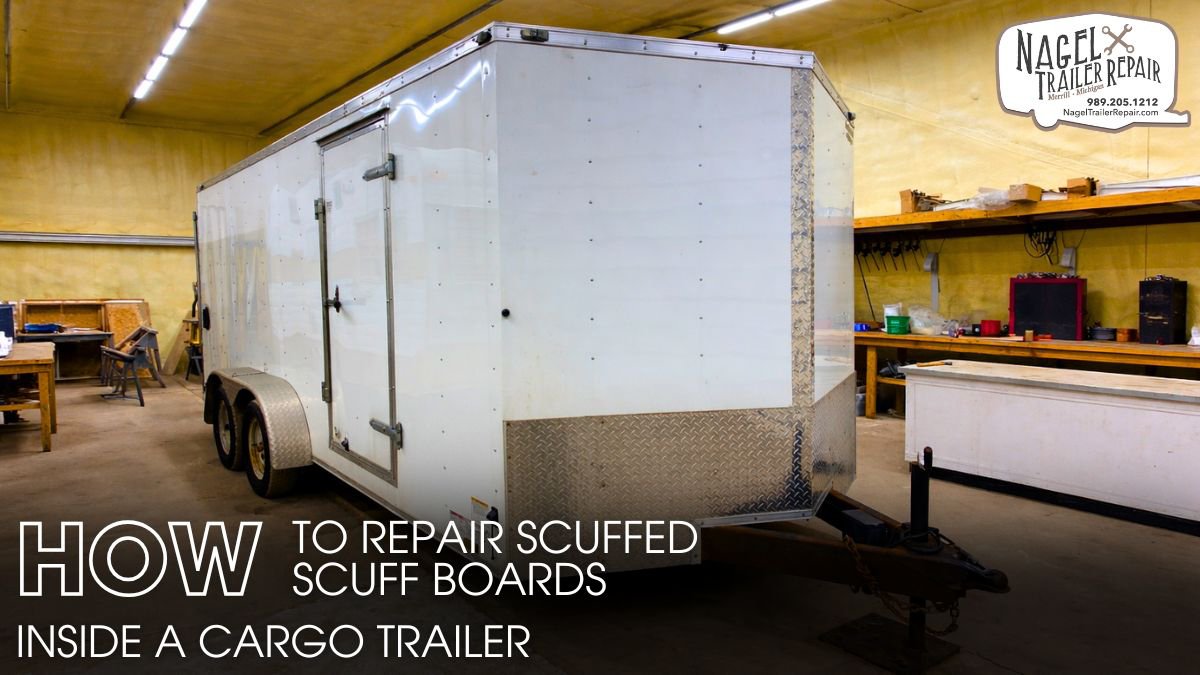
Your cargo shifts, scrapes the wall, and leaves ugly streaks across the scuff boards. Those marks don’t just look bad — they signal wear that can weaken the trailer interior over time. Ignoring them today often means bigger repairs tomorrow.
Many owners notice gouges, splinters, or loose boards but delay fixing them because the process seems complicated. Moisture, repeated loading, and friction quickly worsen the damage, leading to structural issues and costly downtime, especially for anyone relying on cargo trailer repair in Michigan.
This guide shows a clear, step-by-step method to restore scuff boards safely and efficiently. You’ll learn how to clean, repair, seal, and protect the boards so your trailer stays durable, professional-looking, and ready for daily hauling without expensive shop visits.
Understanding Scuff Board Damage:
Scuff boards are the essential armor for a cargo trailer’s interior walls, absorbing the constant abuse during loading and transit. Every time you haul appliances, heavy equipment, pallets, or furniture, these durable boards take the hit, sacrificing themselves to protect the trailer’s frame and outer panels from costly damage.
The threat isn’t just a single, catastrophic impact. Damage accumulates stealthily over time from a thousand small incidents. A heavy pallet slides just two inches against the wall. A tie-down strap loosens slightly during transport, allowing the cargo to saw back and forth.
A forklift operator, making a tight turn, gives the wall a minor bump. Individually, these moments seem harmless. Collectively, over weeks and months, they relentlessly compress the wood fibers, crush the material, and slowly weaken the critical mounting points that hold everything together.
Typical signs you should never ignore:
- Long horizontal scrape marks
- Dark moisture stains
- Splintered edges
- Boards pulling away from wall
- Screw heads popping out
Once the board stops absorbing impact, the wall studs begin taking the load. At that stage, repairs become structural rather than cosmetic. Many owners schedule preventative inspections with cargo repair Michigan professionals before that escalation happens, because replacing studs costs far more than repairing boards.
Tools and Materials Needed:
Repairing scuffed scuff boards inside a cargo trailer is a straightforward task that doesn’t require a fully equipped professional workshop or expensive, specialized tools. While the job is accessible to any DIY owner, the long-term success of your repair hinges almost entirely on one critical factor: using the correct materials. Cutting corners with the wrong paint or filler might offer a quick cosmetic fix, but it will inevitably lead to premature failure.
By taking the time to select and apply the proper resins, durable coatings, and reinforced materials, you make the critical difference between a sloppy patch job that begins peeling or cracking within six months and a high-quality, lasting repair that provides rugged protection for years to come.
Basic hand tools:
- Drill with clutch control
- Pry bar or trim remover
- Putty knife
- Tape measure
- Orbital sander
Repair supplies:
- Two-part epoxy wood filler
- Exterior plywood or hardwood panel
- Self-drilling screws
- Primer and enamel paint
- Polyurethane sealant
Helpful upgrades:
- Aluminum scuff plates
- Rubber guards
- UHMW plastic strips
Cheap wood filler and drywall screws fail quickly inside a vibrating trailer. That’s why many working drivers call mobile trailer repair Michigan shops — they bring commercial hardware designed for transport environments.
Preparing the Trailer Interior:
Proper preparation prevents problems and saves significant time during the installation process. Begin by completely emptying the trailer to create a clear, unobstructed workspace that allows you to move freely along all walls. Remove all straps, hanging hooks, and any removable shelving units or brackets. A thorough sweeping is essential since accumulated dirt and debris can hide small cracks and imperfections in the wall surface.
Once the space is clean, locate the wall studs for secure fastening. These structural supports typically sit directly behind the vertical rivet lines visible on the exterior. After finding each stud, mark their positions lightly with chalk rather than permanent markers to maintain a clean work surface while ensuring you know exactly where to reinstall fasteners later.
Preparation checklist:
- Clear cargo and sweep floor
- Mark damaged areas
- Locate studs
- Protect flooring with cardboard
- Ensure good lighting
If the trailer interior feels cold or damp, let it warm up before repairing. Adhesives bond poorly in low temperatures. In colder regions, owners often rely on trailer repair Michigan services because technicians use heated equipment to ensure proper curing.
Cleaning the Damaged Area:
To properly repair scuffed scuff boards inside a cargo trailer, you must first understand a fundamental rule of adhesion: repair materials will only bond effectively to a clean, bare wood surface. Cargo trailers, by nature of their use, accumulate significant residue on their interior walls.
This residue is not just simple dirt; it is a complex composite of leaked lubricants, fine particulate dust from various goods, and ingrained road grime that is kicked up during transit. This contamination acts as a powerful barrier, preventing patching compounds, paints, and sealants from gripping the wood fibers.
If you apply new material over this contaminated layer, the repair will be temporary at best, eventually peeling or flaking off under the stress of loading and unloading. Therefore, the essential first step is a thorough cleaning process using a degreaser and a stiff brush, ensuring the scuff board is stripped of all contaminants to create a sound surface for a durable, long-lasting repair.
Follow this sequence carefully:
- Scrape loose fibers away
- Wipe with alcohol or degreaser
- Sand lightly to expose fresh wood
- Vacuum all dust
- Allow complete drying
Avoid soaking the wood with water. Moisture trapped beneath filler causes swelling later.
When cleaning reveals dark, soft spots on the wood, it indicates moisture absorption and the need for replacement. To stop rot from reaching the insulation and wall structure, schedule cargo trailer repair in Michigan as soon as possible.
Repairing Minor Scratches:
Even seemingly minor abrasions like shallow scuffs and light scratches are surprisingly simple to fix, yet addressing them promptly is a critical step in wood maintenance. While they may appear to be only a cosmetic nuisance, these small breaches in the finish act as entry points. They allow ambient humidity and moisture to seep into the bare wood beneath, potentially leading to gradual swelling, warping, or discoloration over time.
To properly repair the area, begin by applying a high-quality epoxy wood filler. Use firm, deliberate pressure to force the compound deep into the scratch, ensuring it fully penetrates the open grain rather than just sitting as a superficial layer on top.
This deep penetration creates a solid, stable bond with the wood fibers. Once the filler is applied, you must act quickly: immediately level the surface using a flexible putty knife or scraper. Removing the excess before curing begins is essential, as it minimizes the need for intensive sanding later and ensures a perfectly smooth, seamless finish that is flush with the surrounding wood.
For expert assistance with larger projects or structural issues, be sure to search for “cargo trailer repair near me” to find specialized services near you.
After curing:
- Sand smooth
- Wipe clean
- Prime the repair
Quick touch-ups prevent long cracks from forming later. For businesses that haul daily deliveries, scheduling periodic cargo repair maintenance in Michigan is essential, as frequent small repairs cost far less than a major rebuild.
Fixing Deep Gouges and Chips:
Deep gouges in wood demand a methodical approach and a great deal of patience. Rushing this critical repair step is the most common mistake; if you apply filler too quickly or carelessly, it will almost certainly crumble and fall out within just a few weeks, forcing you to redo the entire job.
Before you even think about applying filler, you must properly prepare the damaged area. Start by gently widening the cavity just enough to remove any crushed or splintered wood fibers that are too weak to hold the filler. This slight widening also exposes fresh, solid material, creating a rough surface that the filler can grip onto firmly. Think of it as giving the patch a strong foundation.
When you’re ready to fill, always apply the filler in thin, separate layers rather than attempting to pack it all in at once. This technique ensures proper drying and prevents shrinkage cracks.
Best practice:
- Fill halfway and cure
- Add final layer
- Shape before fully hard
- Sand smooth after curing
For very deep impact zones, embed mesh tape or backing support to strengthen the repair. Repeated gouges often indicate shifting cargo, and many operators schedule a cargo trailer repair in Michigan to adjust load securing methods at the same time.
Replacing Severely Damaged Boards:
Sometimes, repair is simply not worth the effort. If a board has cracked completely across its width, become swollen and distorted from prolonged exposure to moisture, or can no longer hold screws securely, the only practical solution is to replace it entirely. Patching these issues often leads to further problems down the line, making a fresh start the smarter choice.
Begin by carefully extracting all nails, screws, or other fasteners using the appropriate tools. Take your time to ensure nothing is left embedded. When prying the board away from the wall, work slowly and gently. Applying too much force or rushing can easily bend or damage the wall studs, which would create a much bigger and more complicated repair.
Once the old panel is removed, use it as a template. Measure its dimensions precisely, noting any irregularities or cutouts for outlets. Transfer these exact measurements onto the new board, double-checking for accuracy. Finally, cut the new panel carefully to match, ensuring a seamless and professional fit.
Important installation tips:
- Align with studs
- Leave a tiny expansion gap
- Use corrosion-resistant screws
- Do not overtighten
Multiple board replacements must stay flush so cargo slides smoothly along the wall. Professionals performing trailer repair services often use templates to keep spacing uniform and prevent pallet snagging.
Sealing and Protecting Surface:
Fresh wood is a highly porous and hygroscopic material, meaning it has a natural tendency to absorb and release moisture from the surrounding environment rapidly. In the context of a cargo trailer, this characteristic poses a significant threat to the integrity of the scuff board—the protective panel lining the lower interior walls.
If left untreated, the raw wood will quickly wick up moisture from humidity, wet cargo, or pressure washing. This constant saturation leads to swelling, warping, and eventual delamination of the wood fibers. Over time, this creates an ideal breeding ground for mold, rot, and structural weakness, drastically shortening the scuff board’s service life.
However, by applying a high-quality sealant, you create an impermeable barrier that repels water and resists abrasion. This proactive measure not only prevents moisture ingress but also fortifies the wood against impacts from shifting loads, ensuring the scuff board remains durable, hygienic, and functional for years to come.
Apply:
- Wood sealer
- Primer
- Industrial enamel paint
- Edge sealant
High-impact trailers benefit from added protection:
- Aluminum kick plates near floor
- Plastic wear strips
- Rubber bump panels
Preventing Future Scuffing:
Repair alone doesn’t solve the root problem — movement inside the cargo trailer is the primary cause of damage. Every shift, jolt, and vibration during transit creates friction and impact between items, leading to scratches, dents, and structural weaknesses over time. While fixing broken goods is necessary after the fact, it’s a reactive and costly approach that never addresses the underlying issue.
The real, proactive goal must be to prevent motion entirely. By implementing effective load securement strategies like using durable dunnage bags, friction mats, and systematic blocking and bracing, you neutralize the forces of transit.
For fleet owners, partnering with trailer repair Michigan experts ensures your equipment is always road-ready to support these strategies. When cargo is immobilized, the risk of damage plummets, protecting your goods, reducing long-term costs, and ensuring safer deliveries.
Good loading habits:
- Use load bars between pallets
- Strap tall items
- Fill empty gaps
- Balance weight evenly
Helpful additions:
- Rubber mats under heavy cargo
- Corner protectors
- Anti-slip strips
Companies that adopt these habits see a significant reduction in wall repairs. Furthermore, routine inspections of their trailers in Michigan help identify wear patterns early, allowing them to correct loading mistakes before they lead to costly damage.
Maintenance and Inspection Tips:
Regular inspections are the cornerstone of effective maintenance and cost control, serving as a proactive defense against minor issues escalating into major financial burdens. By dedicating a small amount of time each month to walk through the cargo trailer’s interior, you can identify and address small problems before they compromise the unit’s integrity or require expensive emergency repairs.
During these walkthroughs, pay particularly close attention to high-contact zones, such as the floor near the door where equipment is frequently loaded and unloaded, the interior walls where cargo may shift and rub during transit, and the ceiling where roof leaks often first appear as subtle stains.
If you notice any damage during these inspections, be sure to contact a professional for cargo repair Michigan services to address issues promptly and maintain the integrity of your trailer.
Examine these areas meticulously for early warning signs like developing rust, small holes, loosening floor planks, or dampness indicating a seal failure. This simple, consistent practice not only extends the trailer’s lifespan but also ensures safety and reliability for every journey.
Check for:
- Loose screws
- Swelling wood
- New scrape lines
- Moisture stains
- Soft spots
Recommended routine:
- Monthly visual inspection
- Tighten hardware quarterly
- Repaint worn areas annually
Preventive care dramatically extends the life of your trailer. That’s why many operators in Michigan rely on scheduled cargo trailer maintenance; addressing minor issues during routine service visits costs far less than unexpected downtime during the busy shipping season.
The Role of Professional Maintenance:
Professional maintenance does more than fix visible damage — it keeps a trailer reliable day after day. When wall boards get scraped and gouged, technicians don’t just cover the marks. They remove weakened material, reinforce mounting points, and seal surfaces so moisture and vibration won’t reopen the damage. This prevents cargo from catching on rough edges and protects the trailer frame from hidden stress.
The same approach applies at the hitch end. A worn coupler may look minor, but looseness transfers shock directly into the towing vehicle and makes handling unpredictable. A technician measures tolerance, replaces worn components, aligns the latch, and verifies load distribution so the trailer tracks smoothly at highway speed.
Regular professional servicing turns reactive repairs into planned upkeep. Instead of waiting for breakdowns, owners keep equipment dependable, safer to tow, and ready for daily hauling without unexpected downtime.
Conclusion:
Scuff boards protect the most vulnerable interior surface of a cargo trailer. Minor scratches grow into structural damage if ignored, but proper cleaning, filling, sealing, and preventive loading practices dramatically extend service life. While many repairs can be handled early with basic tools, recurring wear, wall misalignment, or widespread board failure typically requires professional attention from Nagel Trailer Repair to maintain safety and hauling reliability.
Scheduling timely cargo trailer repair in Michigan helps prevent costly downtime, preserves the trailer’s structural integrity, and keeps your equipment dependable for daily operations.