

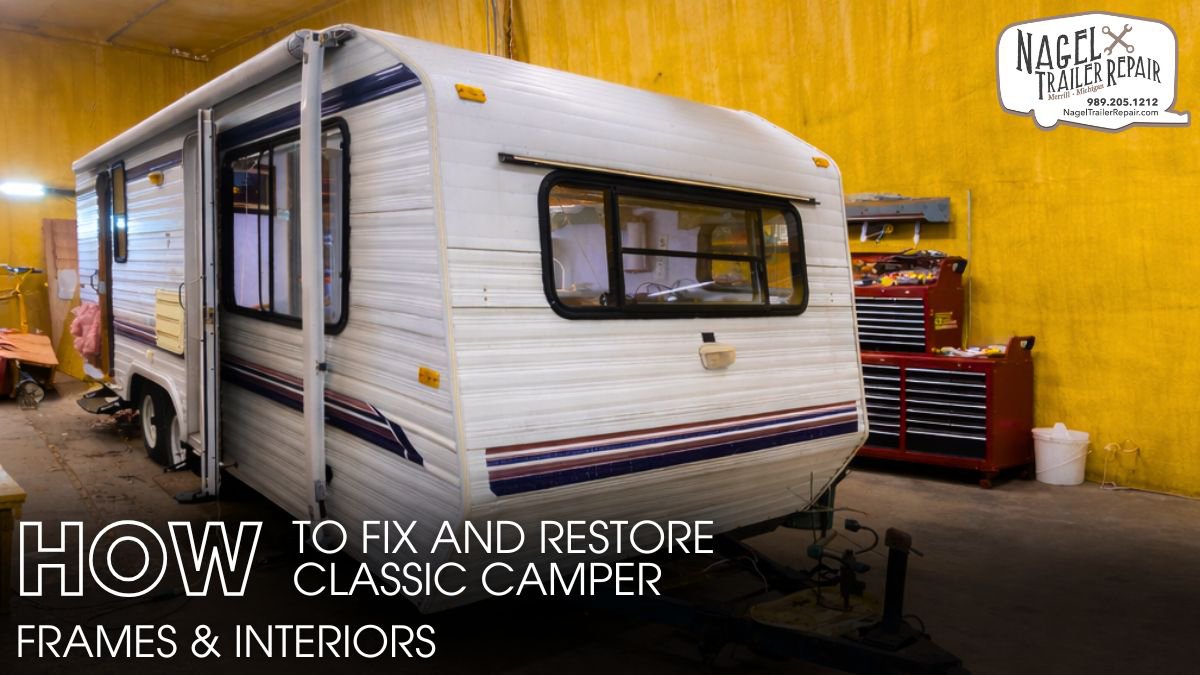
Bringing a vintage camper back to life is more than a project—it’s a passion. The lines, materials, and craftsmanship of older campers tell stories modern RVs can’t match. If you love hands-on work and timeless design, classic camper restoration in Michigan offers the perfect blend of challenge, history, and reward.
However, many restorations stall when rusted frames, damaged body panels, and worn interiors reveal hidden issues. Moisture, age, and improper past repairs can turn excitement into frustration without a clear plan or proven techniques—especially in climates like Michigan, where seasonal moisture accelerates corrosion.
This guide promises a practical, step-by-step approach to restoring frames, body panels, and interior features the right way. You’ll learn what to inspect, how to repair correctly, and how to preserve authenticity—so your classic camper returns to the road stronger, safer, and ready for new adventures.
Project Planning & Safety:
Every successful restoration starts long before the first bolt is removed. Planning gives you control over the process and prevents costly mistakes later. When working on a classic camper repair Michigan shop, you must assume that moisture has affected more areas than you can initially see. Hidden rust, soft wood, and brittle wiring are common discoveries.
Take time to inspect the camper as a complete structure. Look at how the frame supports the body, how panels overlap, and how interior components attach to the shell. Photograph everything and label parts as they come off. This documentation becomes invaluable during reassembly and helps you maintain historical accuracy.
Safety is just as critical as planning. Older campers often contain sharp metal edges, degraded insulation, and outdated materials that require careful handling. A clean, well-lit workspace reduces accidents and keeps the project moving smoothly.
Key focus areas during planning include:
- Structural inspection before cosmetic work
- Realistic budgeting for repairs and parts
- Use of proper safety gear at all times
- Organized storage of removed components
Restoring Classic Camper Frames:
The frame is the backbone of the camper, and everything else depends on its integrity. If the frame is weak or misaligned, even the best interior work will eventually fail. Start by checking straightness, welds, mounting points, and areas where water and road debris tend to collect.
Rust removal must be thorough. Surface rust can often be cleaned and treated, but deeper corrosion usually means cutting out damaged sections and welding in new steel. Many professionals involved in camper repair Michigan services, stress that cosmetic fixes without structural reinforcement only delay future problems.
Once repairs are complete, protecting the metal is essential. Modern rust inhibitors and industrial-grade coatings provide long-term defense against moisture, road salt, and temperature changes. These treatments dramatically extend the life of the restored frame.
Best practices for frame restoration include:
- Measuring alignment before and after repairs
- Reinforcing high-stress load areas
- Sealing internal frame cavities
- Applying durable corrosion protection
Camper’s Body Panel Restoration:
Body panels do more than define the camper’s appearance—they protect the interior and contribute to overall rigidity. Aluminum and steel panels age differently, so understanding the original materials helps you choose the right repair methods.
Carefully inspect panels for dents, corrosion, seam separation, and signs of past repairs. Gentle straightening preserves metal strength, while aggressive methods can stretch or weaken panels. In some cases, replacing severely damaged sections is the most reliable option, especially in long-term camper restoration Michigan projects.
Surface preparation is where many restorations succeed or fail. Proper cleaning, sanding, and priming ensure that paint and sealants bond correctly. Modern sealing compounds outperform older materials and help prevent water intrusion caused by seasonal expansion and contraction.
Important body panel considerations include:
- Correct metal shaping techniques
- Resealing all seams and joints
- Using compatible primers and finishes
- Preventing future corrosion at contact points
Interior Feature Repair:
Restoring a vintage trailer is a labor of love where function meets personality. In the world of classic camper repair, Michigan enthusiasts know that the state’s humidity and snowy winters can be tough on aging structures. To do it right, you must start from the bones. Begin by stripping away old wall panels and flooring to expose the underlying skeleton.
Don’t let a clean surface fool you; water damage often migrates far beyond the eye can see. Pay extra attention to the areas surrounding windows, roof vents, and door openings, as these are notorious for hidden rot.
Once the damage is mapped out, replace any compromised wood framing. Use treated or sealed lumber to build a defense against future moisture. While the walls are open, upgrade your insulation. Modern materials will keep you cozy during late-October lakeside trips without sacrificing an ounce of vintage charm.
True restoration honors the past. Repair original cabinets and furniture whenever possible to preserve that authentic craftsmanship. When it’s time for the “fun” part—upholstery and flooring—choose materials that echo the camper’s era but offer modern durability. Opt for moisture-resistant flooring that can handle muddy boots and sandy gear, ensuring your mobile sanctuary stays beautiful for miles to come.
Interior restoration priorities include:
- Repairing hidden structural damage
- Improving insulation and airflow
- Strengthening cabinets and fixtures
- Selecting era-appropriate materials
Systems & Hardware:
A restored camper must be safe and reliable on the road. Electrical systems in older campers rarely meet modern standards, making rewiring a necessary upgrade. Use proper wire gauges, grounding, and circuit protection to ensure long-term reliability.
Plumbing systems also deserve close attention. Replace old hoses, fittings, and seals to prevent leaks and contamination. Hardware such as latches, hinges, and locks should function smoothly and seal tightly. Experts in classic camper repair Michigan shop, often emphasize that careful weatherproofing during this stage prevents the majority of future issues.
System upgrades should prioritize simplicity, durability, and ease of maintenance rather than unnecessary complexity.
Essential updates include:
- Modern electrical wiring and protection
- Leak-resistant plumbing components
- Improved ventilation and moisture control
- Durable exterior and interior hardware
Final Assembly & Ongoing Care:
Final assembly is the ultimate test of patience. Begin by reinstalling components in a logical sequence, prioritizing structural integrity before moving toward aesthetic finishes. Always test-fit your panels, doors, and windows before the final fastening; this simple step prevents the nightmare of alignment issues once everything is sealed.
If you are planning an adventure, don’t just hit the road. Perform short test trips and conduct detailed inspections. Listen closely for unusual noises, scout for leaks, and confirm that every system operates flawlessly. Whether you are DIYing or seeking professional camper repair Michigan services, addressing minor glitches early stops major failures in their tracks.
Regular maintenance ensures your restored camper remains reliable and safe. Through consistent inspections, proper storage, and seasonal upkeep, you protect the immense time and effort you invested in the build.
Long-term care habits include:
- Routine checks for moisture intrusion
- Periodic resealing and cleaning
- Proper off-season storage
- Immediate attention to minor repairs
The Role of Professional Maintenance:
Professional maintenance plays a quiet but powerful role in keeping a classic camper reliable, safe, and enjoyable for years. Skilled technicians bring trained eyes that catch problems most owners overlook, especially in structural areas like frames, wall connections, and subfloors. They know where moisture hides, how metal fatigue begins, and which materials fail first after decades of use. That experience helps stop small issues before they turn into costly structural damage.
Interior surfaces also benefit from professional care. Vinyl flooring and its substrate often look fine on the surface while hiding soft spots, adhesive failure, or trapped moisture underneath. Professionals understand how flooring systems interact with framing and insulation, so repairs restore strength instead of just appearance. They remove damaged layers correctly, stabilize the base, and install materials that handle movement and temperature changes.
Most importantly, professional maintenance protects your investment. It preserves authenticity, improves longevity, and gives you confidence every time you step inside or head down the road.
Conclusion:
Restoring a vintage camper is a rewarding journey that demands expert skill and thoughtful decision-making. By prioritizing structural integrity and professional RV repair techniques, you ensure your trailer remains authentic, dependable, and road-ready for years.
Climate-aware restoration is vital for longevity, especially when tackling Michigan’s moisture and temperature extremes. Addressing leaks at the source—rather than masking symptoms—guarantees that your camper repairs last and performance remains consistent.
Ultimately, classic camper restoration in Michigan preserves history while building confidence for every mile. With Nagel Trailer Repair’s craftsmanship and regular maintenance, your vintage camper will continue creating family memories for generations to come.