

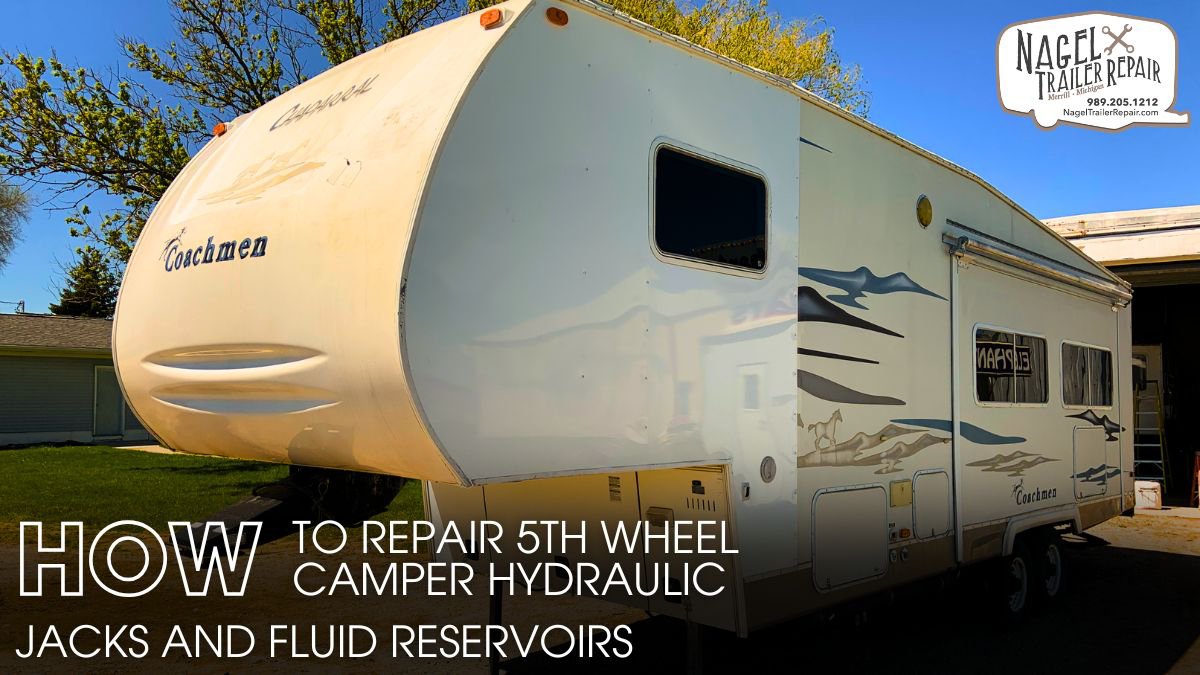
A sinking camper or uneven leveling can ruin a trip fast. When hydraulic jacks fail or fluid reservoirs leak, your 5th wheel becomes unstable and difficult to set up. These issues often appear without warning, leaving many RV owners frustrated and unsure where to start.
Many travelers ignore early warning signs like slow jack movement, fluid spots, or unusual noises. Over time, these small problems turn into costly damage, unsafe leveling, and delays during camping trips.
The good news is that most hydraulic jack and reservoir problems can be diagnosed and repaired with the right approach. In this guide, you’ll learn practical steps, inspection tips, and solutions used in professional 5th wheel camper repair in Michigan to restore your camper’s hydraulic system and keep your RV stable on every trip.
Overview of Hydraulic Jack Systems:
Hydraulic jack systems are essential for keeping a 5th wheel camper stable after it is parked at a campsite. Once the RV is in position, the hydraulic jacks extend to raise and level the camper, preventing unwanted movement. This stability ensures a safer and more comfortable environment for everyday activities such as cooking, relaxing, and sleeping inside the camper.
Unlike manual or electric stabilizers, hydraulic systems rely on pressurized fluid to create powerful lifting force. This mechanism enables the jacks to lift heavy campers smoothly and maintain proper balance, even when the ground surface is uneven or slightly sloped.
Most 5th wheel campers include several important hydraulic components that work together as a single system:
- Hydraulic jack cylinders
- Hydraulic pump motor
- Hydraulic hoses and connectors
- Fluid reservoir tank
- Control valves
- Electronic leveling controls
When the leveling system is activated, the hydraulic pump draws fluid from the reservoir and pushes it through a network of hoses connected to the jack cylinders. This movement of fluid creates pressure inside the system.
The hydraulic pressure forces the cylinders to extend outward. As the cylinders expand, they lift the camper and gradually adjust its position until the vehicle reaches a stable and properly leveled stance. If you experience issues with this process, searching for “camper repair near me” can help you find professionals who can diagnose and fix the hydraulic system quickly.
Early Warning Signs of Jack Problems:
Because the system works under constant hydraulic pressure, gradual wear is unavoidable. Over time, internal components begin to experience strain, which can slowly reduce the efficiency and reliability of the system.
In addition, factors like road vibrations during travel, shifting temperatures, and exposure to dirt and moisture can impact seals, hoses, and fittings, causing them to weaken or deteriorate with continued use.
Some early warning signs that your hydraulic system needs attention include:
- Slow or uneven jack movement
- Hydraulic fluid leaking near jacks
- Jacks refusing to retract fully
- Loud pump noises during leveling
- Camper tilting or struggling to level
Overlooking early warning signs in a hydraulic jack system can eventually result in complete jack failure. Small issues such as slow lifting, unusual noises, or fluid leaks often indicate deeper mechanical problems that should not be ignored. Addressing these signs early helps prevent expensive repairs and unexpected breakdowns during travel.
Many RV owners prefer to schedule inspections with camper repair Michigan professionals as soon as these symptoms appear. Skilled technicians understand hydraulic systems and can quickly diagnose worn components, leaks, or pressure issues. Early professional attention often prevents minor faults from turning into major mechanical failures.
Regular maintenance of your hydraulic jack system is essential for the safety and stability of your camper. A well-maintained system ensures smooth leveling, protects structural components, and reduces the risk of damage during setup. Keeping the system in good condition ultimately supports a safer and more enjoyable RV travel experience.
Tools and Safety Preparation:
Before starting any work on hydraulic jacks or the fluid reservoir, proper preparation is very important. Hydraulic systems contain pressurized fluid and heavy mechanical parts, so working carefully helps reduce the risk of injury or damage.
Make sure the camper is parked on a stable, level surface and the jacks are safely supported before you begin. Taking a few safety precautions in advance can prevent unnecessary accidents during the repair process.
It is also helpful to gather all the required tools and materials beforehand. Having everything ready allows you to work smoothly and complete the repair more efficiently without interruptions.
Common tools used during hydraulic jack repairs include:
- Adjustable wrench and socket set
- Screwdrivers and pliers
- Hydraulic seal kits
- Clean rags or shop towels
- Drain container for hydraulic fluid
- Protective gloves and safety glasses
- Manufacturer-approved hydraulic fluid
- Stabilizing blocks or jack stands
When to Call a Michigan Camper Repair Expert?
Before starting the repair, confirm that all required tools are prepared and within reach. Once everything is ready, focus on properly securing the camper so it remains completely stable. Working under a camper that is not firmly supported can be extremely dangerous. If the camper shifts or moves unexpectedly while you are underneath it, it could lead to severe injuries, so stability and safety should always be your top priority.
Follow these safety steps before starting any repair:
- Park the camper on level ground
- Turn off the RV’s electrical systems
- Use wheel chocks to stop movement
- Release pressure from the hydraulic system
- Allow the system to cool if recently used
Hydraulic fluid is often slick and difficult to handle, so it’s important to work slowly and carefully when dealing with it. Any spills should be cleaned immediately to prevent accidents and keep the workspace safe and tidy.
Many RV owners are comfortable performing basic maintenance on their own. However, hydraulic systems can become complex, especially when issues involve pump motors, multiple cylinders, or integrated leveling components.
In such situations, seeking help from professionals who specialize in 5th wheel repair Michigan services, can be a smart decision. Experienced technicians use advanced diagnostic tools to quickly detect faults and resolve issues more efficiently than relying only on manual inspection.
Diagnosing Jack System Issues:
Effective repairs begin with an accurate diagnosis. Hydraulic issues often look identical at first glance, yet the real cause behind the malfunction can differ greatly from one system to another. Without identifying the exact problem, even well-intended repairs may fail to resolve the issue or could create additional complications over time.
Before attempting any repair work, perform a detailed visual inspection of the complete hydraulic system. Examine each component carefully to understand the system’s overall condition and to identify any irregularities that may indicate the source of the malfunction.
Pay close attention to the hydraulic jacks, hoses, pump assembly, and the fluid reservoir. Look for visible signs such as leaks, cracks, loose fittings, worn connections, or fluid buildup. These indicators often provide early clues about where the problem originates and help guide the next steps in the repair process.
Pay attention to the following issues:
- Fluid stains or puddles under the camper
- Damp hose connections
- Cracked or brittle hydraulic hoses
- Loose bolts on jack mounts
- Bent or misaligned jack cylinders
Even a minor hydraulic leak can lower the system pressure enough to prevent the jacks from operating as they should. When pressure drops, the jacks may struggle to extend or retract smoothly, leading to unstable support for the camper. Identifying and fixing small leaks early helps maintain proper pressure and ensures the hydraulic system continues to function efficiently.
After that, inspect the hydraulic fluid level in the reservoir. A low fluid level is often a sign that there may be a leak somewhere in the system. Also observe the fluid’s condition—if it looks dark, dirty, or contaminated, it can reduce system efficiency and affect the overall performance of the hydraulic jacks.
Identifying Loud RV Pump Noise Issues:
Once you have completed the visual inspection, proceed to test the leveling system to ensure it is operating correctly. Carefully extend the jacks and then retract them while paying close attention to how they move. Observe their motion for any unusual sounds, jerky movements, or delays, as these signs may indicate underlying issues that need further attention or repair.
Watch for signs such as:
- Uneven jack extension
- Jerky lifting movements
- Pump struggling or making loud noises
- Jacks slowly lowering after leveling
Unusual behavior from your camper’s hydraulic jacks often points to internal system problems. In many cases, the issue is caused by worn or damaged seals, air trapped within the hydraulic lines, or a failing hydraulic pump that can no longer maintain proper pressure.
Modern RV leveling systems also rely heavily on electronic components. Problems such as damaged wiring, loose connections, or a faulty control module can interfere with the signals that operate the jacks, leading to improper leveling or system failure.
When troubleshooting becomes complicated, reaching out to mobile RV repair Michigan technicians can be a practical solution. These professionals can inspect and diagnose the camper directly at your location, allowing them to identify hydraulic or electrical issues quickly while saving you the hassle of transporting the RV and helping prevent additional damage to the leveling system.
Repairing Hydraulic Jacks:
After identifying the underlying problem, you can move forward with repairing the hydraulic jacks. The exact repair method will vary depending on the type and severity of the issue you discovered. In most cases, the process involves fixing leaks, tightening connections, or replacing components that have worn out over time due to regular use.
Hydraulic jack systems rely on several small but important parts working together. When any of these components begin to fail, the jack may lose pressure or stop lifting properly. Repairing the system usually requires inspecting each part and replacing the damaged or weakened components.
One of the most frequent repairs is replacing worn or damaged seals. These seals are essential because they keep the hydraulic fluid contained within the cylinder. Properly functioning seals maintain the pressure required for the jack to safely lift and support the camper.
Over time, seals can wear out due to:
- Continuous pressure cycles
- Exposure to dirt or debris
- Temperature changes
- Natural aging of rubber materials
When the seals in a hydraulic cylinder become worn or damaged, hydraulic fluid begins to leak out. This leakage lowers the internal pressure needed for proper operation and reduces the system’s lifting power—a common issue addressed during 5th wheel camper repair in Michigan, where hydraulic leveling and slide-out systems are frequently serviced.
By replacing the faulty seals with new ones, the cylinder can hold pressure correctly again, preventing further fluid loss and restoring the hydraulic system’s full lifting performance and efficiency.
Common Causes of Bent Jack Cylinders:
RV owners occasionally encounter problems with bent jack cylinders. This issue usually arises when the camper is lifted unevenly, placing excess stress on one or more jacks. It can also occur if the leveling jacks are used on soft, sloped, or unstable ground, causing them to shift under pressure. Over time, this uneven load can bend the cylinder and affect the jack’s proper functioning and stability.
If a jack becomes bent or misaligned, you may need to:
- Replace the damaged cylinder
- Realign the jack mounting bracket
- Tighten loose support bolts
Hydraulic hoses should always be checked carefully during any repair process. Over time, these hoses can become brittle, develop cracks, or suffer from wear due to constant pressure and exposure to heat and debris. When this happens, small fluid leaks may start to occur. Even minor leaks can gradually reduce hydraulic pressure, weakening the entire system and affecting the performance and reliability of the equipment.
When installing replacement hoses:
- Choose hoses rated for the correct pressure
- Tighten fittings securely
- Avoid twisting or bending the hose during installation
Once the repairs are finished, carefully reinstall all the components in their proper positions. Make sure every fitting and connection is secure. If the repair process required draining fluid, refill the hydraulic reservoir with the recommended hydraulic fluid and check the system for smooth operation.
While some experienced RV owners handle these fixes on their own, many rely on professional camper repair Michigan services for hydraulic system issues. Skilled technicians have the proper tools to open hydraulic cylinders, inspect seals, and test pressure levels, helping ensure the entire system operates safely and reliably after the repair work is complete.
Servicing the Fluid Reservoir:
The hydraulic fluid reservoir stores the fluid that powers the entire leveling system. When the reservoir is clean and filled to the proper level, the hydraulic jacks operate smoothly and respond more efficiently.
Over time, hydraulic fluid may collect dirt, moisture, and tiny metal particles from system wear. These contaminants can gradually damage hydraulic components and reduce the overall efficiency of the pump and leveling system.
Regular reservoir maintenance is essential to keep the hydraulic system functioning properly. If you’re searching for “RV repair near me“, routine checks and timely fluid replacement can help prevent premature wear and costly mechanical issues.
Begin maintenance by draining the old hydraulic fluid from the reservoir. Collect the fluid in a clean container and dispose of it according to local regulations. After draining, inspect the inside of the tank, as dirt and sediment often accumulate and may restrict proper fluid flow.
Cleaning the reservoir usually involves:
- Wiping the interior with lint-free cloths
- Removing debris from the fluid intake
- Inspecting the reservoir filter or screen
Refill Reservoir with Specified Fluid:
After the reservoir has been thoroughly cleaned, the next step is to refill it with the hydraulic fluid recommended by the manufacturer. Using the correct type of fluid is essential because it provides the proper viscosity needed for the hydraulic system to function efficiently. The right fluid also helps maintain the pressure required for smooth jack operation.
Keeping the hydraulic fluid at the proper level is equally important for system performance. When the fluid level drops too low, air can enter the hydraulic lines, which may lead to inconsistent or jerky movement of the camper jacks. Proper fluid maintenance ensures smoother lifting and lowering of the 5th wheel.
For many RV owners, checking and maintaining the hydraulic reservoir becomes a regular part of their overall service routine. Routine inspections help identify early signs of contamination, leaks, or fluid degradation before they lead to more serious mechanical issues.
If deeper maintenance is required, technicians working in a 5th wheel repair Michigan shop, can perform a complete hydraulic system service. This typically includes flushing the system, cleaning the reservoir, and ensuring that the pump and fluid lines are functioning properly. Consistent servicing greatly improves the durability and lifespan of hydraulic components
Testing and Preventive Care:
Once all repairs and reservoir maintenance are finished, it is essential to perform a thorough test of the hydraulic system. Proper testing ensures that every component is functioning correctly and that the system operates smoothly after the repair process.
Begin by extending and retracting the hydraulic jacks multiple times. Cycling the jacks in this way helps purge any trapped air from the hydraulic lines while allowing the fluid to move evenly throughout the system, which improves overall performance and stability.
While running these tests, closely monitor the system for any unusual behavior. Pay attention to leaks, irregular movements, or abnormal sounds, as these can indicate underlying issues that may require further inspection or adjustment.
Look for:
- Fluid leaks around fittings
- Unusual pump noises
- Slow jack movement
- Uneven leveling
The camper should rise in a smooth and controlled manner when the hydraulic jacks are extended. Once the jacks reach their full extension, the camper needs to stay level and stable without any sudden movement or imbalance.
If you notice that the camper gradually lowers after it has been leveled, it may indicate a pressure leak in the hydraulic system. In such cases, the system should be inspected carefully to identify and fix the issue before further use; for professional assistance, you may want to seek out expert 5th wheel camper repair in Michigan.
Keep Your RV Leveling System Robust:
Regular preventive maintenance is the most effective way to keep your hydraulic system working smoothly and to avoid costly repairs later. Simple routine checks—such as inspecting hoses, monitoring fluid levels, and looking for early signs of leaks or wear—help ensure that every component operates efficiently. These small efforts can significantly extend the life of the system.
By examining the system on a consistent basis, minor issues can be identified and resolved before they turn into major mechanical failures. Addressing small concerns early not only reduces downtime but also saves money on extensive repairs. A proactive maintenance routine ultimately keeps the hydraulic setup reliable, safe, and performing at its best.
Good preventive practices include:
- Inspecting hoses every few months
- Checking reservoir fluid levels regularly
- Cleaning dirt from jack cylinders
- Testing leveling before trips
- Lubricating moving parts when needed
When unexpected problems arise while traveling, mobile RV repair Michigan services offer a practical and stress-free solution for RV owners. Instead of dealing with the hassle of transporting a large camper to a repair facility, certified mobile technicians travel directly to your location.
Whether your RV is parked at a campsite, stored at a facility, or sitting in your driveway, they can diagnose and repair issues such as faulty hydraulic systems and other mechanical components on-site.
This convenient service helps minimize downtime and eliminates the need for expensive towing. By bringing professional repairs directly to the RV, mobile technicians make it easier for owners to resolve problems quickly and continue their journey with confidence.
The Role of Professional Maintenance:
Regular maintenance plays a key role in keeping a 5th wheel camper reliable and comfortable during every trip. Hydraulic leveling systems and interior components such as pleated shades often experience wear after frequent travel and use. When hydraulic jacks begin moving slowly or fluid reservoirs show signs of leaks, trained technicians can quickly inspect the system, replace worn seals, and restore proper fluid pressure.
At the same time, professionals can repair damaged pleated shade strings and adjust tension so the shades move smoothly and stay in position. Routine professional servicing helps prevent small issues from becoming major repairs, extends the life of important camper components, and ensures your RV remains safe, stable, and comfortable wherever the road takes you.
Conclusion:
Maintaining the hydraulic jacks and fluid reservoir of your camper is essential for safe and stable RV travel. Regular inspections, proper fluid maintenance, and timely repairs help prevent leveling issues that can damage your camper or disrupt your trips. By understanding how the hydraulic system works and addressing small problems early, RV owners can extend the life of their equipment and enjoy smoother camping experiences.
However, when repairs become complex or require professional tools, relying on expert 5th wheel camper repair in Michigan, such as Nagel Trailer Repair, ensures your hydraulic system is restored correctly, keeping your camper secure, reliable, and ready for the road.