


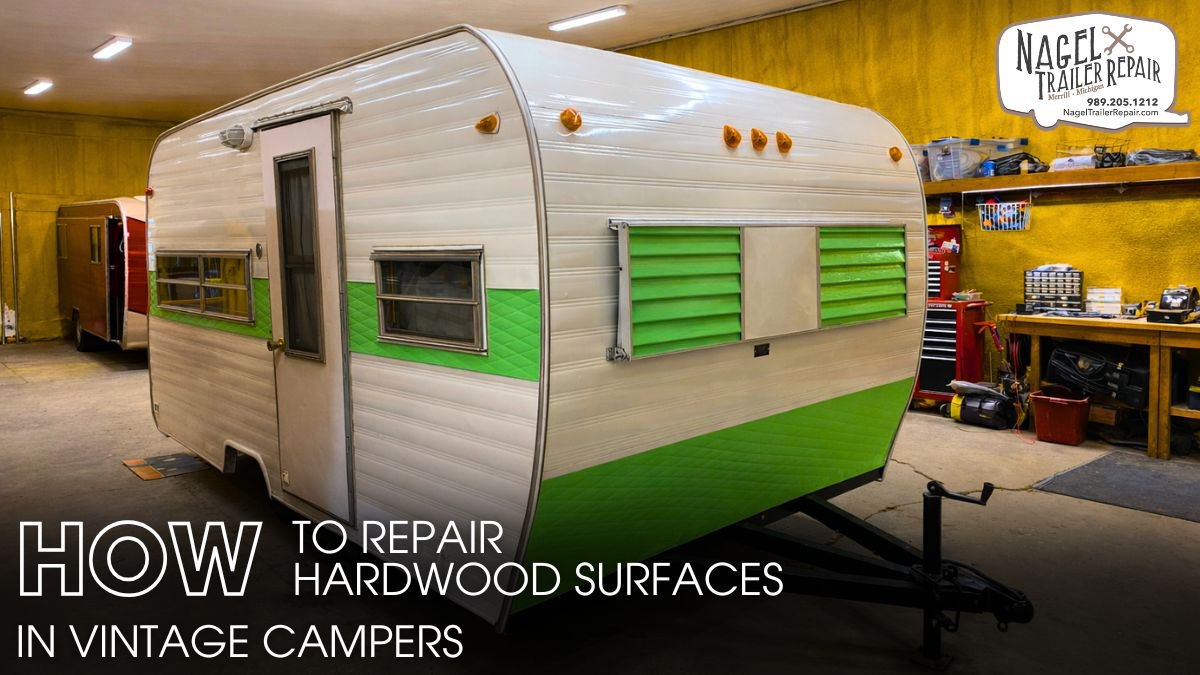
Hardwood surfaces give classic trailers their warmth and character—but years of moisture, vibration, and neglect can leave them scratched, warped, or rotting. If you own a retro rig, you’ve likely seen fading finishes, soft spots, or delaminated veneer that threatens both aesthetics and structural integrity.
Many owners struggle to diagnose the extent of wood damage or choose the right restoration methods. Poor sanding techniques, incompatible fillers, or incorrect sealants can worsen deterioration and reduce resale value—especially during retro camper repair works, where humidity and seasonal shifts accelerate wood decay.
This guide delivers a clear, technical roadmap to restore hardwood surfaces correctly. You’ll learn how to assess damage, execute durable repairs, and refinish wood for long-term protection—ensuring your vintage camper repair in Michigan preserves both authenticity and performance.
Assess Vintage Camper Surface Damage:
Before you pick up a sander or filler, slow down and study the condition of your hardwood surfaces. Careful evaluation saves time, money, and original material. In vintage campers, hardwood appears in cabinet faces, dinette frames, closet doors, trim pieces, and sometimes flooring. Because these elements tie into lightweight framing systems, even small areas of damage can affect stability.
Start by identifying the type of damage. Surface scratches and finish dullness usually result from normal use. Deep stains, bubbling veneer, or soft spots often point to water intrusion. In Michigan, fluctuating humidity levels, lake-effect moisture, and long winter storage periods create repeated expansion and contraction cycles. When you perform vintage camper repair Michigan services, you must assume that moisture has played a role.
Use a structured inspection process:
- Check moisture levels with a wood moisture meter (aim for 6–12% indoors).
- Press a small awl into suspect areas to test for soft rot.
- Shine a bright light across the surface to reveal ripples or cupping.
- Smell enclosed cabinets for musty odors.
- Examine joints and seams for separation.
Pay close attention to areas near sinks, windows, roof vents, and entry doors. Many camper restoration projects uncover hidden leaks that slowly damage wood from behind finished panels. If you skip this step, your repairs may fail within a season.
Also determine whether you’re working with solid hardwood or veneer. Many vintage trailers used thin birch or maple veneer bonded to plywood. Veneer layers are extremely thin, and aggressive sanding can destroy them in minutes. If you identify veneer, plan for minimal material removal and precise refinishing.
Gather Tools and Materials:
Achieving professional-grade results in any restoration or renovation project hinges on two critical factors: utilizing the correct tools for the job and selecting materials specifically engineered for the climate in which the item will exist. This principle is nowhere more important than when working on vintage campers. Unlike modern homes, these classic trailers endure a uniquely harsh lifecycle.
While in transit, they are subjected to constant, unrelenting vibration and road shock that can cause rigid materials to crack or separate. During periods of storage, they face extreme temperature swings—from freezing winter nights to scorching summer days—along with the relentless threat of humidity and moisture intrusion.
Therefore, you cannot rely on standard household products. Instead, you must carefully choose flexible, high-adhesion products designed to absorb movement, expand and contract with the shell, and provide a resilient barrier against rot and corrosion.
Essential tools include:
- Variable-speed random orbital sander
- Detail sander for tight corners
- Oscillating multi-tool for cutting damaged sections
- Moisture meter
- Clamps and cauls for even pressure
- Cabinet scraper for controlled surface leveling
- HEPA vacuum for dust removal
When selecting materials, think long term. In a vintage trailer repair Michigan project, durability matters more than speed. Choose adhesives and finishes that tolerate environmental stress.
Recommended materials:
- Epoxy wood consolidant to stabilize soft fibers
- Two-part structural epoxy filler (non-shrinking)
- Waterproof Type I wood glue or marine epoxy
- Matching hardwood stock for patches
- Oil-based penetrating stain for depth
- Marine-grade polyurethane or spar varnish
Spar varnish works especially well in retro camper restoration projects because it remains flexible. Flexibility prevents cracking when wood expands and contracts with seasonal humidity changes.
Protect yourself during the process. Wear a respirator, gloves, and eye protection. Old finishes may contain harmful compounds, especially in campers built decades ago.
Repair Minor Surface Flaws:
Not every imperfection in your cherished wooden furniture demands the drastic measure of major reconstruction. In fact, you can successfully rectify a wide array of superficial flaws and cosmetic issues with nothing more than careful, targeted surface work. Before reaching for any filler or stain, however, proper preparation is paramount.
Begin this restorative process by cleaning the wood meticulously. It is essential to thoroughly remove all traces of accumulated grease, fine dust, and any old polish residue. These seemingly minor surface contaminants act as a barrier, preventing your chosen fillers and stains from bonding correctly with the raw wood, which would ultimately compromise the repair’s longevity and finish. For professional assistance with larger projects, consider seeking a specialized camper repair Michigan service to ensure high-quality results.
For light scratches:
- Use fine abrasive pads to smooth the surface.
- Apply a color-matched wood filler for shallow defects.
- Overfill slightly to account for shrinkage.
- Allow complete curing before sanding flush.
For dents where fibers remain intact, use steam. Place a damp cloth over the dent and apply gentle heat with an iron. The steam expands compressed fibers and lifts the dent without removing original wood. This technique preserves authenticity, which matters in collectible trailers.
When sanding:
- Begin with the least aggressive grit necessary.
- Sand with the grain to prevent cross-scratches.
- Avoid lingering in one spot.
- Stop frequently to inspect progress.
Blending stain requires patience. Apply stain evenly, wipe excess promptly, and feather edges into surrounding areas. Test your stain in a hidden location first. Many vintage interiors feature warm amber tones; overly dark modern stains can alter the character of your trailer and reduce its value in the Michigan market.
Finish with thin coats of protective sealant. Sand lightly between coats and allow extended drying time in humid conditions.
Fix Structural Wood Damage:
When wood feels soft or crumbles under pressure, you must address structural integrity, not just appearance. Covering active rot with filler only delays failure.
First, eliminate moisture sources. Inspect roof seams, window gaskets, plumbing lines, and exterior penetrations. Without correcting leaks, your repair will fail.
Remove damaged wood with an oscillating tool or saw, cutting back to solid material. Treat borderline areas with epoxy consolidant to strengthen remaining fibers. After consolidation, use penetrating epoxy primer before applying filler. Shape and sand when cured, then paint to match surroundings.
This comprehensive approach ensures lasting structural integrity, preventing costly future repairs and preserving your home’s value.
When fabricating replacement pieces:
- Match wood species and grain direction.
- Maintain original thickness.
- Dry-fit before applying adhesive.
- Use waterproof glue or marine epoxy.
- Clamp evenly to prevent warping.
Reinforce cabinet frames and structural joints with hardwood cleats or pocket screws. Campers endure constant vibration during travel. Reinforcement ensures long-term durability in camper repair Michigan works.
For subfloor repairs, remove compromised panels and inspect the steel frame beneath. Address corrosion before installing new wood. Integrated repairs are common in professional old classic camper repair work because wood and metal systems interact closely.
Take your time. Precision cuts and tight joints create repairs that look original and function reliably.
Sand and Refinish Surfaces:
Refinishing your retro camper’s hardwood floors is one of the most effective ways to protect your property investment and ensure its long-term value. The application of a high-quality, durable finish does more than just restore aesthetic beauty; it creates a formidable shield against the daily wear and tear that can lead to costly damage.
This protective layer acts as a barrier against moisture seepage, which can cause warping and mildew, stands up to the constant abrasion from foot traffic and furniture, and blocks harmful UV exposure that leads to fading and discoloration over time.
Prepare the surface carefully:
- Vacuum thoroughly.
- Wipe with tack cloth.
- Ensure the surface is completely dry.
Follow a progressive sanding schedule:
- 120 grit for leveling repairs.
- 180 grit for smoothing.
- 220 grit for final preparation.
- Optional 320 grit between finish coats.
Apply stain evenly with a cloth or foam applicator. Work in small sections to prevent uneven coloration. Allow sufficient penetration time before wiping excess.
Choose a finish suited to mobile environments. Oil-based polyurethane offers strong abrasion resistance, while spar varnish provides flexibility and UV protection. Many professionals involved in camper restoration Michigan services, recommend spar varnish for campers stored outdoors.
Apply multiple thin coats rather than one heavy coat. Lightly sand between layers to promote adhesion. Maintain ventilation but avoid drafts that introduce dust. Temperature and humidity influence curing time, so adjust your schedule accordingly.
Prevent Future Damage:
After restoring your vintage camper’s beautiful hardwood surfaces, it’s essential to protect them proactively to maintain their renewed appearance. By applying protective coatings and practicing preventive care, you shield the wood from moisture, sunlight damage, and daily wear.
This simple maintenance routine significantly reduces the need for frequent, intensive restoration work, preserving your camper’s charm and saving you time and effort on future projects.
Control moisture year-round:
- Install roof vent covers to allow airflow.
- Use desiccant dehumidifiers during winter storage.
- Reseal roof seams annually.
- Replace worn window seals promptly.
To prevent musty odors, mold growth, and potential water damage, it is crucial to actively encourage ventilation inside cabinets and storage compartments. By leaving doors slightly ajar or installing small vents, you allow fresh air to circulate. This airflow is essential because condensation, the silent enemy of stored items, frequently forms in these enclosed, stagnant spaces where temperature fluctuations trap moisture.
Create a maintenance routine:
- Inspect wood surfaces each spring.
- Check plumbing lines before travel season.
- Examine sealants after winter storage.
- Reapply protective coatings every 2–3 years.
Documenting your vintage trailer repair Michigan work is one of the most valuable investments you can make. In the retro camper market, buyers actively seek out detailed records of restoration projects. By keeping a comprehensive log of parts, labor, and procedures, you provide proof of quality craftsmanship and diligent maintenance. This transparency not only builds trust with potential buyers but can significantly increase your trailer’s resale value. A well-documented history demonstrates responsible ownership and pride in your vintage gem.
The Role of Professional Maintenance:
Professional maintenance plays a critical role in preserving the structure and functionality of vintage campers and trailers. While DIY repairs can address minor cosmetic flaws, experienced technicians bring diagnostic accuracy and long-term solutions that prevent recurring damage.
When restoring hardwood interiors, professionals assess hidden moisture intrusion, stabilize weakened fibers, and apply finishes designed to withstand vibration and seasonal humidity shifts. Their expertise ensures repairs blend seamlessly with original materials while protecting structural integrity.
The same level of precision applies to window systems. Sticking windows often signal warped frames, failing seals, or track misalignment. Skilled specialists recalibrate hardware, replace worn components, and correct frame distortion without compromising the trailer’s vintage character. Routine professional inspections not only extend service life but also safeguard your investment, especially in climates with fluctuating temperatures and moisture exposure.
Conclusion:
Hardwood restoration in a vintage camper demands patience, technical knowledge, and respect for original craftsmanship. When you evaluate damage carefully, select climate-appropriate materials, and apply finishes correctly, you extend the life of your trailer for decades.
Michigan’s seasonal extremes make moisture control especially important. By combining thoughtful inspection, precise structural repairs, and disciplined maintenance, you protect both aesthetics and integrity. Whether you DIY or partner with Nagel Trailer Repair for expert camper restoration services, you ensure that your hardwood surfaces remain strong, beautiful, and road-ready.
With consistent care and informed techniques, your vintage camper repair in Michigan will preserve the character of your classic trailer while delivering reliable performance on every journey.