


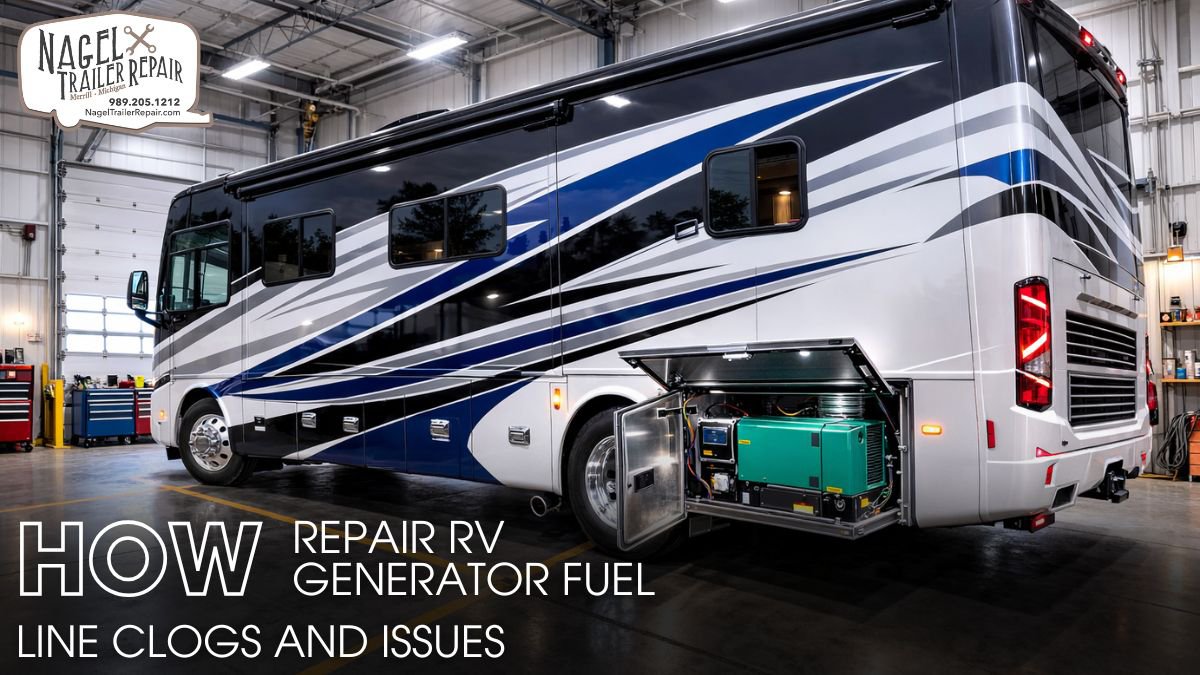
Your RV generator suddenly quits in the middle of a trip, and the silence feels louder than the engine ever did. Power loss means no AC, no fridge, and no comfort. Many owners rush to an RV repair shop in Michigan, but fuel line clogs are one of the most common — and preventable — causes of generator failure.
Old fuel, varnish buildup, and debris slowly restrict the fuel flow until the generator sputters, surges, or refuses to start. Misdiagnosis often leads to costly part replacements when the real issue hides inside a tiny blocked line. Ignoring it can damage the carburetor and fuel pump.
In this guide, you will learn how to diagnose, clean, and repair RV generator fuel line issues step-by-step using safe, practical methods that save time and money before visiting a professional technician.
Understanding RV Generator Fuel Systems:
An RV generator depends on steady fuel delivery more than almost any other component in the coach. Unlike your driving engine, the generator runs at a fixed RPM to maintain electrical frequency. That means even a slight interruption in fuel flow immediately affects performance.
Fuel travels from the tank pickup through a narrow rubber hose into a low-pressure pump. The pump pulls fuel forward into a small inline filter before it enters the carburetor or injector. Because the system pulls fuel instead of pushing it, even a tiny air leak or internal blockage stops proper flow. For reliable diagnostics and repairs, consult with an RV repair Michigan expert to ensure your fuel system operates safely and efficiently.
Over time fuel chemistry changes. Ethanol absorbs moisture, and gasoline oxidizes into sticky varnish. Inside the hose, that varnish coats the walls and traps dust particles.
Common causes of restrictions:
- Old fuel left during storage
- Rubber hose breakdown
- Debris inside fuel tank
- Ethanol moisture separation
- Infrequent generator operation
Due to their precision engineering and incredibly tight internal tolerances, small generators are extremely vulnerable to contamination. Even minuscule particles of dust, debris, or soot that would be considered harmless and pass unnoticed through a larger vehicle engine can cause immediate and catastrophic failure. This is often due to blocked fuel jets or seized components, leading to a sudden, complete shutdown.
Common Signs of Fuel Line Problems:
Fuel delivery problems are notoriously deceptive because they never announce themselves with a sudden, catastrophic failure. Instead, they creep in with such subtlety that most RV owners misdiagnose the issue as an electrical or ignition fault. The symptoms are confusing precisely because they mimic fuel starvation but present gradually.
Initially, you might only notice that your generator requires a slightly longer crank time than usual before catching—a minor inconvenience easily dismissed. However, this soon progresses to rhythmic surging; the engine will repeatedly speed up and then slow down in a consistent cycle.
This “hunting” occurs as the fuel supply becomes a battleground between adequacy and insufficiency, starving the combustion chamber intermittently and creating an illusion of electrical instability.
Typical warning behaviors:
- Starts only with choke engaged
- Runs fine without load but stalls with AC
- Repeated surging every few seconds
- Strong hot exhaust smell
- Stops after warming up
Another strong indicator is inconsistency. The generator works perfectly one day, then fails the next after sitting overnight. That usually means debris shifted and blocked a narrow passage. If you are experiencing these issues on the road, searching for RV repair near me can help you find a technician to clear the system before further damage occurs.
Fuel odor also matters. If you smell gasoline near the compartment, air likely enters the suction side of the line. The pump cannot lift fuel properly when it pulls air bubbles.
Safety Before You Start:
Before touching any part of an RV fuel system, understand that the margin for error is zero. Gasoline vapors are heavier than air and highly volatile; they require only a single spark to ignite. Since generator compartments are enclosed spaces, they act as collection points for these invisible fumes, turning a routine repair into a potential flashpoint if overlooked. Preparation is not a suggestion—it is the barrier between a safe procedure and a catastrophic accident.
Begin by disconnecting the house battery. This step is critical because many modern RVs are wired with automatic systems that engage the generator to recharge batteries when voltage dips. If the engine cranks unexpectedly while you are working on the fuel lines, the mechanical or electrical spark could spell disaster. Removing battery power ensures no automated system bypasses your control.
Finally, evaluate your workspace. Ventilation is non-negotiable. Fumes must be allowed to dissipate continuously, so working inside a closed garage traps hazardous vapors rather than clearing them. Open doors, position fans to direct airflow outward, and confirm you have a clear path to fresh air. These small, deliberate actions secure the environment before the real work begins.
Important precautions:
- Allow engine to cool completely
- Wear gloves and eye protection
- Keep fire extinguisher nearby
- Use approved fuel containers
- Avoid power tools that spark
To prevent fuel spray when disconnecting lines, you must first relieve the system pressure. Run the generator, then turn it off and let it sit idle for several minutes. This allows the pressure to dissipate naturally, ensuring that even residual low pressure won’t cause unexpected spraying. For professional mobile RV repair Michigan support, trust experienced technicians to handle fuel system maintenance safely and efficiently.
Tools and Materials Required:
The longevity and success of any automotive repair project hinge on one critical factor: using the correct materials for the specific application. Choosing a component not designed for its environment is a shortcut to failure. For instance, standard automotive vacuum hose, typically made of silicone or rubber, is engineered to handle air and vacuum pressure only.
When used in the fuel system, it is not fuel-rated and will absorb gasoline, causing it to soften, swell, and deteriorate rapidly, often within months. This degradation leads to cracks, leaks, and potential fire hazards.
To ensure a repair that endures for years and guarantees safety, you must use only proper fuel-system components. These are manufactured from compatible materials like fluoroelastomers (such as Viton) or special nylon, designed to resist the corrosive effects of gasoline and high-pressure conditions. Always verify that parts are explicitly rated for fuel injection or fuel transfer.
Recommended items:
- Ethanol-rated fuel hose (SAE J30R7 or better)
- Spring fuel clamps
- Carburetor cleaner
- Compressed air
- Hand vacuum tester
- Drain pan
- Clean rags
Spring clamps matter more than people realize. They expand and contract with temperature changes, maintaining a seal. Screw clamps often loosen slightly and allow air intrusion.
A short length of clear hose helps during testing. Seeing fuel movement and bubbles gives immediate diagnostic feedback.
Locating the Fuel Line:
Locating the correct fuel hose on a generator requires patience and a methodical approach. Manufacturers often route these lines through tight, compact compartments to maximize space efficiency, which can make the initial inspection feel overwhelming. However, the system is always designed with a logical flow, so tracing it step by step is the key to success.
Begin your search at the most definitive starting point: the fuel tank outlet. This is where the fuel exits the tank to begin its journey toward the engine. Use your hand to follow the hose from this outlet, navigating through any narrow gaps or around sharp corners in the frame.
This first section of hose will lead you directly to a small, often cylindrical fuel pump, which is typically mounted conveniently close to the generator’s main frame for stability and accessibility.
Once you have identified the pump, you will find a shorter, secondary hose connected to its output side. This final segment runs a brief, straightforward path from the pump straight to the carburetor, delivering the fuel needed for combustion. If you are experiencing fuel delivery issues, it may be time to visit an RV repair shop in Michigan for a professional inspection.
By breaking the route down into these three clear segments—tank to pump, and pump to carburetor—you can confidently verify you have the correct hose for replacement.
You may encounter:
- Hidden inline filters
- Anti-siphon valves
- Protective heat sleeves
- Rubber vibration loops
When working with flexible hoses or cables, pay close attention to tight bends and curves. These areas are where debris naturally collects, making them frequent clog points that can restrict flow or cause damage.
Before disassembling or removing any component, always take a clear reference photo. This ensures you remember the correct routing during reinstallation. Proper routing is essential to prevent heat damage, avoid unnecessary vibration wear, and maintain system integrity over time.
Diagnosing the Clog:
To effectively diagnose fuel delivery problems, avoid the common mistake of blindly replacing expensive parts. Instead, use a simple, logical flow test to quickly pinpoint the exact location of the blockage before purchasing anything.
Begin by disconnecting the fuel hose at the carburetor inlet. Position the end of the hose into a suitable, safe container to catch any fuel. Then, have an assistant crank the engine for a few seconds while you observe the fuel flow from the hose.
A strong, consistent, and pulsing stream of fuel indicates the fuel pump is functioning correctly and that the lines from the tank to the pump are clear. In this case, the issue likely lies within the carburetor itself.
Conversely, if only a weak dribble or no fuel at all emerges, it points to a restriction or blockage upstream of that point, such as a clogged fuel filter, a pinched line, or a failing fuel pump. This simple test saves time, money, and effort by directing your repair focus accurately.
Systematically isolate sections:
- Tank to pump suction test
- Pump output flow test
- Filter inspection
- Carburetor inlet check
A handheld vacuum pump is an invaluable diagnostic tool. By applying suction at the pump inlet, you can quickly isolate fuel delivery issues. If the tool builds and holds a strong vacuum but no fuel is drawn into it, this confirms a complete blockage exists somewhere in the line between the fuel tank and the mechanical pump.
When inspecting the system, always check the fuel filters. Any filter element that appears dark, dirty, or sticky with old fuel must be replaced immediately. Attempting to clean these filters is ineffective and a false economy. The varnish and gum deposits from degraded fuel permanently embed themselves deep within the filter media, making it impossible to restore full fuel flow through cleaning alone.
Cleaning the Fuel Line:
To ensure the longevity and proper function of your small engine’s fuel system, a thorough inspection and cleaning of the fuel hose is a critical step. First, carefully check the hose to confirm it is still flexible and free from any cracks, brittleness, or leaks.
If the hose has hardened or shows signs of deterioration, it must be replaced rather than cleaned. However, if the material remains supple and intact, it can often be restored to full performance by removing built-up deposits.
Begin by completely draining any remaining fuel from the hose into an approved container. Once empty, take a can of high-quality carburetor cleaner and spray it liberally inside one end of the hose, ensuring it coats the interior walls. Allow the cleaner to soak inside for several minutes to dissolve varnish, gum, and other residues.
For professional assistance with your vehicle’s fuel system, consider trusted mobile RV repair Michigan services to ensure thorough maintenance and safety.
After the soaking period, use a compressed air nozzle to blow forcefully backward through the line (opposite the normal fuel flow direction). It is important to work slowly and deliberately during this process to ensure that dislodged debris is pushed out of the hose entirely, rather than being driven further into the system where it could cause a blockage.
Effective cleaning steps:
- Inject solvent
- Wait 10 minutes
- Blow air opposite flow direction
- Repeat until clear
Never use excessive air pressure when cleaning fuel system components. Too much pressure can separate the rubber hose lining from its inner wall, creating new debris and contamination inside the fuel line.
After completing the cleaning procedure, always install a new fuel filter. Old particles and contaminants loosen during the flushing process, and a fresh filter is essential to prevent these impurities from reaching and clogging the sensitive carburetor.
Repairing Damaged Sections:
If the hose feels hard, brittle, cracked, or exhibits any spongy or swollen sections, it must be replaced immediately to prevent system failure. Aging rubber often deteriorates from the inside out, meaning the interior can collapse and form blockages even when the exterior surface still appears visually acceptable.
When performing the repair, use a sharp knife to cut out the compromised section, ensuring the cut is perfectly straight and clean. It is absolutely critical to match the replacement hose to the exact inside diameter of the original.
If the new hose fits too loosely, it will allow air to be drawn into the fuel system, causing pressure loss and poor engine performance. Conversely, if the hose is too tight, it will constrict the vital flow of fuel, leading to starvation and operational issues.
Installation tips:
- Push hose fully onto barb
- Position clamp behind ridge
- Avoid twisting
- Keep away from exhaust heat
Tight spaces make mistakes easy. If access risks damaging wiring or fuel pump mounts, using RV repair Michigan services can prevent secondary failures and ensure proper routing.
Reassembly and Testing:
Upon completion of the repair work, a significant volume of air often remains trapped inside the water line, creating an airlock that prevents normal water flow. This trapped air must be fully purged from the system before the pump can function correctly.
To successfully remove the air and restore suction, the pump will need to undergo several short, intermittent cranking cycles. This process, known as priming, gradually forces the air pocket out of the line and allows water to be drawn up, eventually establishing proper pressure and continuous operation.
It is critically important to inspect every single connection and fitting along the line with great care. Look closely for any signs of moisture, drips, or seepage, no matter how minor they may appear. Even the slightest hint of dampness around a joint or coupling is a clear indication of a leak. Such imperfections must be addressed immediately, as even a pinhole leak can compromise the entire system by letting air back in or causing water damage and loss of pressure over time.
Then perform a staged load test:
- Run at idle
- Turn on interior appliances
- Start air conditioner
- Add high electrical load
Stable sound and steady RPM confirm success. Continued stalling suggests carburetor contamination. At that point, searching for RV repair near me helps you access professional pressure gauges and ultrasonic cleaning.
Preventing Future Clogs:
Preventive maintenance saves more frustration than any repair. Fuel deteriorates quickly, especially in humid climates.
Adopt simple habits:
- Run generator monthly under load
- Add fuel stabilizer before storage
- Replace filter annually
- Keep tank partially full
- Inspect hoses seasonally
Running the generator heats internal components and evaporates moisture. Short idle runs are not enough — apply electrical load.
If your RV stays parked for long periods, scheduling mobile RV repair Michigan maintenance keeps the fuel system clean without moving the vehicle.
The Role of Professional Maintenance:
Some repairs look simple until hidden wear turns them into recurring problems. A clogged fuel line may run fine after cleaning, but residue inside the tank or a weakening pump can bring the failure back weeks later. In the same way, a loose storage door hinge might tighten temporarily, yet misalignment or frame fatigue slowly pulls the screws out again. Professional maintenance focuses on root causes instead of quick fixes.
A trained technician inspects the entire system — fuel pickup height, hose integrity, pressure output, door frame squareness, seal compression, and mounting structure. They replace materials with proper rated components, adjust alignment, and prevent vibration damage.
This approach saves money over time because repeated minor repairs often cost more than one thorough service. Regular inspections also catch early wear before it turns into leaks, rattles, or sudden roadside breakdowns, keeping the RV dependable and ready for travel.
Conclusion:
RV generator fuel line problems often appear complicated, but they usually trace back to restricted flow caused by aging fuel, varnish, or deteriorating hoses. With careful inspection, proper cleaning methods, and timely replacement of worn components, most owners can restore reliable generator operation and prevent expensive damage to the carburetor and fuel pump.
Consistent preventive maintenance remains the key to avoiding sudden power failures during trips. However, when symptoms persist or access becomes difficult, visiting Nagel Trailer Repair, the best RV repair shop in Michigan ensures accurate diagnostics, safe repairs, and long-term reliability for your RV power system.