


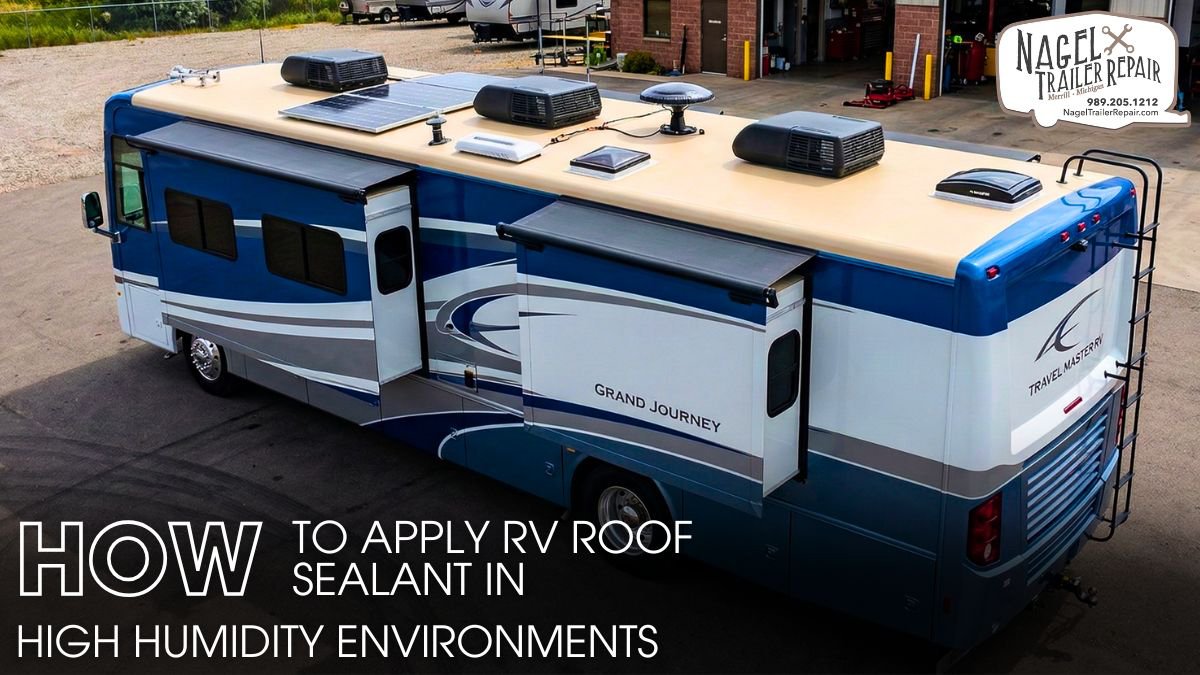
High humidity can make RV roof maintenance frustrating. Moist air slows drying, weakens adhesion, and often leaves RV owners unsure whether the sealant will hold. If you want a durable roof repair, you must understand how moisture affects every step of the sealing process.
Many RV owners struggle when applying sealant in damp conditions. Moisture trapped under the sealant can cause cracks, leaks, or early failure. Without the right preparation and timing, even high-quality products may not perform as expected.
This guide explains practical techniques to handle humid conditions with confidence. You will learn simple preparation, application, and curing tips that make RV roof sealing in Michigan more reliable, even when humidity levels stay high.
RV Roof Sealant Basics:
Your RV roof protects everything inside your vehicle—from furniture and electronics to insulation and structural components. Because RVs constantly move and face changing weather conditions, the roof experiences much more stress than a traditional home roof. That is why sealant plays such an important role in protecting your RV.
RV roof sealant forms a flexible waterproof layer that closes small gaps, seams, and joints on the roof. Areas around vents, skylights, antennas, ladders, and air-conditioning units are especially vulnerable to leaks. When these areas remain properly sealed, rainwater cannot seep inside and cause damage.
Humidity adds another layer of complexity. When the air contains a lot of moisture, sealants may take longer to dry or may not bond as strongly to the roof surface. If moisture remains on the roof during application, it can prevent the sealant from forming a proper bond.
Several factors influence how well sealant works in humid conditions:
- Moisture present on the roof surface
- Air humidity levels during application
- Type and quality of sealant used
- Surface preparation before sealing
- Proper curing time after application
Challenges of High Humidity:
Humidity is often dismissed as a minor weather detail, yet it plays a critical role in the success of RV roof sealant applications. Moisture in the air actively interferes with the chemical curing process of many sealants and can create an invisible barrier between the product and the roof membrane.
Even on a surface that appears completely dry, high humidity can deposit a microscopic layer of moisture. This film prevents the sealant from achieving a full, airtight bond, significantly weakening its grip and leading to premature failure such as peeling or cracking shortly after application.
Beyond surface-level interference, humidity poses a threat by becoming trapped beneath the sealant layer. When sealant is applied over a roof that has absorbed ambient moisture, or if condensation forms during the application process, water can be permanently sealed underneath.
Why RV Roof Sealants Bubble and Blister?
Some common problems caused by humidity include:
- Sealant failing to bond properly
- Slow or uneven curing
- Bubbling or blistering under the sealant
- Reduced durability of the seal
- Higher risk of leaks developing later
Temperature fluctuations pose a serious threat to RV roof integrity, often compounding existing vulnerabilities. Consider a typical scenario: a humid, moisture-laden morning gives way to intense afternoon sunlight.
This rapid transition causes roofing materials—particularly sealants and membranes—to undergo quick expansion. If the sealant application is fresh and hasn’t fully cured, this sudden stress can break its bond, causing it to pull away from the surface and creating gaps where water can infiltrate.
Because humidity and temperature swings introduce such complexities, trusting the job to professionals is a wise investment. Expert technicians specializing in RV roof repair possess a deep understanding of how regional weather patterns impact different sealant chemistries.
They don’t just apply materials; they select the right product for the current conditions and know the precise application techniques required to ensure a durable, flexible bond that moves with the RV.
Furthermore, true professionals exercise patience and foresight. They carefully monitor hyperlocal weather forecasts, planning the repair for a window of stable, moderate conditions. By choosing to apply sealant when humidity is low and temperatures are steady, they create the optimal environment for curing, which dramatically extends the lifespan of the repair and ensures maximum protection for your vehicle
Tools and Materials Needed:
Before starting any roof sealing project, thorough preparation is the most critical step to ensuring success. It is essential to gather the right tools and materials well in advance, as scrambling for equipment mid-project can lead to mistakes and safety hazards. Having everything prepared—from safety harnesses and ladders to the specific sealant required for your roofing material—helps ensure a smooth, efficient, and uninterrupted workflow.
Using proper tools directly impacts the longevity and quality of the finished seal. Specialized equipment, such as wire brushes or scrapers, allows you to remove old, brittle sealant and debris safely without damaging the underlying shingles or membrane.
A powerful leaf blower or shop vacuum is vital for cleaning the roof thoroughly, ensuring the surface is free of dust and mildew, which prevents the new sealant from adhering properly. Furthermore, having the right caulking guns or trowels enables you to apply new sealant evenly and consistently, eliminating thin spots that might leak in the future.
Common tools used during RV roof sealing include:
- Plastic scrapers for removing old sealant
- Soft brushes for cleaning the roof
- RV-friendly cleaning solutions
- Microfiber cloths or towels
- Caulking gun for sealant application
- Sealant smoothing tools
- Protective gloves and safety glasses
- Ladder or roof access equipment
Michigan RV Roofing Material Choice:
Choosing the correct sealant product is equally important. Not all sealants perform well in humid environments. Some products cure better when exposed to moisture, while others require dry conditions.
Typical sealant options include:
- Self-leveling sealants for horizontal roof surfaces
- Non-sag sealants for vertical edges and seams
- Silicone-based sealants for weather resistance
- Polyurethane sealants for strong bonding
- Butyl sealants for flexible waterproof sealing
Preparing the RV Roof Surface:
Proper preparation is the cornerstone of any successful roof sealing project. Even the highest quality sealants will fail to perform if applied to a surface that is dirty, damp, or compromised. Investing time in the prep work ensures the sealant adheres correctly and provides long-lasting protection.
Begin by removing all loose debris from the roof. Leaves, twigs, dust, and other small particles can create a barrier that prevents the sealant from bonding effectively. Use a soft brush or broom to sweep the entire surface, paying special attention to corners and areas where debris tends to accumulate.
After sweeping, give the roof a thorough wash. Using a cleaner specifically designed for RV roofs helps eliminate embedded dirt, mold, mildew, and old residues. Apply the solution as directed, scrub gently if needed, and rinse completely. This step ensures the surface is not only clean but also primed for maximum adhesion.
Finally, allow the roof to dry fully. Moisture is the enemy of adhesion, so check the forecast and plan your project for a dry window. Once the surface is clean and completely dry, you are ready to move forward with confidence.
A proper cleaning process usually includes:
- Sweeping away loose debris
- Washing the roof with a gentle cleaning solution
- Scrubbing stubborn dirt or stains
- Rinsing the surface with clean water
- Allowing the roof to dry completely
Once the roof is clean, inspect it carefully for damage. Look around vents, seams, and fixtures where leaks commonly develop.
Check for signs such as:
- Cracked or brittle sealant
- Loose roof fixtures
- Small gaps around seams
- Areas where old sealant is peeling
Scrape Away Damaged Sealant Safely:
Begin by carefully removing any old, damaged, or deteriorated sealant from the roof seam or repair area. It is imperative to use a plastic scraper or a stiff nylon brush for this task. Avoid using metal tools such as putty knives or wire brushes at all costs, as these can easily cut, gouge, or puncture the underlying roof membrane, leading to leaks and significant long-term damage.
Once the bulk of the old sealant has been removed, thoroughly clean the area once more to eliminate any fine residue, dust, or debris left behind. This meticulous cleaning process is crucial because it ensures that the new sealant can achieve a direct, strong, and permanent bond to the clean roof surface itself, rather than sticking to loose particles or old material.
Pay close attention to humidity levels during your repair. High moisture in the air makes the drying process critically important. Even microscopic amounts of trapped moisture or condensation can reactivate solvents or prevent adhesion, significantly weakening the new seal. Therefore, after cleaning, allow the roof surface plenty of time to dry completely before you attempt to apply any new sealant.
Some helpful preparation tips include:
- Checking the weather forecast before starting
- Working during times of lower humidity
- Using clean towels to remove leftover moisture
- Avoiding sealing immediately after rainfall
Many RV owners search for “RV repair near me” when they realize that roof preparation requires careful inspection and experience. Professional technicians can detect hidden issues and prepare the roof properly before sealing begins. Proper preparation ensures the sealant adheres correctly and provides long-term protection.
Applying Roof Sealant Correctly:
Areas that typically require sealing include:
- Roof seams and edges
- Skylights and vents
- Air conditioner mounts
- Antenna bases
- Ladder brackets and roof accessories
To ensure a proper seal, always apply thin, even layers of sealant rather than thick patches. Thick applications can trap moisture underneath, significantly slowing down the curing process, especially during periods of high humidity or damp weather.
Mastering RV Roof Protection:
Additional tips for successful sealing include:
- Work in shaded areas when possible
- Avoid applying sealant before rain
- Keep the application steady and controlled
- Double-check coverage around seams and corners
Post-Application Care:
After applying the sealant, the curing stage becomes very important. The sealant must harden properly before the roof faces heavy use or harsh weather. Humidity often increases curing time. Some sealants that normally dry within a few hours may require additional time in moist conditions.
During the curing process, avoid activities that could disturb the fresh seal.
RV owners should:
- Avoid driving the RV immediately after sealing
- Protect the roof from rain when possible
- Keep dust and debris away from the surface
- Allow the sealant enough time to cure fully
Once the sealant has cured, inspect the sealed areas carefully. Look for smooth edges and strong adhesion around seams and fixtures. Routine maintenance also helps keep the roof in good condition. Experts recommend inspecting RV roofs at least twice each year.
Regular roof maintenance may include:
- Checking sealant for cracks or damage
- Cleaning the roof surface periodically
- Reapplying sealant where necessary
- Addressing small issues before they worsen
Humidity can gradually weaken sealant over time, especially if it was applied incorrectly. Regular inspections help detect early signs of wear before leaks develop.
Many RV owners schedule maintenance with professionals who specialize in RV roof sealing services. Experienced technicians can identify potential problems early and apply additional sealant when needed. Taking care of the roof ensures your RV stays dry, safe, and ready for travel.
The Role of Professional Maintenance:
Maintaining an RV roof requires more than occasional inspections, especially in regions with challenging weather conditions. High humidity can make sealant application difficult because moisture affects adhesion and curing time.
Professionals understand how to prepare the roof surface properly, choose the right sealant, and apply it in a way that creates a durable, watertight barrier even when humidity levels are high. Their experience helps prevent trapped moisture, uneven sealing, and premature sealant failure.
Seasonal temperature changes also place heavy stress on RV roofs. In colder regions, repeated freezing and thawing can cause roofing materials to expand and contract, which may lead to cracks, loose seams, or weakened sealant. Professional technicians monitor these problem areas and perform timely repairs before small issues become costly leaks. Regular maintenance not only protects the roof structure but also extends the lifespan of the RV, ensuring it stays safe and reliable for every trip.
Conclusion:
Applying RV roof sealant in humid environments requires careful preparation, proper materials, and the right application techniques. Moisture can affect adhesion, curing time, and long-term durability, which is why every step—from cleaning the roof to monitoring curing conditions—must be handled correctly. Regular inspections and timely maintenance also play a key role in preventing leaks and costly structural damage.
If you want dependable protection for your RV, Nagel Trailer Repair offers professional RV roof sealing in Michigan to ensure the job is done safely and effectively. Expert technicians understand humidity challenges and apply sealants with precision, helping your RV roof stay durable, watertight, and ready for every journey.