


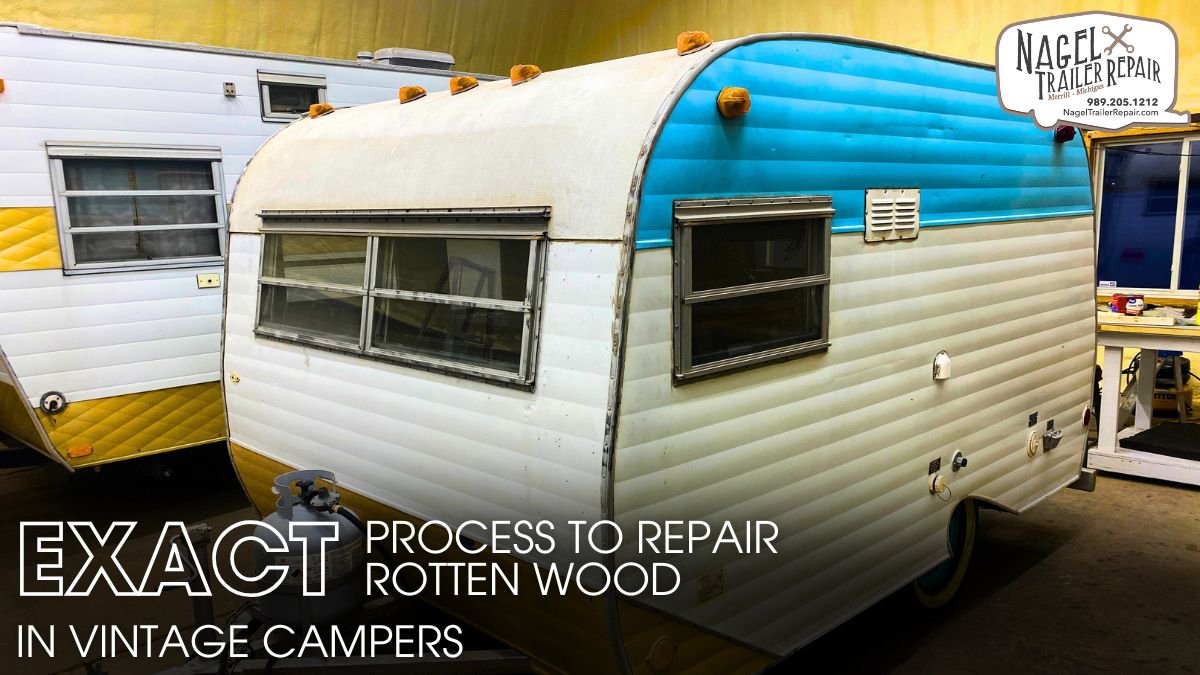
Water stains, spongy floors, and walls that no longer feel solid often signal a deeper problem hiding inside a vintage camper. Wood rot does not appear overnight, but once it takes hold, it spreads quietly and aggressively. What begins as a small leak can quickly compromise framing, flooring, and structural joints that hold the camper together. Left untreated, rot turns restoration dreams into expensive rebuilds.
Many camper owners struggle because wood rot rarely shows its full extent at first glance. Surface panels can look intact while the structure behind them continues to decay. Without a clear process, repairs become trial and error, leading to repeated failures and wasted time. In moisture-prone regions like the Great lake States, seasonal weather actively accelerates deterioration, making this a critical concern for vintage camper repair Michigan services.
This guide walks through the exact, proven process used by experienced restorers to repair rotten wood correctly. You will learn how to identify damage, remove it completely, rebuild with confidence, and seal the camper to prevent future problems. When done right, these steps restore strength, safety, and long-term reliability.
Understanding Wood Rot Damage:
Wood rot develops when moisture remains trapped inside camper structures for long periods. Vintage campers are especially vulnerable because they were built with thinner materials, minimal vapor barriers, and sealants that degrade over decades. Once water enters through a roof seam, window frame, or corner joint, it often travels far beyond the original leak point.
Rot weakens wood from the inside out. The fibers lose strength, fasteners loosen, and load-bearing members begin to fail. Floors may sag, walls may bow, and cabinets may shift out of alignment. In Michigan’s climate, freeze-thaw cycles worsen this damage by expanding cracks and pulling moisture deeper into the structure.
Rot most often develops in predictable areas, including:
- Roof edges and front or rear caps
- Window and door openings
- Lower wall sections near wheel wells
- Floor-to-wall transition points
Understanding how rot behaves allows restorers to anticipate hidden damage rather than reacting to it. In camper restoration Michigan work, recognizing these patterns prevents incomplete repairs and protects the overall structure.
Inspecting and Confirming Rot:
Inspection sets the foundation for a successful repair. Relying only on what you can see almost guarantees missed damage. Rot commonly hides behind interior panels, insulation, and exterior skins that still appear intact.
Start by applying gentle pressure to suspect areas. Softness, flexing, or unusual movement often signals compromised wood underneath. Discoloration, staining, or persistent odors also point to long-term moisture exposure. Moisture meters help quantify the problem, but physical probing remains one of the most reliable methods.
During inspection, pay close attention to:
- Wood that crumbles or flakes when probed
- Fasteners that pull out easily
- Rust stains around screws or staples
- Mold growth behind panels
Documenting damage as you inspect helps define the repair scope. Professional camper repair Michigan service depends on knowing where damage stops—not guessing. A thorough inspection prevents repeated tear-downs and ensures repairs address the real problem.
Preparing for Wood Removal:
Preparation protects both the camper and the quality of the repair. Removing rotten wood without proper support can cause walls or floors to shift, creating alignment issues that are difficult to correct later.
Begin by stabilizing the camper on level ground. Support the frame and floor evenly to prevent movement once structural components are removed. Disconnect electrical, plumbing, and propane systems to avoid damage or safety hazards during demolition.
Interior components should be removed carefully and methodically. Cabinets, trim, and panels often need to come out to access framing. Labeling parts and hardware simplifies reassembly and preserves originality.
Effective preparation includes:
- Wearing protective gear for mold exposure
- Isolating work areas to control debris
- Removing panels without damaging skins
- Verifying structural support before cutting
In vintage trailer repair Michigan project, careful preparation distinguishes professional-grade work from rushed repairs that introduce new problems.
Removing Rotten Wood:
Complete removal of rotten wood is non-negotiable. Leaving even small sections of compromised material allows decay to continue beneath new repairs. Many failed restorations trace back to partial removal that concealed, rather than eliminated, the problem.
Cut back damaged areas gradually until you reach solid, dry wood that resists probing. This may require removing more material than expected, but it ensures the repair lasts. Inspect surrounding framing carefully, as rot often spreads along joints and fastener lines.
Once removal is complete, clean exposed areas thoroughly. Remove debris, dust, and organic material that could retain moisture. Treat adjacent wood with antifungal or wood-hardening products to stabilize fibers and prevent recurrence.
Successful removal follows a few key rules:
- Never rebuild over questionable wood
- Remove damage beyond visible rot
- Clean and treat all exposed surfaces
- Confirm dryness before rebuilding
For durable vintage camper repair Michigan services, this step determines whether the repair will last years or fail within months.
Rebuilding and Reinforcing:
Rebuilding restores strength and often improves upon original construction. Replacement materials must match original dimensions to maintain proper alignment while offering improved durability where possible.
Use high-quality lumber suited for moisture resistance, especially in floors and lower walls. Marine-grade plywood or treated wood performs well in vulnerable areas. Adhesives and fasteners should resist corrosion and withstand vibration during travel.
Rebuilding is also the time to reinforce weak points. Many vintage campers benefit from additional bracing at corners, floor edges, and roof transitions. Proper alignment ensures doors close correctly, walls remain square, and loads distribute evenly.
Effective rebuilding focuses on:
- Restoring structural load paths
- Reinforcing joints and stress points
- Maintaining square and level geometry
- Securing all fasteners properly
In Michigan camper restoration project, rebuilding is not about cosmetic fixes. It is about restoring confidence that the camper can safely handle travel, weather, and long-term use.
Sealing and Preventing Future Rot:
Sealing determines whether your repair succeeds long-term. Even the best structural work fails if moisture finds its way back inside. Every seam, penetration, and joint must be sealed using materials compatible with the camper’s construction.
Focus first on high-risk areas such as roof seams, window frames, corner trim, and exterior fasteners. Use proven sealants designed for flexibility and long-term exposure. Interior reassembly should also account for airflow to reduce condensation buildup.
Preventive care does not end when repairs are complete. Ongoing inspection and maintenance protect your investment and extend the life of the camper.
Key prevention practices include:
- Resealing critical areas on a schedule
- Monitoring interior humidity levels
- Inspecting after heavy rain or storage
- Addressing small leaks immediately
For long-lasting vintage trailer repair Michigan services, prevention transforms repairs into true restoration rather than repeated fixes.
The Role of Professional Maintenance:
Professional maintenance plays a critical role in preserving both the structure and livability of a vintage camper. Experienced technicians do more than fix visible damage—they follow a method-driven approach that addresses hidden weaknesses before they become major failures.
When dealing with wood deterioration, professionals know how to trace moisture intrusion back to its source, remove all compromised material, and rebuild structural sections without disturbing surrounding components. This precision prevents recurring rot and ensures repairs hold up under travel stress and seasonal weather changes.
Interior restoration demands the same level of expertise. Skilled specialists understand how vintage materials age and how to restore walls, cabinetry, flooring, and finishes without sacrificing structural integrity or historical character. They balance modern durability with original design, ensuring interiors remain functional, safe, and visually authentic.
Ongoing professional maintenance also includes regular inspections, resealing, and system checks that extend the life of both structural repairs and interior upgrades. By investing in professional care, owners reduce long-term costs, avoid repeat damage, and maintain confidence that their vintage camper remains road-ready and reliable.
Conclusion:
Restoring a vintage trailer is a labor of love that requires patience, precision, and the right techniques to ensure structural integrity for years to come. By following this exact process—from identifying the source of moisture to replacing damaged framing and sealing the exterior—you can successfully halt decay and preserve the nostalgic charm of your mobile home. While DIY wood restoration is rewarding, some structural damage requires a professional touch to guarantee safety on the open road.
If you find yourself overwhelmed by extensive rot or need expert assistance with your restoration project, the team at Nagel Trailer Repair is here to help. For high-quality vintage camper repair Michigan services, contact us today to get your classic trailer back in peak condition for your next adventure.