

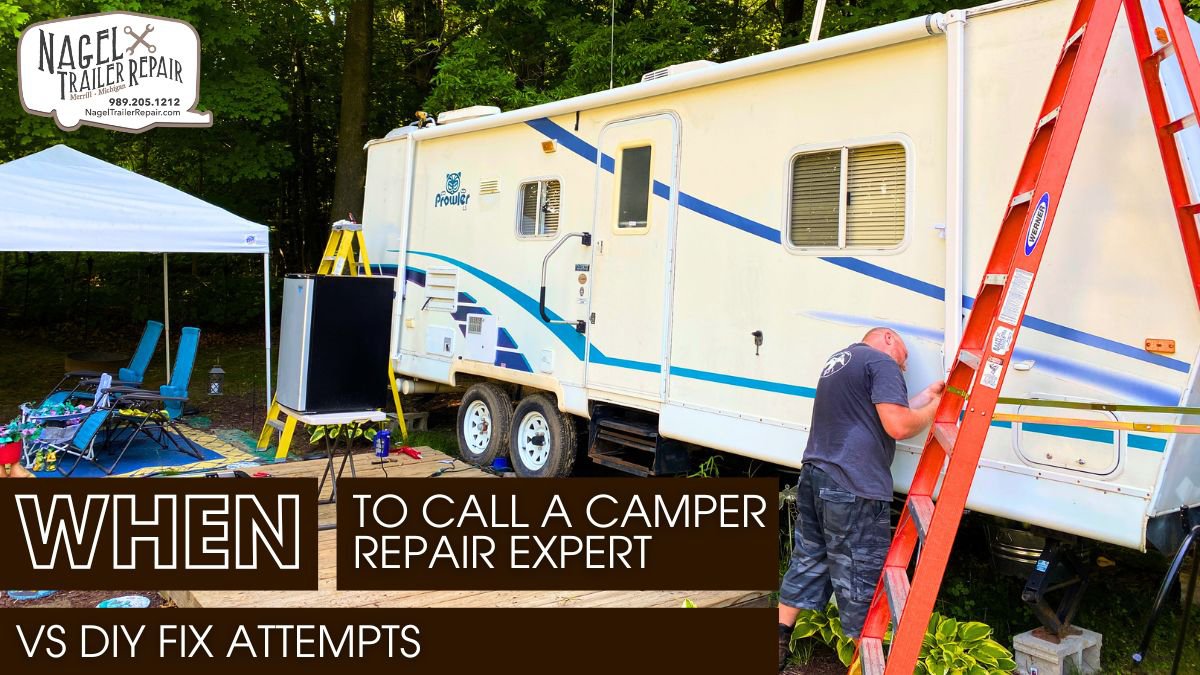
A sudden camper breakdown can turn your adventure into stress within minutes. Whether you’re parked at a scenic campsite or preparing for a long trip, unexpected issues demand quick decisions. Knowing when to grab your tools and when to step back can make all the difference.
Many camper owners jump into DIY fixes to save money, only to face bigger problems later. Electrical faults, hidden leaks, or structural damage often go unnoticed until they become costly repairs. Without the right skills or tools, a simple fix can quickly spiral out of control.
This guide helps you decide when to DIY or call a camper repair expert in Michigan. Avoid costly mistakes and protect your investment by choosing professional care. Keep your travels stress-free and get back on the road safely—your next great adventure deserves a reliable rig!
Understanding Camper Repair Basics:
When you work on a camper, you are dealing with a compact but highly integrated system. Every component—electrical, plumbing, structural, and HVAC—depends on another. If one system fails, it often creates a chain reaction that affects multiple areas.
Most campers run on a dual electrical setup. The 12V DC system powers essentials like lights, fans, and water pumps, while the 120V AC system operates when you connect to shore power. A failing converter or weak battery doesn’t just dim your lights—it can interrupt your entire power distribution and damage sensitive electronics.
Water systems also require attention. Even a small leak can travel through insulation, wood framing, and flooring. Over time, that moisture leads to rot, mold, and structural weakness. Roof materials like EPDM or TPO membranes naturally degrade, and once seals fail, water intrusion becomes almost inevitable.
To approach repairs correctly, you need to think diagnostically, not reactively. That means understanding how to trace problems back to their source rather than fixing what you see on the surface.
Key fundamentals every camper owner should follow:
- Identify the root cause before touching tools
- Separate electrical, plumbing, and structural issues
- Use a multimeter to verify voltage and continuity
- Inspect seals, joints, and load-bearing areas regularly
When you build this foundation, you reduce guesswork and avoid turning small issues into major repairs.
Benefits of DIY Camper Repairs:
DIY repairs can be extremely effective when you stay within your technical limits. They give you control, reduce downtime, and help you maintain your camper proactively.
The most obvious advantage is cost savings. Labor charges in RV repair shops can be high, especially for routine fixes. When you handle basic maintenance yourself, you eliminate those recurring service costs and only pay for materials.
DIY also builds practical knowledge. As you work through repairs, you begin to understand how your camper is wired, how water flows through the system, and how different components interact. This knowledge becomes invaluable when something goes wrong during a trip.
Another major benefit is flexibility. When you are traveling, you cannot always rely on nearby repair shops. Being able to fix minor issues on your own keeps your trip on track and prevents unnecessary delays.
You can safely handle tasks like:
- Replacing blown fuses and faulty switches
- Sealing roof seams and window edges
- Fixing minor plumbing leaks or loose fittings
- Installing new batteries or upgrading solar setups
- Troubleshooting basic wiring issues
However, successful DIY work requires discipline. You must follow proper repair methods, use the right materials, and avoid shortcuts. When done correctly, DIY repairs extend your camper’s lifespan and keep maintenance costs predictable.
Limits of DIY Repair Attempts:
DIY has clear limits, especially when repairs become complex or involve hidden damage. This is where many camper owners make costly mistakes.
Electrical systems are one of the biggest risk areas. Modern campers include converters, inverters, transfer switches, and battery management systems. If you miswire a connection or misdiagnose a fault, you can damage expensive components or create serious safety hazards like short circuits or overheating.
Water damage is another area where DIY often falls short. What looks like a small stain on the ceiling may indicate widespread internal damage. Moisture can spread through layers of insulation and wood, weakening the structure from the inside out. Surface repairs do not address the real problem.
Structural repairs are even more sensitive. Camper frames and walls are engineered to balance weight and flexibility. If you attempt to fix cracks, delamination, or sagging areas without proper techniques, you risk compromising the entire structure.
Common DIY limitations include:
- Inability to detect hidden moisture or internal rot
- Lack of advanced diagnostic tools
- Misreading electrical layouts and wiring paths
- Improper sealing that leads to repeat leaks
- Overlooking long-term structural impact
At this stage, DIY stops being cost-effective. What starts as a money-saving attempt often turns into a much larger repair bill.
Signs You Need a Camper Repair Expert:
Knowing when to call a professional can save you thousands of dollars and prevent irreversible damage. Certain issues require specialized tools, training, and experience.
Electrical problems should never be taken lightly. If your camper shows inconsistent power, frequent breaker trips, or inverter issues, you need expert diagnostics. Professionals use load testing and circuit tracing to pinpoint the exact fault without damaging the system.
Water intrusion is another major red flag. Soft flooring, wall discoloration, or a persistent musty smell indicates deeper structural damage. Experts use moisture meters and thermal imaging to locate hidden leaks and assess the full extent of the damage.
Structural issues demand immediate attention. If you notice wall bulging, roof sagging, or frame cracks, you are dealing with compromised integrity. These repairs require precise reinforcement and specialized materials.
Call a repair expert when you notice:
- Fluctuating or unreliable electrical power
- Persistent leaks or unexplained moisture
- Mold growth or strong odors
- Visible structural deformation
- Appliance failures involving gas or high voltage
- Wall or roof delamination
Hiring a professional at the right time prevents minor issues from escalating into major financial burdens.
Cost Comparison: DIY vs Expert
At first glance, DIY repairs seem cheaper. But when you factor in long-term costs, the picture changes significantly.
DIY costs include tools, materials, and your time. High-quality sealants, electrical components, and diagnostic tools can add up quickly. If you make mistakes, you may need to redo the repair or replace damaged parts, increasing overall expenses.
Professional repairs involve higher upfront costs, but they deliver accuracy and durability. Technicians diagnose the root cause quickly and fix the issue correctly the first time. Most reputable repair shops also provide warranties, which protect you from repeat costs.
The financial advantage of hiring an expert becomes clear when you consider long-term impact:
- Prevents secondary damage across systems
- Reduces repeat repair costs
- Maintains camper resale value
- Minimizes downtime and travel disruptions
- Ensures compliance with safety standards
For example, a poorly sealed roof might cost a small amount to fix initially, but if it leads to structural rot, the repair cost can multiply several times. A professional repair, although more expensive upfront, eliminates that risk.
Smart camper owners treat professional repairs as an investment, not an expense.
How to Choose a Repair Expert?
Choosing the right repair expert is just as important as deciding to hire one. The quality of the repair depends heavily on the technician’s expertise and approach.
Start by checking certifications and technical training. Qualified technicians follow industry standards and understand the complexities of camper systems. Experience with your specific type of camper adds another layer of reliability.
Reputation matters. Look for consistent positive reviews, detailed customer feedback, and proven work history. A trustworthy repair shop will be transparent about diagnostics, pricing, and timelines.
You should also evaluate how they approach problem-solving. A skilled technician performs a thorough inspection before recommending any repair. If someone jumps straight to a solution without proper diagnostics, it’s a warning sign.
When selecting a repair expert, focus on:
- Verified certifications and hands-on experience
- Clear and detailed repair estimates
- Warranty coverage on parts and labor
- Use of advanced diagnostic tools
- Realistic timelines and communication
A reliable expert doesn’t just fix the issue—they ensure your camper performs reliably in the long run.
The Role of Professional Maintenance:
Regular professional maintenance keeps your camper reliable and prevents small issues from turning into expensive failures. While handling basic fixes yourself makes sense, trained technicians bring diagnostic accuracy that most DIY attempts can’t match. They identify hidden electrical faults, moisture intrusion, and early-stage structural damage before they escalate.
Seasonal factors, especially spring moisture, often affect battery performance. Increased humidity can accelerate corrosion on terminals, weaken connections, and reduce charging efficiency. A professional inspection ensures your battery system, wiring, and converter operate within safe parameters.
Experts also use specialized tools to test load capacity, detect voltage drops, and locate concealed leaks—areas where DIY efforts usually fall short. Investing in routine professional servicing not only extends your camper’s lifespan but also reduces long-term repair costs and unexpected breakdowns.
Conclusion:
Handling minor repairs yourself can save money and keep your camper in good condition. When you stay within your limits and follow proper techniques, DIY becomes a practical and cost-effective approach.
However, complex issues require professional expertise. Electrical faults, structural damage, and hidden leaks demand precision, and delaying expert intervention often increases repair costs significantly.
The best strategy is to balance DIY with pro help. Handle simple fixes, but for safety, trust a camper repair expert in Michigan. Nagel Trailer Repair ensures your rig stays road-ready, protecting your investment and making every trip stress-free. Book your service today!