


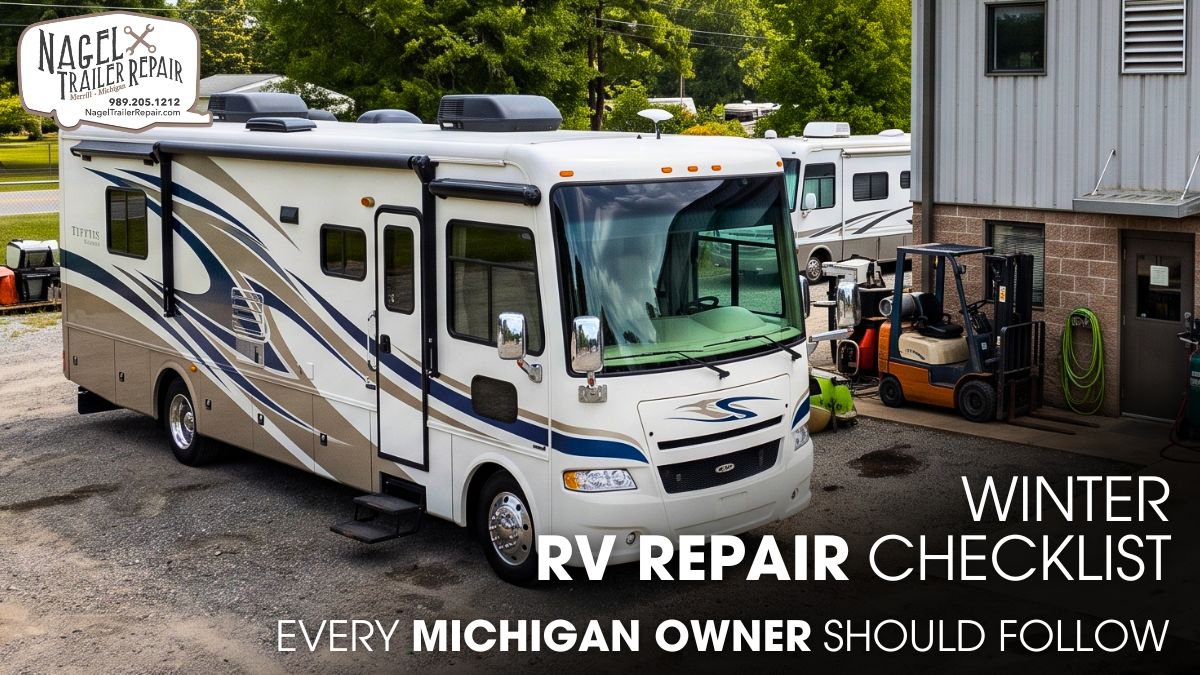
Michigan winters can put your RV through freezing temperatures, heavy snow, and harsh moisture. A small repair issue that seems harmless in fall can become a costly problem when winter arrives.
Frozen pipes, weak batteries, damaged seals, and underinflated tires can leave your RV vulnerable to serious winter damage. Ignoring these areas may lead to expensive repairs and reduce your RV’s reliability.
Prepare your vehicle for Michigan’s harsh winter by checking vital systems, sealing vulnerable areas, and addressing repairs early. An RV expert in Michigan can identify hidden problems and prevent costly cold-weather damage. Schedule professional repair services now to keep your rig protected and road-ready when spring arrives.
Inspect the RV Exterior:
Michigan’s freeze-thaw cycle makes exterior inspection a critical repair step. Start at the roof and examine every seam, vent, skylight, antenna mount, ladder attachment, and air-conditioner opening. Look for cracked sealant, gaps, lifted membrane edges, soft spots, and water staining. A small opening can let moisture into the roof deck or wall, where freezing water can accelerate delamination and structural deterioration.
Check slide-out seals, window gaskets, entry-door weatherstripping, and storage-compartment seals. Replace brittle seals and use a sealant compatible with the roof or exterior material. Avoid applying a new product over incompatible or poorly prepared sealant.
Inspect the underbody for corrosion, damaged insulation, loose panels, exposed wiring, and weakened propane lines before winter arrives. An experienced RV repair shop in Michigan can identify these issues early and complete the necessary repairs, helping protect your RV from costly cold-weather damage.
Key exterior checks:
- Inspect every roof penetration and seal.
- Check for soft spots and interior water stains.
- Examine slide-out and compartment seals.
- Inspect exterior lights for cracked housings.
- Repair corrosion and exposed wiring.
- Check the underbody for damaged insulation.
Protect the RV Plumbing:
Winterization requires more than draining the freshwater tank. Freezing water expands and can crack fittings, valves, filters, pumps, and appliance connections. Follow the RV manufacturer’s procedure and drain the freshwater tank, water heater, gray tank, black tank, and low-point lines.
Open faucets and flush the toilet to release trapped pressure. If your water heater uses an anode rod or drain plug, let it cool completely before servicing it. For stored RVs, use the approved compressed-air blowout or RV antifreeze method. If you use compressed air, stay within the manufacturer’s pressure specification. Excessive pressure can damage plumbing.
Use only non-toxic RV/marine antifreeze in potable-water systems. Never substitute automotive engine coolant. Check exterior shower valves, toilet valves, refrigerator water lines, ice makers, filter housings, and water-pump components because these areas can retain water.
If you live or travel in your RV during winter, ensure the heated underbelly receives proper furnace heat to prevent frozen pipes. When problems arise, reliable mobile RV repair supports in Michigan can identify issues early, protect your RV from winter damage, and keep your travels safe.
Plumbing priorities:
- Drain all tanks and low-point lines.
- Bypass the water heater before winterizing.
- Protect pumps, valves, and filters.
- Winterize refrigerator water lines.
- Use only RV-approved antifreeze.
- Inspect plumbing for existing leaks.
Check the RV Heating System:
Test the furnace before sustained freezing temperatures arrive. Raise the thermostat and confirm the blower starts, ignition completes, the burner operates steadily, and warm air reaches the registers. Inspect intake and exhaust openings for snow, ice, leaves, or nests. A blocked exhaust can create dangerous combustion conditions.
Inspect ductwork for crushed sections, disconnected joints, or restricted airflow. Check propane hoses and regulators for deterioration, but do not attempt complex gas-system repairs without proper training. Unusual odors, delayed ignition, soot, abnormal flame behavior, or repeated shutdowns require professional diagnosis.
Test carbon-monoxide and smoke alarms as well. Michigan State Police recommends professional furnace inspection and working carbon-monoxide protection during winter preparation.
For a reliable repair decision, consult an RV repair expert in Michigan. In 2026, furnace component repairs may cost about $165–$580, while replacement can range from $900–$2,600. Professional inspection helps identify the right solution, control costs, and restore dependable heating.
Heating-system checks:
- Test thermostat response and furnace startup.
- Inspect furnace intake and exhaust vents.
- Check ductwork for restrictions.
- Examine propane connections for deterioration.
- Test smoke and carbon-monoxide alarms.
- Investigate abnormal furnace cycling.
Service the RV Electrical System:
Cold temperatures reduce battery performance and expose weak connections. Inspect the house-battery bank, terminals, cables, fuses, and chassis grounds. Remove corrosion and tighten connections according to manufacturer specifications. Test battery condition rather than relying only on resting voltage.
Follow the correct storage procedure for your battery chemistry. Lead-acid and lithium batteries have different charging and temperature requirements, so never assume one storage method works for both.
Inspect the converter/charger, inverter, breaker panel, shore-power cord, transfer switch, and accessible wiring. Look for heat discoloration, melted insulation, corrosion, loose terminals, or repeated breaker trips. Test exterior marker lights, brake lights, turn signals, and critical 12-volt circuits before storage.
A loose electrical connection boosts resistance and heat, especially under heavy load. Replacing fuses repeatedly hides the real danger—don’t risk a fire or breakdown. Trust certified pros to diagnose and fix the root cause safely. For peace of mind on every trip, search “RV repair near me” today and protect your home on wheels.
Electrical inspection points:
- Clean battery terminals and ground connections.
- Verify the correct battery charging profile.
- Inspect shore-power plugs and cables.
- Check converter and inverter operation.
- Look for heat-damaged wiring.
- Test all critical 12-volt circuits.
Inspect Tires and Brakes:
RV tires can deteriorate while the vehicle sits unused. Check tire pressure when cold and follow the RV or trailer manufacturer’s specified pressure and load requirements. Do not automatically use the maximum pressure molded into the tire unless the vehicle specification requires it.
Inspect sidewalls and tread for cracks, bulges, cuts, exposed cords, and uneven wear. Record tire age as well as tread condition because rubber can lose structural integrity before the tread looks worn.
For towable RVs, inspect brake assemblies, magnets, wiring, breakaway switches, drums, hubs, bearings, and seals. Service wheel bearings according to the axle manufacturer’s schedule. Motorhome owners should inspect pads or shoes, rotors or drums, hydraulic lines, brake fluid, and parking-brake operation.
If you drive during winter, road salt can accelerate chassis corrosion. Protect your investment by washing salt and chemical residue from the underbody and running gear when conditions allow. For lasting safety and performance, trust professional RV services in Michigan to catch hidden damage and keep your home-on-wheels road-ready all season.
Tire and brake priorities:
- Check tire pressure when tires are cold.
- Inspect sidewalls for weather cracking.
- Verify tire age and load rating.
- Test the trailer breakaway system.
- Inspect brake wiring and assemblies.
- Check wheel bearings and seals.
Prepare for Michigan Winter:
After mechanical repairs, prepare the RV for storage or winter use. Wash and dry the exterior, clear debris from roof drainage areas, and remove leaves that can trap moisture. If you use a cover, select an RV-specific product and avoid creating abrasion points or excessive condensation.
Inside, remove food and clean appliances to discourage rodents. Inspect cabinets, storage bays, floor edges, and wiring paths for pest activity. Control humidity because condensation on cold surfaces can promote mold, corrosion, and material deterioration.
Follow the manufacturer’s guidance for snow accumulation. Remove excessive snow safely without scraping or puncturing the roof membrane, and avoid climbing onto an icy roof without proper equipment.
Preventive maintenance also makes financial sense. Current 2026 RV cost estimates put DIY winterization around $50 and professional winterization up to about $250. Minor roof-leak repairs commonly fall around $200–$800, plumbing repairs around $150–$800, and water-damage remediation can reach $2,000–$20,000. These are broad U.S. estimates rather than Michigan-specific quotes, but they demonstrate how quickly a small maintenance issue can become a major repair.
Before storage, document your winterization date, battery health, tire PSI, sealant fixes, furnace checks, and any flaws—snap photos for a spring baseline. But don’t just note problems; act now. Trust RV repairs in Michigan to handle issues professionally, saving you costly surprises. Schedule expert service today and enjoy peace of mind all season.
Michigan winter preparation checklist:
- Clean and dry the RV exterior.
- Clear leaves and debris from drainage areas.
- Use a suitable RV cover when appropriate.
- Remove food that can attract rodents.
- Control interior humidity and condensation.
- Inspect the RV after major snow events.
- Record completed repairs and winterization work.
The Role of Professional Maintenance:
Professional maintenance gives RV owners an extra layer of protection before Michigan’s freezing weather arrives. Experienced technicians can spot deteriorated sealants, weak roof membranes, hidden moisture, damaged flashing, plumbing vulnerabilities, and heating-system faults that a routine visual check may miss.
They can also use proper preparation techniques and RV-specific materials to complete repairs correctly. Catching these problems early can turn a potentially expensive repair into a manageable maintenance job and help prevent winter damage from spreading.
Regular professional inspections also make financial sense. A basic RV roof inspection may cost around $100–$300, while minor resealing can often fall near $200–$500. In contrast, hidden moisture that reaches the roof deck, insulation, or interior structure can push restoration costs into the thousands of dollars.
Keeping inspection reports, repair records, photographs, and estimates also gives owners useful documentation for future maintenance and potential insurance claims.
Conclusion:
Michigan’s winter conditions demand more than basic RV storage. A systematic inspection of the exterior, plumbing, furnace, electrical system, tires, brakes, and interior can prevent freeze damage and expensive spring repairs.
Complete your winter RV repair checklist before sustained freezing temperatures arrive. When you discover damaged seals, plumbing failures, electrical faults, brake concerns, or heating-system problems, turn to Nagel Trailer Repair for dependable solutions.
Work with an RV expert in Michigan to identify issues early, protect your RV from winter damage, and keep every system ready for safe, comfortable travel. Schedule professional RV repair services today and prepare with confidence.