
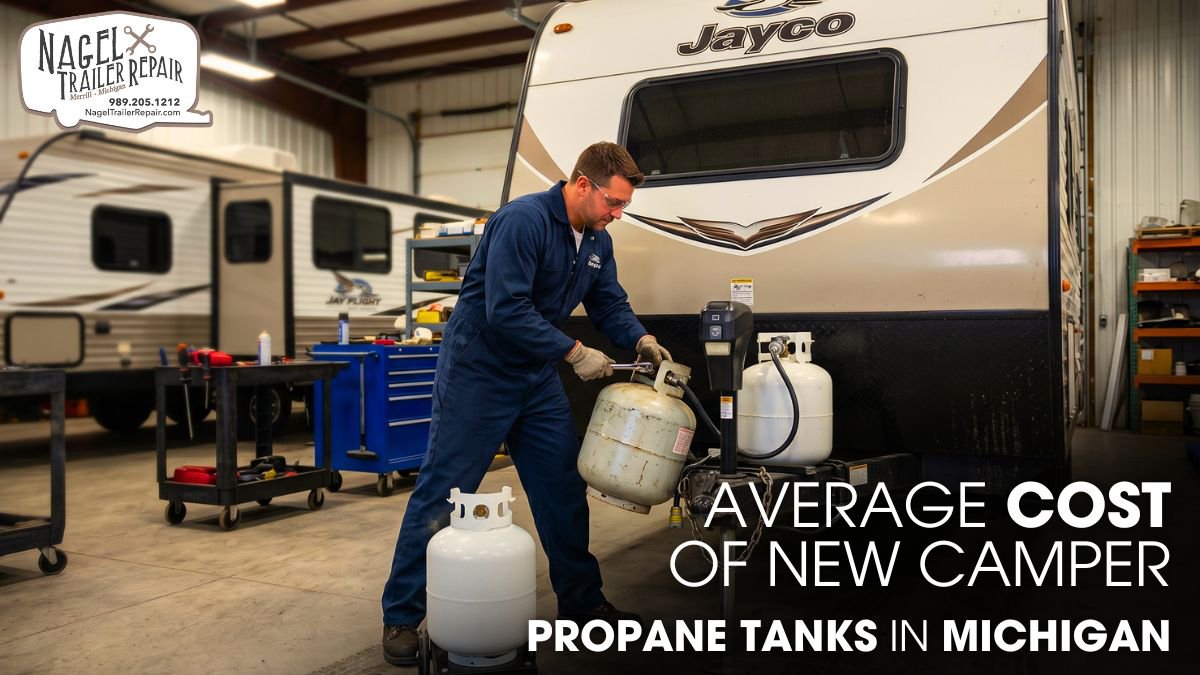
Buying a new camper propane tank in Michigan can quickly become confusing. Prices vary across retailers, tank sizes, materials, and brands, making it difficult for RV owners to determine a fair cost before making a purchase.
Many campers end up paying more than necessary because they overlook factors such as certification standards, seasonal demand, replacement requirements, and long-term ownership expenses. Without accurate pricing information, budgeting for a new propane tank becomes a challenge.
This guide, trusted by any camper expert in Michigan, breaks down new propane tank costs, pricing factors, and smart comparisons. Get the right tank, then boost safety and savings with professional camper repair services—your key to reliable, worry-free adventures.
Understanding Camper Propane Tanks:
Before comparing prices, it is important to understand what you are actually buying when you invest in a camper propane tank. Many RV owners focus on the upfront cost, but a propane tank is much more than a fuel container. It is a pressure-rated storage vessel engineered to safely hold liquefied petroleum gas (LPG) under controlled conditions. The quality of the tank directly affects safety, fuel efficiency, maintenance expenses, and long-term ownership costs.
Most travel trailers, fifth wheels, and truck campers use portable DOT-certified propane cylinders. These cylinders store propane in liquid form under pressure. As propane leaves the tank, it vaporizes and flows through regulators and fuel lines to power RV appliances such as furnaces, water heaters, refrigerators, cooktops, and generators.
For Michigan campers, propane consumption often increases because of cooler temperatures during spring, fall, and even summer evenings. A furnace can consume several pounds of propane per day during cold-weather camping. This makes tank capacity a critical factor when evaluating both convenience and operating costs.
The most common camper propane tank sizes include:
- 20-pound tanks that hold approximately 4.7 gallons of propane
- 30-pound tanks that hold approximately 7 gallons of propane
- 40-pound tanks that hold approximately 9.4 gallons of propane
Tank construction also plays a major role in pricing and performance. Steel tanks dominate the market because they provide excellent strength and affordability. Aluminum tanks cost considerably more but offer lower weight and superior resistance to corrosion. This can be particularly valuable in Michigan, where moisture, road salt, and seasonal weather changes can accelerate rust formation.
When evaluating propane tanks, buyers should pay close attention to:
- OPD (Overfill Prevention Device) valves
- Weld quality and structural integrity
- Protective collar design
- Exterior corrosion-resistant coatings
- DOT certification compliance
- Manufacturing date and warranty coverage
Choosing the right tank is not just a safety decision. It is also a financial decision that affects fuel storage capacity, maintenance expenses, replacement cycles, and overall camping convenience.
Average Propane Tank Prices in Michigan:
The average cost of a new camper propane tank in Michigan depends on numerous factors, including tank size, material type, manufacturing quality, retailer markup, and market demand. Buyers should understand that the advertised tank price rarely reflects the total investment required.
Current market pricing generally falls within the following ranges:
- 20-pound steel tanks: $35–$100
- 30-pound steel tanks: $70–$160
- 40-pound steel tanks: $120–$300
- Premium aluminum tanks: $180–$400+
Although these price ranges provide a useful benchmark, the final ownership cost often exceeds the shelf price. Many RV owners underestimate the additional expenses required to place a new propane tank into service.
Additional costs may include:
- Initial propane fill: $15–$40
- Regulator replacement: $25–$100
- Pigtail hoses: $10–$40
- Mounting brackets and hardware: $20–$75
- State sales tax
- Transportation or delivery charges
For example, a 30-pound propane tank listed for $95 can easily become a $150 investment after adding fuel, hardware, and installation accessories.
From a financial perspective, larger tanks often provide stronger value. A 30-pound cylinder generally costs only 30% to 60% more than a 20-pound tank while providing approximately 50% more fuel capacity. This improves storage efficiency and reduces the number of refill stops during extended camping trips.
Seasonal demand also affects propane tank pricing throughout Michigan. Demand typically rises between spring and midsummer as RV owners prepare for camping season. During these periods, retailers often reduce promotional activity because inventory moves quickly. Purchasing during late fall or winter frequently provides better opportunities for discounts and clearance pricing.
Factors Affecting Tank Costs:
Several technical and economic factors influence propane tank pricing. Understanding these variables helps buyers identify the best long-term value rather than simply selecting the lowest-priced product.
One of the most significant pricing factors is material selection. Steel remains the industry standard because it combines durability with relatively low production costs. However, steel requires ongoing maintenance to prevent rust and corrosion. Michigan’s climate can accelerate wear due to moisture exposure, temperature fluctuations, and road salt contamination.
Aluminum tanks cost substantially more but provide several long-term advantages:
- Excellent corrosion resistance
- Lower maintenance requirements
- Reduced towing weight
- Longer cosmetic lifespan
- Higher resale appeal
Manufacturing quality is another major cost factor. Premium propane tanks undergo extensive testing procedures before reaching consumers. These processes include pressure testing, weld inspection, leak detection, valve testing, and coating verification.
Economic conditions also influence pricing. Rising costs for steel, aluminum, labor, transportation, and energy all affect manufacturing expenses. When production costs increase, manufacturers and retailers typically pass a portion of those increases to consumers.
Warranty coverage contributes to pricing as well. A tank backed by a strong manufacturer warranty often costs more initially but may provide better financial protection over its service life.
Key pricing variables include:
- Raw material costs
- Manufacturing standards
- Safety testing procedures
- Certification requirements
- Freight and logistics expenses
- Brand reputation
- Warranty protection
- Retail profit margins
When viewed from a total cost-of-ownership perspective, a higher-quality tank frequently delivers better value than a lower-priced alternative.
New vs Used Propane Tanks:
Many RV owners explore the used market to reduce upfront costs. While used propane tanks can offer immediate savings, they also introduce technical and financial risks that buyers must carefully evaluate.
Typical used propane tank prices include:
- Used 20-pound tanks: $15–$50
- Used 30-pound tanks: $30–$100
- Used 40-pound tanks: $50–$150
At first glance, these prices appear attractive compared to new tanks. However, hidden costs often reduce the actual savings.
Federal regulations require propane cylinders to remain within certification requirements. Once a cylinder reaches the end of its certification period, it must undergo requalification before many refill stations will accept it.
Potential expenses associated with used tanks include:
- Requalification inspections
- Valve replacement
- Leak testing
- Corrosion repair
- Transportation costs
- Premature replacement
For example, a camper might purchase a used 30-pound tank for $50. If the cylinder requires a $25 inspection and a $20 valve replacement, the total investment quickly increases to $95 before adding propane. At that point, the cost difference between a used and new tank becomes much smaller.
New tanks provide several important advantages:
- Full manufacturer warranty
- Current certification compliance
- Longer expected service life
- Lower maintenance expenses
- Better resale value
- Greater operational reliability
When ownership costs are spread over ten years or more, new tanks often produce a lower annual cost than older cylinders that require repeated maintenance and inspections.
Where to Buy in Michigan?
Michigan consumers have several options when purchasing camper propane tanks. Each purchasing channel offers unique advantages related to pricing, product selection, technical expertise, and customer support.
RV dealerships frequently stock propane tanks designed specifically for recreational vehicle applications. Although dealership pricing may be slightly higher, buyers benefit from specialized knowledge and compatibility guidance. This expertise can prevent costly installation errors and improve system performance.
Hardware stores and agricultural supply retailers represent another popular purchasing option. These businesses often maintain large propane-related inventories and competitive pricing structures.
Benefits of buying locally include:
- Immediate product availability
- Competitive promotional pricing
- Easier warranty service
- Lower transportation costs
- Ability to inspect products before purchase
Online retailers have become increasingly popular because they provide broader product selections and transparent pricing comparisons. Buyers can evaluate specifications, reviews, and warranty terms across multiple brands before making a purchase decision.
However, shipping costs require careful consideration. Propane cylinders are heavy and bulky products. Freight expenses can significantly increase acquisition costs, particularly for larger 40-pound models.
Before making a purchase, buyers should compare:
- Base tank price
- Shipping and delivery costs
- Warranty coverage
- Included accessories
- Return policies
- Installation requirements
A detailed comparison often reveals substantial differences in total ownership costs that are not immediately apparent from advertised pricing.
Tips to Save on Propane Tank Purchases:
Reducing propane tank expenses requires a strategic approach. The lowest-priced tank is not always the most cost-effective choice. Smart buyers focus on total ownership costs rather than upfront spending alone.
One of the best ways to save money is by purchasing during the off-season. Demand for RV equipment typically declines during winter months, encouraging retailers to offer discounts and inventory-clearing promotions.
Comparison shopping remains equally important. Price differences between retailers can easily exceed 20%, especially for larger propane cylinders.
Additional cost-saving strategies include:
- Purchasing certified tanks only
- Comparing warranty terms carefully
- Evaluating total installed costs
- Avoiding unnecessary premium features
- Choosing the correct tank size for actual usage
- Monitoring seasonal sales and promotions
Buyers should also evaluate cost per gallon of propane storage. Larger tanks frequently provide a lower storage-cost ratio, making them more economical over time despite higher initial purchase prices.
Frequent RV travelers should consider lifecycle costs as well. Investing in a premium tank with stronger corrosion resistance, superior manufacturing quality, and longer warranty protection may reduce replacement and maintenance expenses over many years of use.
The most financially sound purchase balances acquisition cost, durability, maintenance requirements, warranty coverage, and expected service life. Taking a long-term ownership approach helps maximize return on investment while ensuring reliable propane storage for future camping adventures.
The Role of Professional Maintenance:
Professional maintenance plays a critical role in protecting both the safety and value of a camper. Experienced technicians can identify early signs of propane system wear, valve issues, regulator problems, and corrosion before they lead to expensive repairs or premature equipment replacement. Regular inspections also help owners maximize the lifespan of their fuel systems while avoiding unnecessary operating costs.
The same principle applies to camper roof maintenance. Professionals can detect small cracks, loose seals, and moisture intrusion that often go unnoticed until significant water damage occurs. Using high-quality sealants, roofing tapes, and compatible repair materials, they can perform durable repairs.
These repairs prevent recurring leaks and structural deterioration. Investing in routine maintenance may involve an upfront expense, but it often reduces long-term repair costs, improves reliability, and helps preserve the overall condition and resale value of the camper.
Conclusion:
The average cost of new camper propane tanks in Michigan varies considerably depending on tank size, material, certification status, and retailer. While a standard 20-pound tank may cost as little as $35, premium aluminum or high-capacity models can exceed $400.
Understanding the technical differences between tank types and evaluating long-term ownership costs can help RV owners make financially sound decisions. For reliable upkeep, trust Nagel Trailer Repair—your camper expert in Michigan.
By comparing retailers, buying off-season, and choosing certified high-quality tanks, you’ll maximize safety and value. Don’t wait—professional camper repair services keep your investment road-ready and worry-free.