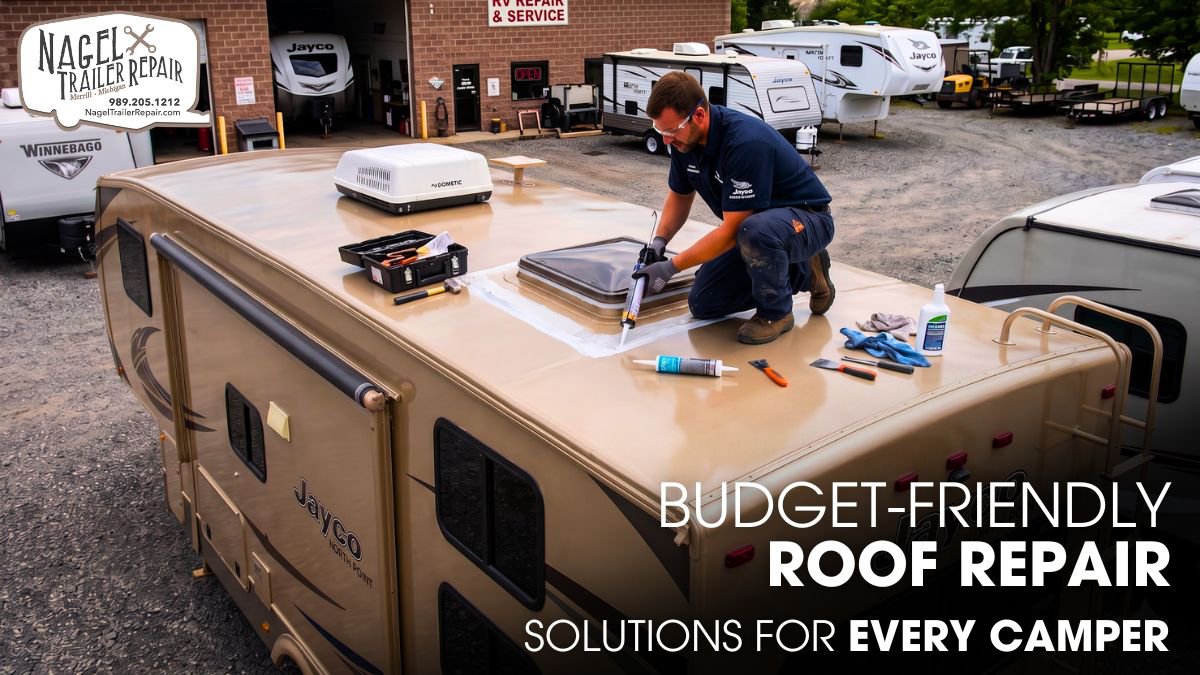
A leaking camper roof can quickly turn an exciting road trip into a costly headache. Water damage, mold growth, and weakened structural components often start with small cracks or worn seals that many campers overlook. The good news is that repairing roof damage does not always require a large budget or professional intervention.
Many camper owners struggle with unexpected repair costs and feel overwhelmed by the variety of products and roof repair methods available. Ignoring minor roof issues can lead to bigger problems, higher expenses, and interruptions to travel plans.
This guide delivers practical, budget-friendly roof repair solutions to fix common issues without overspending. Learn damage identification, affordable materials, and simple techniques—but for lasting protection, trust a camper roof expert in Michigan to ensure quality. Take action now and safeguard your investment!
Why Camper Roof Maintenance Matters?
When people think about camper maintenance, they often focus on tires, batteries, brakes, or engine performance. However, the roof deserves just as much attention because it protects every major system inside the camper. A small leak can compromise insulation, damage electrical wiring, weaken structural components, and create ideal conditions for mold growth.
Unlike residential roofs, camper roofs face unique challenges. Every mile traveled exposes the roof to vibration, twisting forces, sudden impacts, and changing weather conditions. During summer, roof surfaces can reach temperatures exceeding 140°F (60°C). At night, temperatures may drop dramatically. This constant cycle of expansion and contraction places stress on roofing materials and sealants.
Most campers use one of four roofing materials: EPDM rubber, TPO membrane, fiberglass, or aluminum. Each material performs differently under environmental stress. EPDM roofs remain flexible and resist UV damage well, while TPO roofs offer strong puncture resistance and energy efficiency. Fiberglass roofs provide durability but can develop stress cracks over time. Aluminum roofs resist corrosion but often require close monitoring around seams and fasteners.
From a financial perspective, roof maintenance delivers one of the highest returns on investment. Spending $50 to repair a deteriorating seam today can prevent thousands of dollars in water damage later. Many major camper restoration projects begin with leaks that owners initially considered insignificant.
Assessing Roof Damage on a Budget:
Before buying repair products or scheduling repairs, identify the exact source of the problem. Many camper owners waste money fixing visible symptoms instead of addressing the actual leak.
Start with a thorough visual inspection of the roof surface. Examine every seam, vent, skylight, air-conditioning unit, antenna mount, and solar panel bracket. These penetration points experience the highest risk of water intrusion because sealants around them gradually degrade over time.
Pay close attention to signs such as:
- Cracked or separated sealant
- Loose fasteners
- Membrane wrinkles
- Surface bubbling
- Soft roof decking
- Discolored roofing material
- Standing water areas
A soft section underfoot often indicates moisture damage beneath the roofing membrane. In many cases, water travels several feet from the original entry point before becoming visible. That movement makes accurate diagnosis critical.
Inside the camper, inspect ceilings, cabinets, wall corners, and storage compartments. Water stains, swollen wood, peeling wall coverings, and musty odors frequently reveal hidden leaks. Even small discoloration marks can indicate a developing moisture problem.
For owners seeking a more technical approach, a moisture meter provides valuable insight at a relatively low cost. Most consumer-grade moisture meters range from $20 to $60 and can help identify damp areas before visible damage appears. Some RV owners also use thermal imaging attachments for smartphones to locate temperature variations caused by trapped moisture.
Keeping inspection records creates additional financial benefits. By documenting roof conditions annually, owners can monitor deterioration patterns and budget for future maintenance instead of facing unexpected repair bills.
Best Materials for Camper Roof Repairs:
Choosing the right repair materials can significantly affect both repair performance and long-term costs. Many budget-conscious owners focus only on purchase price, but durability and compatibility often determine the true value of a repair product.
For most camper roofs, butyl-based repair tape provides one of the most economical solutions available. High-quality roofing tape forms a watertight seal, adapts to roof movement, and resists ultraviolet degradation. When installed correctly, it can deliver years of reliable performance.
Lap sealants remain another essential component of cost-effective roof maintenance. Self-leveling sealants work particularly well on horizontal surfaces because they flow into gaps and create continuous waterproof barriers. Non-sag sealants perform better on vertical surfaces where material movement must remain controlled.
Common budget-friendly repair materials include:
- Butyl repair tape
- Self-leveling roof sealant
- Non-sag seam sealant
- EPDM repair patches
- TPO repair systems
- Fiberglass repair kits
- Replacement screws with neoprene washers
Material compatibility is extremely important. Using household silicone or generic construction caulk may seem like a way to save money, but these products often fail prematurely and can interfere with future repairs. Incompatible materials frequently create adhesion problems that increase long-term repair costs.
From a financial standpoint, preventive repairs consistently outperform major restoration projects. Spending $100 on quality repair materials can prevent structural damage that may cost several thousand dollars to correct later.
DIY Roof Repair Methods:
Many camper roof repairs fall well within the capabilities of a careful do-it-yourself owner. The key to success lies in preparation rather than complexity.
Before applying any repair product, thoroughly clean the damaged area. Dirt, oxidation, oils, and old sealant residue can reduce adhesion and shorten repair life. Most roofing manufacturers recommend cleaners specifically designed for their roofing materials.
For punctures or tears, begin by removing loose debris and cleaning the surrounding area. Cut a repair patch large enough to extend beyond the damaged section by at least two inches in every direction. Apply the appropriate adhesive according to manufacturer specifications and firmly roll the patch into place to eliminate trapped air.
When repairing seams, follow a systematic approach:
- Remove deteriorated sealant
- Clean the surface completely
- Inspect for hidden damage
- Apply new sealant evenly
- Verify full seam coverage
Fiberglass roof repairs require a slightly different process. After cleaning the damaged area, lightly sand the crack, apply fiberglass cloth and resin, allow proper curing, and finish with a UV-resistant coating. This method restores structural strength while protecting the repair from environmental exposure.
One of the biggest advantages of DIY repairs is labor savings. Professional RV repair facilities commonly charge between $90 and $180 per labor hour. A repair requiring only $75 in materials may cost several hundred dollars when professional labor is added.
Emergency repairs should focus on preventing additional water intrusion until permanent repairs become possible. Waterproof roof tape serves as an effective temporary solution during travel, especially when weather conditions prevent a complete repair.
Preventing Future Roof Problems:
Preventive maintenance remains the most effective strategy for controlling roof repair costs. A structured maintenance plan reduces the likelihood of major failures and extends the service life of roofing materials.
Environmental exposure continuously affects camper roofs. Ultraviolet radiation breaks down polymers, temperature fluctuations stress seams, and standing water accelerates material deterioration. Regular inspections help identify these issues before they become serious problems.
A practical maintenance schedule should include:
- Monthly visual inspections
- Seasonal roof cleaning
- Semiannual sealant inspections
- Immediate correction of defects
- Annual condition documentation
Roof cleaning provides benefits beyond appearance. Removing leaves, dirt, and organic debris prevents moisture retention and reduces the risk of premature material degradation. Using cleaners approved for the specific roofing material helps preserve membrane performance.
Protective roof coatings can further improve long-term durability. Reflective coatings reduce heat absorption, minimize thermal stress, and enhance UV resistance. Although coatings require an upfront investment, they often reduce future maintenance costs and extend roof lifespan.
Storage practices also play an important role. Covered storage reduces environmental exposure and limits damage caused by sunlight, precipitation, and falling debris. Even a quality camper cover can significantly slow roof deterioration compared to year-round outdoor storage.
Saving Money on Long-Term Repairs:
Successful roof management requires balancing immediate repair costs with long-term financial outcomes. Smart decisions today often prevent expensive repairs tomorrow.
One useful guideline involves comparing repair costs to replacement costs. If localized damage affects only a small area, repairs usually provide the best value. However, extensive water damage, widespread membrane deterioration, or severe structural issues may justify roof replacement.
Typical repair cost ranges include:
- Minor sealant repairs: $20–$100
- Localized patch repairs: $50–$250
- Partial membrane repairs: $300–$1,000
- Structural water damage repairs: $1,500–$5,000
- Complete roof replacement: $4,000–$12,000+
Owners can often reduce expenses by purchasing aftermarket components that meet the same technical specifications as manufacturer-branded products. Comparing tensile strength, UV resistance, flexibility, elongation ratings, and weathering performance helps identify high-value alternatives without sacrificing quality.
Detailed maintenance records also provide financial advantages. A documented maintenance history demonstrates responsible ownership, supports resale value, and helps buyers feel more confident about the camper’s condition.
Ultimately, every dollar invested in preventive roof maintenance helps protect a much larger investment. Consistent inspections, timely repairs, and informed purchasing decisions allow camper owners to control costs while maximizing the lifespan of their roofing system.
The Role of Professional Maintenance:
Professional maintenance helps camper owners identify hidden roof issues before they become expensive repairs. Experienced technicians can detect early signs of membrane wear, sealant failure, moisture intrusion, and structural weakness that are often difficult to spot during routine inspections. Early intervention reduces repair costs and protects the camper from long-term damage.
Regular professional inspections also support better energy performance. Technicians can identify gaps, damaged insulation, and roofing defects that allow heat transfer, forcing heating and cooling systems to work harder and consume more energy.
By combining preventive maintenance with timely repairs, owners can extend roof lifespan, improve interior comfort, lower energy expenses, and avoid unexpected financial burdens. Investing in expert maintenance today often results in significant savings and improved camper reliability over the long term.
Conclusion:
A camper roof endures constant exposure to weather, road vibration, UV radiation, and temperature fluctuations. Without routine inspections and timely repairs, minor defects can rapidly develop into structural problems that require extensive restoration and significant financial investment.
Budget-friendly roof maintenance begins with accurate damage assessment, proper material selection, and consistent preventive care. Affordable solutions such as butyl repair tape, compatible sealants, patch kits, and protective coatings can deliver long-lasting performance when installed correctly and maintained regularly.
The most cost-effective strategy? Proactive maintenance. Trust Nagel Trailer Repair, your camper roof expert in Michigan, to catch small leaks early. With documented inspections and scheduled care, you’ll slash repair bills, protect your interior, and extend roof life—ensuring worry-free adventures for years. Don’t wait; protect your investment today!