


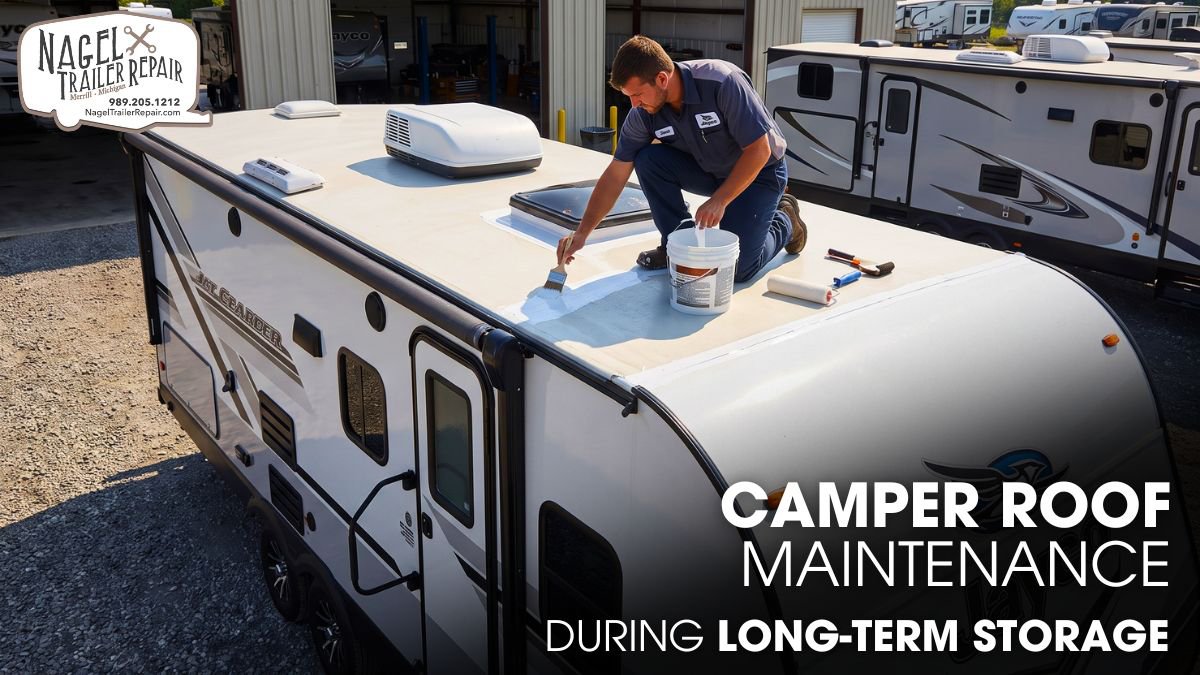
Many camper owners focus on engines, tires, and batteries before storing their RV, but the roof is often the most overlooked component. Yet it serves as the first line of defense against rain, UV rays, debris, and changing weather conditions during long-term storage.
The problem is that even a small crack, worn seal, or buildup of debris can lead to water intrusion, mold growth, and costly structural damage while your camper sits unused. These issues often develop unnoticed and become expensive repairs later.
This guide will show you how to maintain your camper roof during long-term storage and avoid costly damage. For lasting protection, consider consulting a camper roof expert in Michigan for inspections and repairs. Professional care helps extend roof life and keeps your camper road-ready for future adventures.
Why Camper Roof Maintenance Matters?
When people prepare a camper for long-term storage, they often think about fuel stabilizers, battery maintenance, tire protection, and pest prevention. The roof, however, usually receives far less attention. That can be a costly mistake because the roof protects every major component inside the camper.
If the roofing system fails, water can reach insulation, wiring, wall assemblies, cabinetry, and structural framing. Modern campers typically use EPDM rubber, TPO membrane, fiberglass, or aluminum roofing systems. While each material offers excellent durability, none of them are maintenance-free.
During storage, roofs remain exposed to ultraviolet radiation, moisture, airborne pollutants, tree debris, and continuous temperature fluctuations. Unlike a camper that travels regularly and receives routine inspections, a stored camper may sit untouched for months while minor roof problems slowly become major repair issues.
One of the biggest concerns is thermal cycling. Roofing materials expand during warm daytime temperatures and contract when temperatures drop at night. This constant movement places stress on seams, sealants, fasteners, and roof penetrations. Over time, even high-quality sealants can lose elasticity, develop cracks, or separate from the substrate.
Long-term exposure to environmental conditions can result in:
- Sealant shrinkage around roof penetrations
- UV degradation of roofing membranes
- Water intrusion through microscopic openings
- Mold and mildew development within insulation
- Wood rot in roof decking materials
- Corrosion of fasteners and mounting hardware
- Delamination of laminated roof structures
Regular roof maintenance helps prevent these issues and significantly extends the service life of the entire camper.
Inspect the Roof Before Storage:
A thorough inspection should always be the first step before placing a camper into seasonal or long-term storage. The goal is to identify weaknesses before environmental exposure makes them worse.
Start by inspecting the entire roof surface. Walk carefully across approved walking areas and look for visible signs of wear. Even small punctures can create pathways for moisture intrusion. Pay special attention to corners, roof edges, seams, and locations where accessories attach to the roof structure.
Many roof leaks originate around penetrations rather than open roof surfaces. Components such as air conditioners, plumbing vents, skylights, antennas, solar panels, ladder mounts, and satellite systems interrupt the roof membrane and require sealants to remain watertight.
During your inspection, carefully examine:
- Self-leveling lap sealants
- Roof termination bars
- Mechanical fasteners
- Mounting brackets
- Seam tape systems
- Vent and skylight flanges
Look for signs of cracking, lifting, bubbling, hardening, or separation. Flexible sealants should remain pliable and firmly bonded to both surfaces. If a sealant becomes brittle, it may no longer accommodate roof movement caused by temperature changes.
Do not limit the inspection to the exterior. Water often travels along structural members before becoming visible. Check the camper interior for:
- Ceiling stains
- Discoloration near roof joints
- Soft wall panels
- Musty odors
- Mold growth
- Warped cabinetry
These warning signs may indicate hidden roof leaks that require immediate attention before storage begins.
Clean the Roof Thoroughly:
Keeping your camper roof clean is one of the simplest ways to protect it during storage. Dirt, dust, and outdoor debris can hold moisture against the surface, causing roofing materials to wear out faster and reducing their overall lifespan.
Fallen leaves and pine needles often collect water, creating damp spots that remain for long periods. These moist conditions may encourage mold, mildew, and discoloration while increasing the chances of damage to the roof membrane over time.
Tree sap and bird droppings can also affect the roof if ignored. Clear away loose debris with a soft brush or a leaf blower before washing. Gentle cleaning methods help maintain the roof’s condition without harming the protective surface.
A proper cleaning process generally includes:
- Removing loose organic debris
- Applying a manufacturer-approved cleaner
- Gently scrubbing contaminated areas
- Cleaning around roof penetrations
- Thoroughly rinsing all surfaces
- Allowing the roof to dry completely
Different roof materials require different maintenance approaches. EPDM rubber roofs often develop a chalk-like oxidation layer that should be cleaned periodically. TPO roofs generally resist oxidation better but still require routine cleaning to maintain surface integrity. Fiberglass roofs benefit from non-abrasive cleaners that preserve the protective gelcoat finish.
Cleaning serves another important purpose. It exposes hidden defects that dirt and oxidation may conceal. Small cracks, punctures, or deteriorating sealants become easier to identify once the roof surface is clean.
Protect Roof Seals and Surfaces:
After inspection and cleaning, the next priority is protecting the roofing system from long-term environmental exposure.
Sealants are critical components of every camper roof. Even the most durable roofing membrane can fail if water bypasses seals around penetrations and accessories. Replacing deteriorated sealant before storage is significantly less expensive than repairing water damage later.
Focus on areas that experience the highest movement and stress, including:
- Roof vents
- Skylights
- Air conditioning units
- Antenna mounts
- Solar panel brackets
- Roof rack attachments
- Front and rear roof transitions
Use only sealants that are compatible with the roofing material. Incompatible products can reduce adhesion and create premature failures.
Protective roof coatings can provide an additional layer of defense. Many elastomeric coatings contain UV-resistant compounds that help reduce membrane aging. These coatings reflect sunlight, lower surface temperatures, and improve resistance to weather-related degradation.
Ultraviolet radiation remains one of the most damaging factors affecting camper roofs. Continuous UV exposure gradually breaks down polymers within roofing materials. As the material ages, flexibility decreases and cracking becomes more likely.
Protective measures may include:
- UV-resistant roof coatings
- Roof conditioning treatments
- Breathable RV covers
- Regular sealant maintenance
- Protective storage structures
If you use a storage cover, choose a breathable material specifically designed for RV use. Non-breathable covers can trap condensation beneath the cover and create moisture-related problems.
Monitor the Camper Roof during Storage:
Many camper owners believe roof care is only necessary before placing the vehicle in storage. However, maintenance should continue even when the camper is not being used. Regular attention during storage helps keep the roof in good condition and reduces the risk of unnoticed damage.
Weather can have a significant impact over time. Strong winds, extended rain, snow accumulation, and falling debris from nearby trees may affect the roof’s integrity, even while the camper remains parked.
Checking the roof every 30 to 60 days is a practical habit whenever possible. Routine inspections make it easier to spot minor issues early, helping prevent costly repairs and preserving the camper’s overall condition throughout the storage period.
During routine inspections, evaluate:
- Debris accumulation
- Standing water
- Sealant condition
- Roof membrane integrity
- Damage from weather events
- Signs of animal activity
Standing water deserves particular attention. While many camper roofs include slight drainage slopes, structural settling or design characteristics may allow water to collect in low spots. Prolonged ponding increases hydrostatic pressure and accelerates membrane deterioration.
Temperature swings also affect roofing systems during storage. Daily expansion and contraction cycles place stress on seams and joints. Over several months, this movement can create small gaps that eventually permit water intrusion.
After severe weather events, perform additional inspections. Hail impacts may not always produce obvious damage, yet they can weaken roofing materials and shorten service life. Likewise, falling branches may create punctures that remain hidden beneath debris.
Consistent monitoring allows owners to address small maintenance issues before they develop into structural problems.
Prepare the Roof for Travel Again:
Before putting your camper back into regular use, take time to inspect the roof carefully. Long storage periods can affect roofing materials, even when the camper has been properly maintained and protected. A thorough check helps you catch small issues before they become expensive repairs.
Look over the entire roof for fading, cracks, stains, or any signs of wear. Check vents, skylights, antennas, and other roof-mounted fixtures to ensure they remain secure and properly sealed. Pay close attention to areas that received repairs during the last maintenance cycle.
Changes in temperature and weather can weaken sealants over time. Examine repaired sections for gaps, peeling, shrinkage, or loose edges. To confirm the roof remains watertight, perform a gentle water test while checking the interior for any signs of moisture or leaks.
Before hitting the road, verify that:
- All roof penetrations remain watertight
- Sealants remain flexible and intact
- Roof coatings show no signs of failure
- Drainage pathways remain clear
- Fasteners remain secure
- No new punctures or cracks exist
Address any issues immediately. Highway vibration, wind loads, and changing weather conditions place additional stress on roofing systems. Small defects that seem harmless in storage can quickly become major leak sources once the camper returns to regular use.
The Role of Professional Maintenance:
Professional maintenance helps identify issues that are easy to miss during routine inspections. Experienced technicians can detect hidden leaks, weakened sealants, surface deterioration, and structural concerns before they lead to costly repairs. Their expertise also ensures that protective materials are applied correctly and perform as intended.
They use specialized tools and industry-approved products to restore exterior surfaces, improve durability, and maintain long-term protection against weather, UV exposure, and moisture damage.
Regular professional service not only extends the life of your camper but also helps preserve its appearance, value, and overall performance, giving you greater confidence whether it is stored for months or ready for the next adventure
Conclusion:
Camper roof maintenance during long-term storage is one of the most important preventive measures RV owners can perform. Regular inspections, thorough cleaning, sealant maintenance, protective treatments, and periodic monitoring help preserve the roof’s structural integrity and weather resistance.
By investing in proactive roof care and timely inspections, camper owners can prevent expensive damage, extend the lifespan of their roofs, and keep their RV protected through every storage season.
Partnering with trusted professionals like Nagel Trailer Repair ensures small issues are addressed before they become major problems. A skilled camper roof expert in Michigan can identify hidden concerns, provide reliable repairs, and help maintain your camper’s value, safety, and readiness for future adventures.