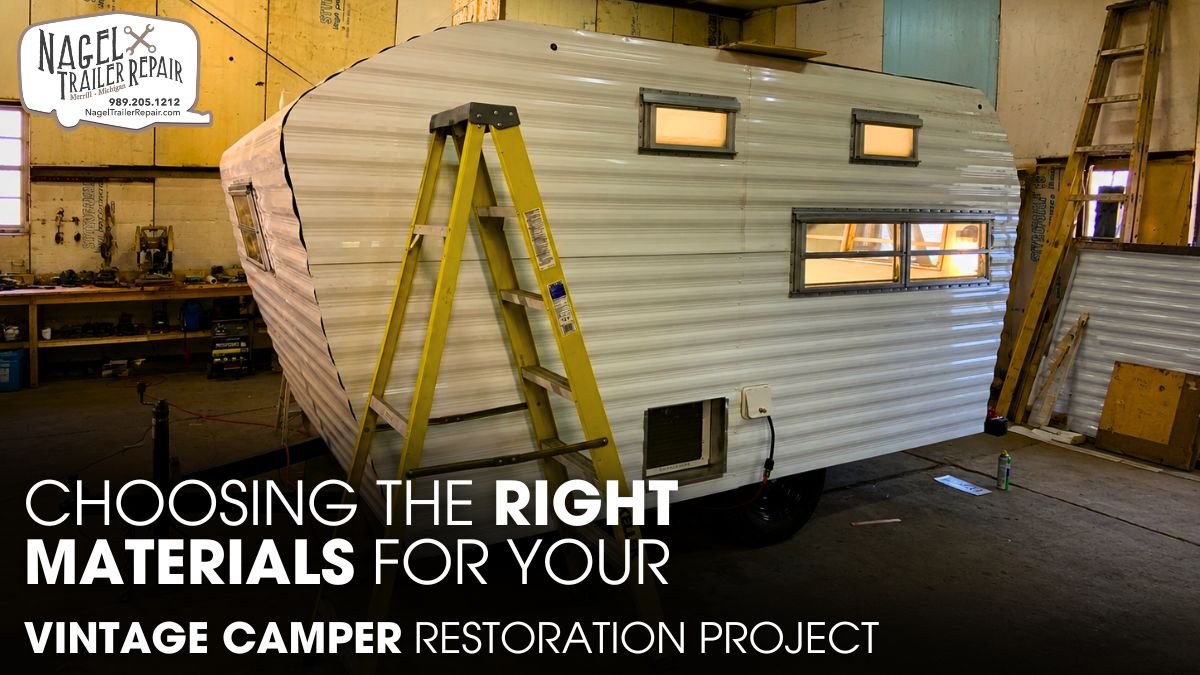
Restoring a vintage camper is an exciting journey that brings classic charm back to life. Every decision, from the frame to the interior finishes, shapes the camper’s appearance, durability, and long-term value. Choosing the right materials from the start helps create a restoration that looks authentic and performs reliably for years.
Many restorers face challenges when selecting materials. Modern products may not match the original design, while outdated materials can lack the strength and protection needed for today’s travel conditions. Poor material choices often lead to premature wear, water damage, and costly repairs.
This guide, crafted with input from a vintage camper expert in Michigan, will help you confidently choose authentic, durable materials that honor your rig’s soul. Restore wisely, boost road performance, and trust skilled pros to bring lasting value—because your camper’s story deserves expert hands.
Original Vintage Camper Materials:
Every successful vintage camper restoration starts with understanding how the camper was originally built. Many people become eager to replace damaged components immediately, but skipping the research phase often creates problems later. Vintage campers were engineered as complete systems, and each material played a specific role in balancing weight, durability, and towing performance.
Most campers built between the 1950s and early 1980s used a combination of steel chassis components, wood framing, aluminum exterior skin, plywood interiors, and basic insulation materials. Although these construction methods seem simple compared to modern RV manufacturing, they were carefully designed to handle road vibration, weather exposure, and long-term use while remaining lightweight enough for safe towing.
Before removing damaged parts, take time to inspect and document the original construction. Measure framing dimensions, wall thicknesses, roof curvature, panel gauges, and fastener locations. Photographs can become invaluable references during reassembly.
Important areas to evaluate include:
- Exterior aluminum thickness
- Wall framing dimensions
- Floor support spacing
- Roof bow construction
- Original fastener materials
- Insulation type and condition
One of the most overlooked aspects of restoration is load-path engineering. During travel, forces generated by braking, acceleration, cornering, and road impacts travel through the frame, walls, roof, and floor. Replacing structural materials with heavier or weaker alternatives can change how these forces move through the camper and potentially create stress points that did not exist in the original design.
Understanding the original materials allows you to make informed decisions that preserve both structural integrity and historical authenticity.
Selecting Exterior Restoration Materials:
The exterior shell acts as the camper’s first line of defense against moisture, ultraviolet radiation, temperature fluctuations, wind, and road debris. Choosing the right exterior materials directly affects how long your restoration will last.
Aluminum remains the preferred exterior material for many vintage camper restorations. Manufacturers originally selected aluminum because it offered an excellent strength-to-weight ratio while resisting corrosion far better than untreated steel. Common alloys used in vintage campers include 3003-H14 and 5052-H32, both known for their durability and formability.
Modern replacement aluminum provides several benefits:
- Excellent corrosion resistance
- Low maintenance requirements
- Lightweight construction
- Long service life
- Authentic vintage appearance
Matching the original panel thickness is important. Installing thicker aluminum may seem like an upgrade, but it can affect body contours, panel fitment, and overall weight distribution.
Roof restoration requires even greater attention because the roof receives the highest exposure to environmental stress. Constant UV radiation, thermal expansion cycles, rain, snow, and standing water place significant demands on roofing materials.
Many restorers choose between:
- Aluminum roofing
- EPDM rubber roofing
- TPO roofing systems
Aluminum remains the most authentic option and can last for decades when properly maintained. EPDM roofing offers exceptional waterproofing performance, while TPO provides excellent UV resistance and heat reflectivity. However, both alternatives can alter the camper’s original appearance.
Sealants have improved dramatically since many vintage campers were manufactured. Modern polyurethane and hybrid polymer sealants maintain flexibility during seasonal expansion and contraction. They also provide superior adhesion to aluminum, fiberglass, painted surfaces, and roofing materials.
For windows, roof vents, marker lights, and trim installations, butyl tape remains one of the most effective sealing products available. Its ability to compress and conform to irregular surfaces makes it highly effective at preventing moisture intrusion.
Choosing Durable Structural Materials:
Structural restoration determines whether a vintage camper remains safe, stable, and roadworthy. Cosmetic upgrades may improve appearance, but structural materials determine the camper’s ability to withstand years of travel.
The chassis serves as the foundation of the entire camper. Most vintage campers use welded steel frames constructed from rectangular tubing, C-channel sections, or angle iron. Over time, corrosion often develops around suspension mounting points, outriggers, cross-members, and welded joints.
Before performing repairs, thoroughly inspect the frame using grinding tools, wire wheels, and thickness measurements. Surface rust may look severe but often causes minimal structural damage. Deep pitting, perforation, and metal thinning require more extensive repairs.
When selecting replacement steel, evaluate:
- Yield strength
- Tensile strength
- Weldability
- Corrosion resistance
- Fatigue performance
Mild steel remains one of the best repair materials because it closely matches the mechanical properties of many original frames. After welding, apply epoxy primer followed by a high-quality polyurethane coating to maximize corrosion protection.
Wood selection also plays a major role in structural integrity. Many vintage campers rely heavily on wood framing throughout the walls, roof, and floor systems. Water intrusion often damages these components long before visible symptoms appear.
Marine-grade plywood remains a top choice because manufacturers construct it using waterproof adhesives and void-free veneers. This construction method minimizes moisture retention and improves long-term durability.
Baltic birch plywood offers additional structural advantages:
- Excellent dimensional stability
- High compressive strength
- Strong screw retention
- Uniform core construction
Fasteners deserve just as much attention as framing materials. Cheap or corroded hardware often becomes the weak link in a restoration project. Stainless steel fasteners resist corrosion and maintain clamping force under continuous vibration. When joining aluminum and steel components, however, always consider galvanic compatibility to prevent accelerated corrosion.
A strong structure results from selecting materials that work together rather than focusing on individual components alone.
Interior Material Selection Guide:
The interior of a vintage camper must balance comfort, durability, appearance, and weight. Every material you install affects towing performance, energy efficiency, maintenance requirements, and overall usability.
Birch plywood remains one of the most popular choices for wall and ceiling panels because it closely resembles materials used in many original campers. Its attractive grain pattern accepts stain evenly and creates the warm appearance commonly associated with classic RV interiors.
Birch plywood also provides:
- Excellent strength-to-weight ratio
- Good dimensional stability
- Reliable fastener retention
- Easy finishing characteristics
Some restorers choose modern composite panels instead. Honeycomb-core composites offer impressive rigidity while significantly reducing overall weight. These materials can improve towing efficiency without sacrificing structural performance.
Flooring selection requires careful consideration because floors experience constant traffic, vibration, and potential moisture exposure. Modern luxury vinyl plank flooring has become increasingly popular due to its durability and waterproof construction.
Important flooring considerations include:
- Weight per square foot
- Moisture resistance
- Surface durability
- Thermal expansion characteristics
- Ease of future replacement
Cabinet construction presents another opportunity to balance authenticity and functionality. Solid hardwood cabinets provide exceptional durability but add considerable weight. Many experienced restorers build cabinet boxes from Baltic birch plywood and use hardwood face frames to achieve the appearance of solid wood while keeping weight under control.
Insulation technology has improved significantly since vintage campers were built. Closed-cell spray foam creates both an air barrier and thermal barrier while resisting moisture infiltration. Polyisocyanurate foam boards offer high R-values and maintain dimensional stability even under challenging environmental conditions.
Proper insulation improves interior comfort, reduces condensation, and increases energy efficiency during both hot and cold weather.
Balancing Authenticity and Performance:
One of the most difficult decisions in any vintage camper restoration involves balancing originality with modern performance. While preserving authenticity remains important, practical upgrades often improve safety, comfort, and reliability.
The most successful restorations typically preserve visible historical features while modernizing hidden systems.
Features commonly preserved include:
- Original cabinetry designs
- Factory trim profiles
- Vintage hardware
- Traditional wall finishes
- Period-correct color schemes
At the same time, modern upgrades can dramatically improve functionality.
Popular upgrades include:
- Modern electrical systems
- LED lighting
- PEX plumbing
- High-performance insulation
- Advanced adhesives
- Improved ventilation systems
Modern wiring systems provide greater electrical capacity and enhanced safety. PEX plumbing withstands freezing temperatures more effectively than many older plumbing materials. LED lighting reduces energy consumption while producing less heat inside the camper.
Weight management remains a critical engineering consideration throughout the project. Adding stronger materials often increases weight, which can negatively affect towing stability, axle loading, and fuel efficiency. Every material choice should support the camper’s overall weight and balance requirements.
The goal is not to create a museum piece or a completely modern RV. Instead, the goal is to preserve the character of the vintage camper while improving its ability to meet modern travel expectations.
Maintenance and Longevity Factors:
Material selection should always consider long-term maintenance requirements. Some products may cost less initially but create ongoing repair expenses that far exceed any upfront savings.
The most effective restoration materials typically offer:
- UV resistance
- Corrosion resistance
- Moisture protection
- Structural stability
- Easy serviceability
Moisture remains the greatest threat to any vintage camper. Even a small leak can damage framing, insulation, flooring, and cabinetry long before visible signs appear. Modern moisture barriers, improved sealants, and proper ventilation systems significantly reduce this risk.
Ultraviolet exposure presents another long-term challenge. Continuous UV radiation can weaken plastics, fade finishes, degrade sealants, and shorten the lifespan of exterior components. Protective coatings containing UV inhibitors help preserve both appearance and material performance.
Future maintenance should influence every restoration decision. Components that can be easily inspected, removed, and replaced simplify repairs and reduce ownership costs over time. Standardized hardware, accessible wiring channels, and modular construction techniques make future restoration work far more manageable.
A successful restoration should not only look impressive when completed. It should also remain practical to maintain and repair for decades to come.
The Role of Professional Maintenance:
Professional maintenance plays a critical role in preserving the safety, performance, and value of any vintage camper restoration. Experienced technicians can identify hidden structural weaknesses, material compatibility issues, and early signs of corrosion before they develop into costly repairs.
They also ensure that refurbished propane systems meet current safety standards by inspecting tanks, testing valves, checking regulators, and verifying leak-free connections. Proper maintenance extends the lifespan of restoration materials, improves system reliability, and helps prevent unexpected failures on the road.
By combining expert inspections with routine servicing, owners can protect their investment, maintain authentic craftsmanship, and enjoy greater confidence knowing their camper remains safe, efficient, and ready for years of travel and adventure.
Conclusion:
Choosing the right materials for a vintage camper restoration project requires more than matching appearances. Every material affects structural integrity, weather resistance, weight distribution, maintenance requirements, and long-term reliability. Careful evaluation of original construction methods helps ensure that replacement components work together as an integrated system.
Successful restorations blend historical accuracy with modern upgrades, just as Nagel Trailer Repair advises. Enhanced sealants, wiring, and insulation boost performance, while corrosion-resistant materials preserve character.
Trust a vintage camper expert in Michigan for strategic, authentic improvements. Revive your classic confidently—durability meets nostalgia, ensuring road-ready charm for decades. Act now!