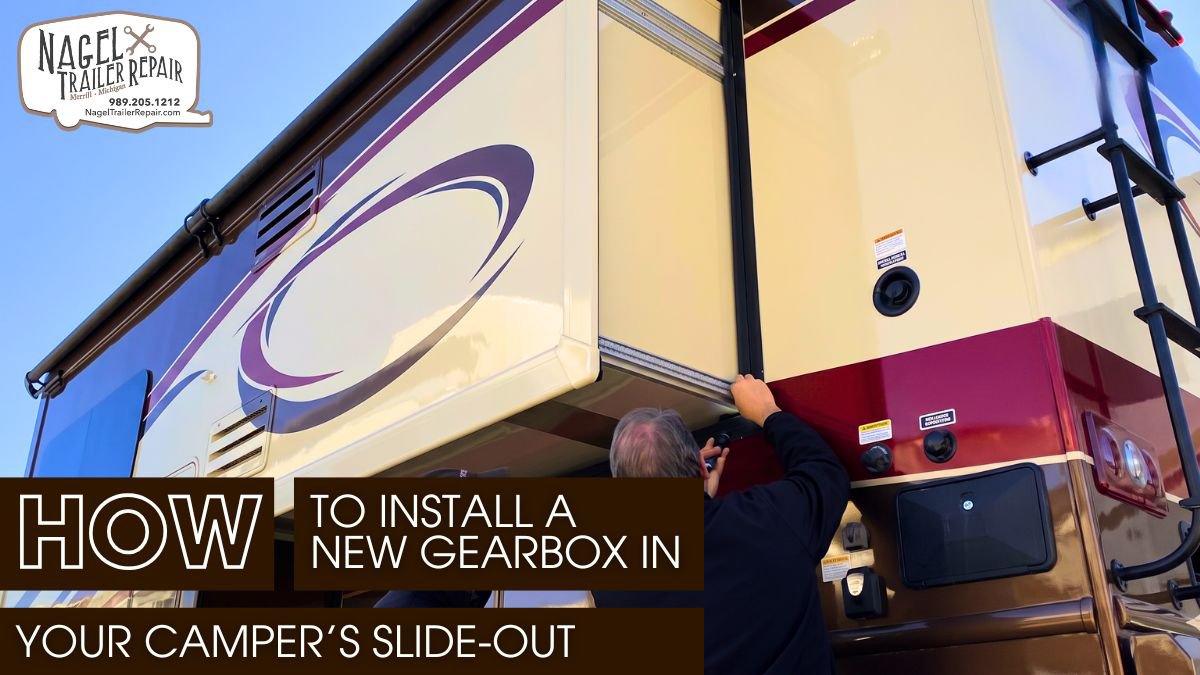
A stuck slide-out can turn a relaxing camper trip into a frustrating ordeal in minutes. When your camper refuses to extend or retract smoothly, the culprit often lies in a worn or damaged gearbox that disrupts the entire mechanism.
Many camper owners struggle with grinding noises, uneven movement, or a slide-out that won’t budge at all. Ignoring these warning signs can lead to costly repairs, further mechanical damage, or even being stranded mid-trip.
This guide simplifies installing a new slide-out gearbox with expert steps. While DIY helps, consulting with a camper repair expert in Michigan ensures peak performance. Master the tools and safe removal today to restore smooth operation and travel with the confidence that only professional-grade care provides!
Camper Slide-Out Gearboxes:
Your camper’s slide-out gearbox does more than just “help things move”—it’s the component that makes controlled movement possible. The electric motor spins fast but doesn’t produce enough torque on its own. The gearbox steps in to reduce speed and multiply torque so the system can move a heavy slide room smoothly and safely.
Most RV slide systems use either spur gear reductions, planetary gear assemblies, or worm gear drives. Each design handles load differently, but all of them aim to deliver steady, synchronized motion. If the gearbox fails, the entire system loses balance, and that’s when you start seeing uneven extension or binding.
You’ll usually notice early warning signs before a total failure happens. Paying attention to those signals can save you from a much bigger repair later.
- Grinding noises often mean worn or chipped gears
- Hesitation or delay suggests internal backlash
- Jerky movement points to uneven torque delivery
- A spinning motor with no movement signals stripped gears
- Excess heat indicates internal resistance or friction
Different slide systems place different demands on the gearbox. Rack-and-pinion systems rely heavily on alignment, while worm gear setups focus on holding torque under load. Cable-driven slides need precise drum control to maintain balance. Understanding which system you have helps you avoid installing the wrong gearbox and creating new problems.
Tools and Parts Needed:
Replacing a gearbox is not just a basic swap—it’s a mechanical job that requires accuracy. Using the right tools ensures you don’t damage components or compromise the installation.
Start with a solid set of tools that lets you work efficiently and safely.
- Socket set (both metric and SAE)
- Torque wrench for precise tightening
- Impact driver for stubborn fasteners
- Allen keys for motor mounts
- Pry bar for controlled separation
- Multimeter to confirm electrical isolation
Choosing the right gearbox matters just as much as the installation itself. Even if two gearboxes look similar, small differences in specs can cause serious issues.
- Match the exact gear ratio from the original unit
- Confirm torque rating meets load requirements
- Ensure shaft size and spline pattern match
- Verify mounting hole alignment
- Use OEM or high-quality aftermarket parts
Don’t overlook safety gear. You’ll be working around heavy components and electrical systems, so take precautions seriously.
- Use wheel chocks to keep the camper stable
- Wear gloves to protect your hands
- Use safety glasses when working underneath
- Support the camper with stabilizer jacks
- Disconnect all power before starting
Taking time to prepare your tools and parts upfront prevents mistakes once the work begins.
Preparing the Camper:
Preparation sets the tone for the entire job. If the camper isn’t stable or properly isolated, even a simple task can become risky.
Park your camper on level ground and engage the parking brake. Deploy stabilizer jacks to eliminate movement. Even slight shifting can throw off alignment during installation.
Next, disconnect all power sources. This includes the house battery and any shore power connection. Slide-out motors draw significant current, and accidental activation can cause injury or damage. Use a multimeter to confirm that no voltage is present before you proceed.
Accessing the gearbox may require removing panels or covers. Depending on your setup, you might need to work from underneath the camper or inside a storage compartment. Keep track of all hardware you remove so reassembly stays straightforward.
While you’re there, take a close look at the surrounding components. Gearbox failure often connects to other mechanical issues.
- Check rails for bending or obstruction
- Inspect wiring for corrosion or loose connections
- Look for signs of motor overheating
- Verify that slide tracks are aligned
- Remove debris from gear contact areas
Fixing these issues now prevents you from installing a new gearbox into a system that will fail again.
Removing the Old Gearbox:
Take your time during removal. Rushing this step can damage parts that you’ll need to reuse.
Start by locating the gearbox and understanding how it connects to the motor and drive system. Most setups use a direct coupling or shaft connection.
Disconnect the motor wiring first. Label connections if needed so you can restore them correctly later. Remove the motor mounting bolts and gently separate it from the gearbox. If it doesn’t come free easily, double-check for hidden fasteners instead of forcing it.
Once the motor is out, focus on the gearbox mounting bolts. Loosen them gradually in a balanced pattern to avoid stressing the bracket. If you encounter rusted bolts, apply penetrating oil and give it time to work.
Carefully slide the gearbox off the drive shaft. This step requires patience because the shaft interface is critical for proper operation.
- Avoid hammering or applying sudden force
- Use a puller tool if the fit is tight
- Clean the shaft once the gearbox is removed
- Inspect splines or keyways for wear
- Replace damaged components before reinstalling
Examining the old gearbox can tell you a lot. Worn teeth, metal shavings, or seized bearings often point to lubrication failure or misalignment. Understanding why it failed helps you avoid repeating the issue.
Installing the New Gearbox:
Installing the new gearbox is where precision really matters. A slight misalignment can lead to noise, wear, or complete failure.
Start by aligning the gearbox with the drive shaft. Make sure the splines or keyways line up perfectly before sliding it into place. It should fit smoothly—if it doesn’t, stop and realign rather than forcing it.
Secure the gearbox using the correct bolts. Tighten them gradually in a cross pattern to distribute pressure evenly. Always use a torque wrench to meet the manufacturer’s specifications.
Next, reinstall the motor. Ensure the coupling between the motor and gearbox seats fully. A poor connection here can cause vibration or slippage during operation. Reconnect all wiring and double-check that everything is secure.
- Apply thread locker to mounting bolts
- Ensure the gearbox sits flush against the mount
- Rotate the system manually before powering
- Check that wiring is not pinched
- Confirm proper alignment of all components
Taking your time here ensures that the system operates smoothly once powered up.
Testing and Final Checks:
Once everything is installed, testing becomes the final and most important step. Restore power to the camper and confirm that the voltage is stable. A weak battery can create misleading symptoms, so start with a solid power source.
Run the slide-out in short bursts instead of a full cycle right away. This lets you catch problems early without putting full load on the system. Watch how the slide moves and listen carefully for unusual sounds.
A properly installed gearbox should deliver smooth, even movement with minimal noise. If you notice hesitation, binding, or uneven motion, stop and recheck alignment and connections.
- Verify both sides extend evenly
- Listen for grinding or clicking
- Monitor motor temperature
- Recheck bolt tightness after testing
- Inspect seals for proper compression
After testing, perform one final inspection. Make sure all components are secure and nothing has shifted during operation. Regular maintenance, including lubrication and visual checks, will keep the system working reliably.
The Role of Professional Maintenance:
Professional maintenance keeps your camper systems reliable and prevents small issues from turning into costly failures. A trained technician can align mechanical components precisely, calibrate torque settings, and verify that moving parts operate under the correct load conditions. This level of accuracy is critical when dealing with complex assemblies that rely on synchronized motion and proper power transfer.
Routine service also helps preserve exterior surfaces. Experts use the right cleaning agents and techniques to remove contaminants without damaging protective coatings or seals. They can spot early signs of wear, corrosion, or material breakdown that often go unnoticed.
By investing in professional care, you improve performance, extend component life, and reduce the risk of unexpected breakdowns during travel.
Conclusion:
A properly installed slide-out gearbox brings your camper back to smooth, reliable operation. When you follow the correct steps and pay attention to alignment and torque, you prevent uneven movement and unnecessary strain on the system.
Regular inspection and basic maintenance go a long way in keeping everything running as it should. Checking for wear, keeping components clean, and addressing small issues early helps you avoid major repairs down the road.
When you take a careful, hands-on approach, you not only fix the problem but also improve the performance and lifespan of your slide-out. For professional care, trust a camper repair expert in Michigan like Nagel Trailer Repair. Our precision ensures your adventures remain seamless, motivating you to invest in the quality your RV deserves.