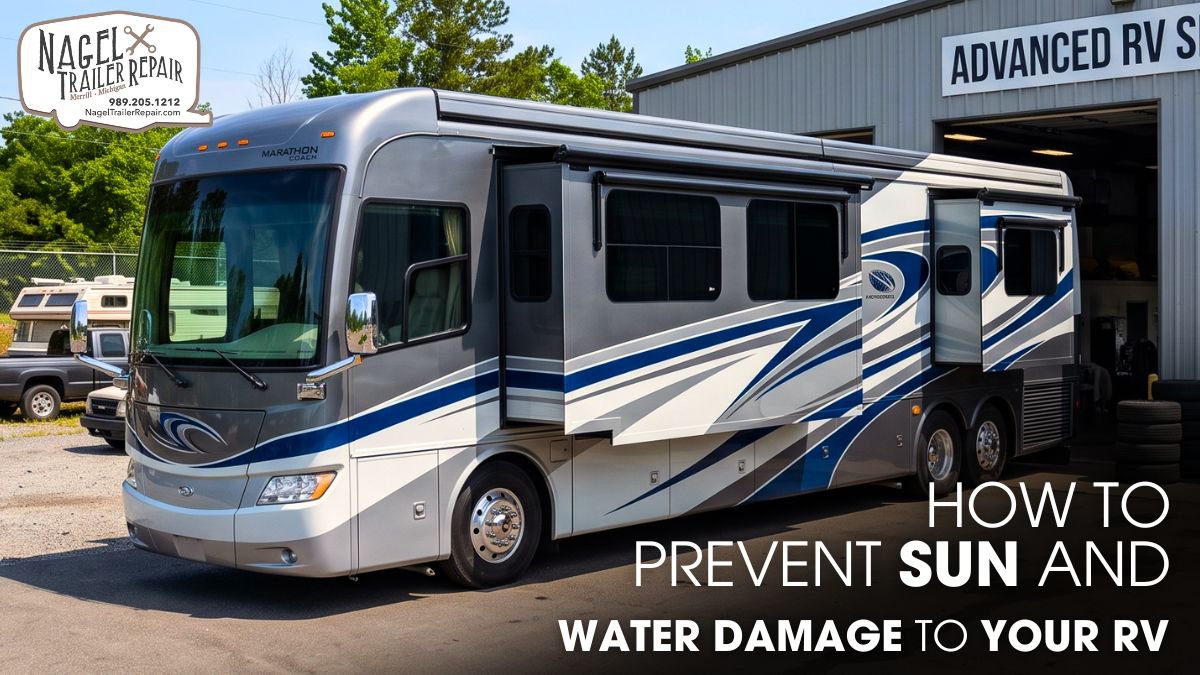
The sun may brighten your RV adventures, but relentless UV exposure and water can quietly weaken your RV’s roof, seals, and exterior. Over time, harsh sunlight can cause fading, cracking, and material deterioration, while moisture can lead to leaks, stains, mold, and costly structural damage.
Ignoring these threats can turn minor wear into major RV repairs. Even a small crack or failed seal can allow water to enter and create problems that become harder and more expensive to fix.
Understand RV Sun and Water Damage:
Your RV roof takes a beating every time you leave it outdoors. Solar radiation, rain, humidity, temperature swings, road vibration, and airborne contaminants continuously stress the roofing system. The damage usually develops gradually, which makes it easy to overlook until you notice a leak inside.
UV radiation causes photochemical degradation in many polymer-based materials. Over time, ultraviolet energy can break molecular bonds in membranes and sealants, causing them to lose elasticity and become brittle. High roof temperatures make this process worse. As the roof heats and cools, different materials expand and contract at different rates, placing mechanical stress on seams and joints.
Water creates a different problem. Once it passes through a failed seal or damaged membrane, it can move through insulation, roof decking, and wall cavities before becoming visible inside the RV. That means an interior water stain does not necessarily sit directly below the leak.
Watch for these early warning signs:
- Brittle, cracked, or shrinking sealant
- Discolored ceiling panels or wall coverings
- Soft or spongy sections of the roof
- Bubbling, blistering, or lifting materials
- Musty odors or unexplained interior moisture
- Corrosion around roof-mounted components
Finding these symptoms early can help prevent costly structural damage before moisture spreads deeper. If you notice warning signs, contact an RV repair shop in Michigan for a professional inspection and timely repairs. Prompt service can protect your RV, preserve its condition, and help you enjoy safer, worry-free travels.
Inspect Your RV Roof Regularly:
A proper RV roof inspection should go beyond a quick visual check. Walk the roof only when the manufacturer permits it and when you can do so safely. Otherwise, use appropriate access equipment and inspect from a safe position. Examine the entire roofing surface, including seams, edges, transitions, and every roof penetration.
Pay close attention to vents, skylights, antennas, plumbing vents, air-conditioning units, satellite equipment, and other components that interrupt the roof membrane. Every penetration creates another potential pathway for water, particularly when its sealant deteriorates.
Look for sealant that has separated from the substrate, developed surface cracks, shrunk away from an edge, or lost flexibility. Also check for punctures and abrasion caused by branches, debris, maintenance equipment, or previous repairs.
A technical inspection should include:
- Checking seams for separation and cracking
- Examining fasteners and penetration flanges
- Looking for membrane abrasion or punctures
- Testing suspicious soft areas carefully
- Checking roof edges and termination points
- Inspecting previous repair patches for failure
Do not simply add sealant over a failed seal without finding the underlying issue. Dirt, moisture, oxidation, or incompatible materials can weaken adhesion and shorten the repair’s life. For reliable results, professional RV repair services in Michigan include proper surface preparation and careful application, helping prevent leaks and protect your RV for the long run.
Protect Your RV From Sun Damage:
Reducing UV exposure can significantly slow exterior material degradation. However, effective protection starts with identifying exactly what material covers your RV roof. Different roofing systems have different chemical compositions and maintenance requirements.
For example, an EPDM membrane does not necessarily respond to cleaning agents, coatings, or repair products in the same way as TPO, fiberglass, or aluminum. Applying an incompatible product can weaken adhesion, alter the surface, or interfere with future repairs.
If the roofing manufacturer approves a protective coating, follow the specified preparation procedure carefully. Remove dirt and contaminants, repair existing defects, allow moisture to escape, and apply the coating within the recommended temperature and humidity range. Respect the required film thickness and curing period as well.
You can reduce solar stress by:
- Parking under suitable covered storage
- Using an RV cover designed for outdoor use
- Selecting manufacturer-approved UV protection
- Cleaning the roof with compatible products
- Inspecting UV-exposed sealants frequently
A breathable, well-fitted RV cover can block harsh sunlight without trapping moisture. Secure it properly to prevent wind-driven rubbing and exterior wear. If you notice cracks, fading, or water damage, turn to our shop in Merrill, MI for professional inspection and timely repairs that help protect your RV and extend its life.
Prevent Water From Entering Your RV:
The best defense against water damage is a continuous and properly maintained weather barrier. Your RV roof does not rely on one component alone. The membrane, sealants, flashing, penetration assemblies, edge treatments, and drainage system must work together.
Sealants deserve particular attention because they accommodate movement between materials while blocking water. Thermal expansion, vibration, aging, and UV exposure can eventually cause sealant to lose adhesion or elasticity.
When repairing a failed joint, remove deteriorated material as required by the product manufacturer. Clean the bonding surface thoroughly and make sure it is dry. Then apply a compatible sealant using the specified bead size, tooling method, and curing conditions.
Avoid creating water traps during repairs. Excess material or incorrectly shaped sealant can redirect water toward vulnerable areas rather than away from them.
Water-prevention maintenance should include:
- Cleaning roof drainage paths regularly
- Maintaining gutters and downspouts
- Checking window and door seals
- Inspecting roof penetrations after storms
- Repairing failed sealant before heavy rainfall
If water still gets inside after an exterior repair, avoid covering the same spot with more sealant. A professional inspection can trace the hidden water path and check nearby components for damage. If you’re searching for “RV repair near me”, expert service can identify the source and restore your RV’s protection before the problem worsens.
Follow a Seasonal RV Maintenance Plan:
RV maintenance works best when you treat it as a preventive system rather than an emergency response. Different seasons expose your RV to different failure mechanisms, so adjust your inspection priorities throughout the year.
Before summer, inspect surfaces that receive intense solar exposure. Look for UV degradation, chalking, cracking, and sealant hardening. Before periods of heavy rainfall, verify that every penetration remains sealed and that drainage routes remain unobstructed.
After severe weather, inspect the roof for impact damage, punctures, loose components, and displaced sealant. Road travel also deserves attention because vibration can gradually loosen fittings and stress joints.
Before long-term storage:
- Clean and dry the roof thoroughly
- Repair damaged seams and penetrations
- Clear gutters and drainage channels
- Inspect for existing moisture intrusion
- Protect the RV from excessive UV exposure
Keep a maintenance record with dates, photographs, repair materials, and observed defects. This simple practice helps you recognize progressive deterioration and gives a repair technician useful information when diagnosing recurring problems.
Never rush a roof repair before severe weather arrives. Give repair materials enough time to cure and bond properly according to the manufacturer’s instructions. For dependable protection, choose expert RV services in Michigan to ensure repairs are completed correctly and your RV stays ready for changing weather.
Know When to Call an RV Expert:
Not every roof problem requires professional intervention, but some symptoms indicate that you should stop treating the issue as routine maintenance. A professional can determine whether damage affects only the surface or has reached the substrate and supporting structure.
Soft roof sections deserve particular attention. A spongy area can indicate moisture-related deterioration of roof decking or insulation. Similarly, repeated interior staining can indicate an unresolved entry point even when the visible exterior appears intact.
Professional evaluation becomes especially important when you find:
- Persistent or recurring roof leaks
- Extensive membrane cracking or deterioration
- Large soft or weakened roof areas
- Multiple failed roof penetrations
- Damage around air-conditioning assemblies
- Evidence of prolonged moisture intrusion
A technician can assess the roof membrane, substrate, seams, penetration interfaces, and previous repairs as one system. This approach helps identify the actual failure mechanism instead of treating only the visible symptom.
Timely professional repairs can prevent minor issues from becoming costly damage. Moisture that reaches structural components may lead to extensive restoration, while early sealant repairs are usually simpler and more affordable. Choose an RV specialist in Michigan to identify leaks, restore damaged areas, and protect your RV from further deterioration. Professional service helps preserve your vehicle’s condition and keeps it ready for the road..
The Role of Professional Maintenance:
Professional maintenance plays a critical role in keeping an RV protected from environmental damage and unnecessary operating costs. A trained technician can inspect roof membranes, seams, sealants, vents, and other penetration points to identify early signs of UV degradation or moisture intrusion.
Proper surface preparation and compatible sealants help maintain a reliable weather barrier, while timely repairs prevent small leaks from reaching insulation, decking, or interior structures. Regular inspections also help identify tire-pressure issues, wheel alignment problems, restricted air filters, and other mechanical conditions that can affect performance.
Professional servicing also helps the RV operate more efficiently on the road. Technicians can check tire inflation, engine and transmission condition, fuel and air systems, and unnecessary mechanical drag. Correct tire pressure reduces rolling resistance, while a properly maintained engine can burn fuel more efficiently under load.
Keeping the RV within its recommended operating specifications, removing unnecessary weight, and addressing mechanical problems early can reduce fuel consumption while improving drivability, component life, and overall travel reliability.
Conclusion:
Your RV roof works as a critical weather barrier against UV radiation, rain, humidity, and temperature changes. Regular inspections help you identify material deterioration before it develops into expensive structural damage.
Use compatible repair materials, maintain seals, control drainage, and reduce direct solar exposure through proper storage. These preventive measures help preserve roof performance and protect your RV’s interior.
When you find persistent leaks, soft spots, or major cracks, don’t wait—call Nagel Trailer Repair, your trusted RV expert in Michigan. From seal failure to structural damage, their skilled team delivers durable fixes that safeguard your investment. Act now—schedule your inspection today and stay road-ready with confidence!