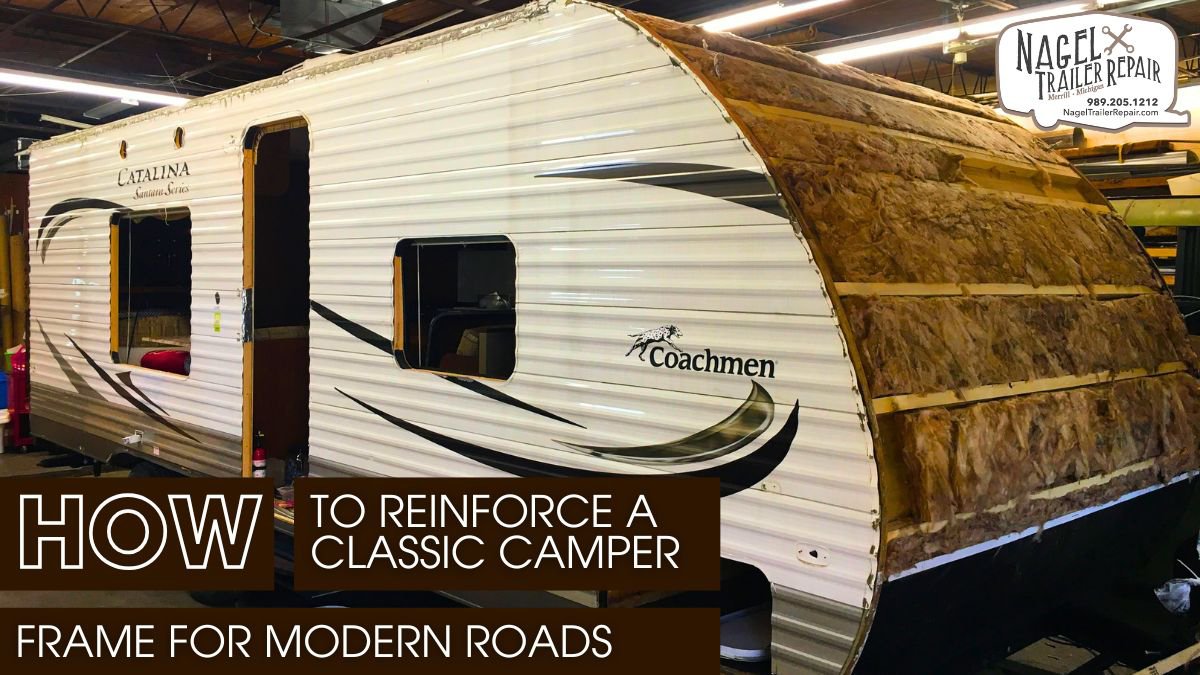
Classic camper frames weren’t built for today’s fast, demanding roads. Yet with the right reinforcement approach, you can transform a vintage chassis into a road-ready foundation that handles modern stress with confidence.
The problem is clear: aging steel, hidden rust, and outdated load design make classic frames vulnerable to cracks, flex, and failure. Without upgrades, every mile increases wear and risk.
This guide helps you reinforce your camper frame with proven techniques for strength and stability. For expert results, professional classic camper repairs in Michigan ensure your vintage gem stays road-ready, safe, and stunning for every journey.
Understanding Classic Camper Frames:
When you look at a classic camper frame, you’re essentially looking at a straightforward ladder-frame design—two long steel rails connected by crossmembers. Manufacturers chose this layout because it was simple, cost-effective, and easy to repair. Most of these frames use mild steel C-channels, which handle vertical loads reasonably well but fall short when it comes to resisting twist.
That’s where the real issue begins. Unlike modern boxed frames, C-channel structures don’t form a closed loop, so they flex more under torsional stress. Over time, this repeated flexing concentrates stress at joints, welds, and mounting points. You may not notice it immediately, but microcracks start forming and gradually grow under cyclic loading.
Modern driving conditions amplify these weaknesses. Higher speeds, uneven highways, and constant vibration introduce load patterns that these frames were never designed to handle. What once worked fine on slower roads now accelerates fatigue and structural degradation.
Key technical factors you should keep in mind:
- Section modulus determines how well rails resist bending
- Open channels reduce torsional rigidity significantly
- Load paths often break at poorly designed joints
- Stress risers form at sharp edges and weld toes
Understanding these fundamentals helps you reinforce the frame intelligently instead of just adding random steel.
Assessing Frame Condition:
Before you reinforce anything, you need a clear picture of what you’re working with. A proper assessment goes beyond a quick glance—you need to treat it like a structural audit. Start by cleaning the frame thoroughly so you can see bare metal. Dirt and rust scale often hide critical damage.
Once the surface is clean, inspect every weld, joint, and mounting point. Look for hairline cracks, distortion, or elongated bolt holes. If the frame looks slightly twisted or sagging, that’s a sign of long-term fatigue or overload.
Corrosion deserves special attention. Surface rust is manageable, but pitting corrosion is a different story—it eats into the metal and reduces its effective thickness. That directly weakens the frame’s load-bearing capacity. You should measure suspect areas using calipers or a thickness gauge to quantify material loss.
If you want to go deeper, use non-destructive testing methods:
- Dye penetrant testing reveals surface cracks clearly
- Magnetic particle inspection highlights hidden flaws
- Ultrasonic testing detects internal damage and thinning
When deciding whether to repair or replace, think in structural terms. If a section has lost a significant portion of its thickness or shows widespread cracking, replacement is often the safer route. For localized issues, reinforcement works well when applied correctly.
Choosing Reinforcement Materials:
Material selection plays a major role in how effective your reinforcement will be. In most cases, high-strength low-alloy (HSLA) steel is your best option. It offers better yield strength and fatigue resistance than standard mild steel, while still being compatible for welding.
You might consider aluminum to save weight, but it introduces complications. Aluminum and steel expand differently under temperature changes, and when they come into contact, galvanic corrosion can occur. On top of that, aluminum doesn’t perform as well under repeated cyclic loading, which is critical for a camper frame.
The shape of your reinforcement matters just as much as the material. Box sections and tubular members provide far better torsional rigidity than flat plates. When you integrate these into the frame, you significantly reduce twisting and improve load distribution.
Here are the key technical considerations:
- Match yield strength with expected load conditions
- Prioritize fatigue resistance over just static strength
- Ensure compatibility with welding or fastening methods
- Choose materials that support long-term corrosion protection
After installation, protect your work properly. Use epoxy primers for adhesion, followed by durable topcoats. If you want maximum longevity, galvanization adds a sacrificial zinc layer that protects the steel from corrosion.
Reinforcement Techniques:
Reinforcing a frame isn’t just about adding more metal—it’s about improving how forces move through the structure. Welding is the most common approach because it creates a continuous load path. But you need to control heat carefully. Excessive heat can weaken the surrounding metal, especially in the heat-affected zone.
Bolting offers a practical alternative in certain areas. High-grade bolts, when torqued correctly, provide strong and reliable connections without introducing thermal stress. They also allow for easier modifications later.
Most reinforcement work involves adding structural elements like gussets, fish plates, and crossmembers. Gussets strengthen joints by spreading loads over a larger area. Fish plates reinforce weakened sections by layering additional material. Crossmembers improve torsional rigidity and help maintain the frame’s shape under stress.
Best practices you should follow:
- Avoid sharp corners that create stress concentrations
- Use gradual transitions between old and new sections
- Keep reinforcements symmetrical for balanced loading
- Align added components with natural load paths
Suspension mounting points deserve extra attention. These areas take constant dynamic loads, so reinforcing them with thicker plates and added bracing can significantly reduce flex and improve durability.
Camper Upgradation for Modern Roads:
Once you reinforce the frame, you need to think about how the entire system behaves on modern roads. Load distribution becomes critical. If weight isn’t balanced properly, even a reinforced frame can experience uneven stress.
Maintaining correct tongue weight—typically around 10–15% of total trailer weight—helps stabilize the camper and reduces strain on the hitch. You should also ensure that loads are distributed evenly across the frame to minimize bending moments.
Modern suspension upgrades make a noticeable difference. Torsion axles, shock absorbers, and equalizer systems reduce vibration and smooth out load transitions. This lowers the stress cycles acting on the frame, which directly improves fatigue life.
Consider these practical upgrades:
- Install radial tires rated for higher speeds
- Use anti-sway systems for better control
- Reinforce hitch and coupling areas
- Add dampers to reduce vibration impact
At highway speeds, aerodynamic forces increase rapidly. Drag and wind loads place additional stress on the frame and its connections. A reinforced frame with improved rigidity handles these forces more effectively, keeping the camper stable and predictable.
Safety Checks and Maintenance:
Even after reinforcement, your job isn’t done. A strengthened frame still requires regular monitoring to ensure it performs as expected. Think of maintenance as part of the reinforcement process, not something separate.
Right after completing the work, you should verify everything using non-destructive testing. This helps confirm that welds are sound and no hidden defects exist. Catching issues early prevents larger failures down the line.
Ongoing maintenance should become routine:
- Check welds and joints for cracks or fatigue signs
- Inspect and retorque fasteners periodically
- Reapply coatings where wear or corrosion appears
- Monitor alignment to ensure structural stability
Environmental exposure plays a big role in long-term durability. Moisture, road salts, and temperature changes accelerate corrosion. Cleaning the frame and maintaining protective coatings go a long way in preserving its integrity.
Ultimately, durability comes down to consistent care and responsible use. Avoid overloading the camper, pay attention to how it handles, and address small issues before they grow. When you combine solid engineering with regular maintenance, your reinforced frame will handle modern roads with confidence for years.
The Role of Professional Maintenance:
Professional maintenance plays a critical role when you upgrade structural components and restore interior surfaces in a classic camper. Skilled technicians don’t just fix visible issues—they evaluate load paths, material fatigue, and hidden damage that often goes unnoticed during DIY work. When reinforcing a chassis, precise welding, correct fastener torque, and proper alignment ensure the frame handles modern road stress safely and efficiently.
At the same time, interior restoration requires equal expertise. Repairing worn flooring and its underlying substrate demands accurate moisture assessment, proper bonding techniques, and material compatibility to prevent future warping or delamination. Professionals use specialized tools to detect soft spots, reinforce weakened layers, and restore structural integrity beneath the surface.
By relying on experienced hands, you reduce long-term risks, improve durability, and ensure every upgrade performs as intended.
Conclusion:
Reinforcing a classic camper frame isn’t just a mechanical upgrade—it’s a structural transformation. When you understand how forces act on the chassis, you can make targeted improvements that significantly enhance strength and stability without overcomplicating the design.
Choosing the right materials and applying reinforcement techniques correctly ensures that every modification contributes to durability rather than creating new weak points. A well-balanced approach keeps the frame strong under real-world conditions.
Long-term performance depends on how well you maintain what you’ve built. With regular inspections and classic camper repairs in Michigan, your reinforced frame stays safe. Trust Nagel Trailer Repair for proactive care to keep your vintage beauty road-ready and thriving on modern adventures!