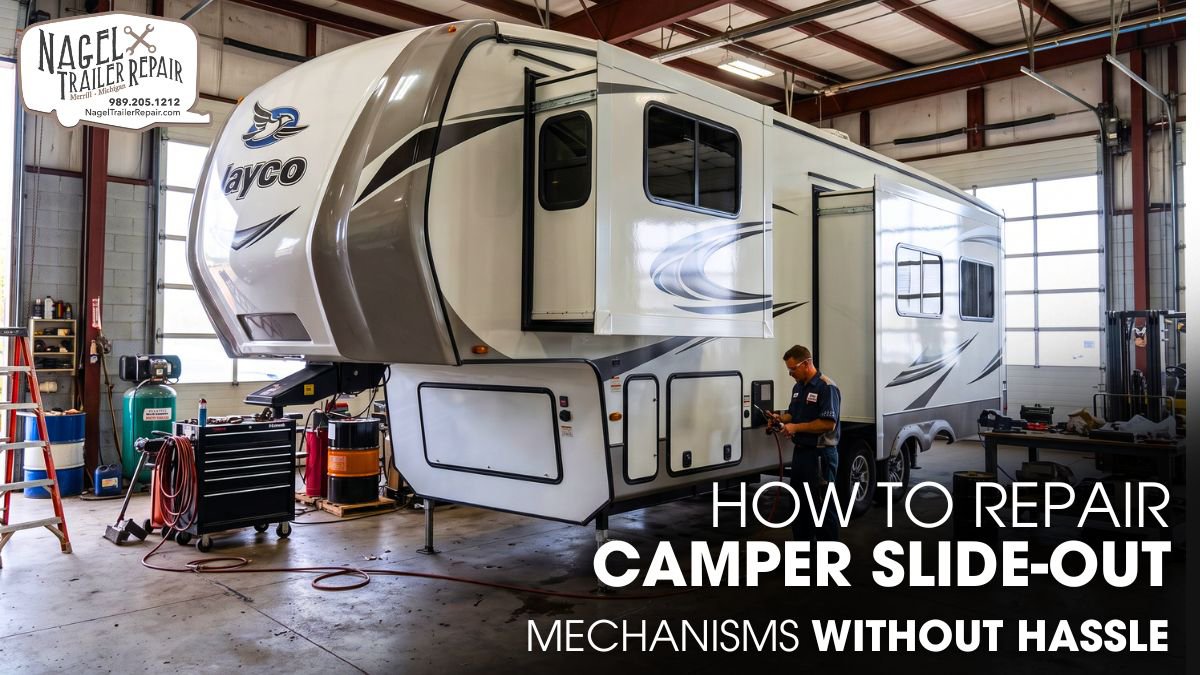
Nothing disrupts an RV adventure faster than a camper slide-out that refuses to move smoothly. Whether it sticks, jerks, makes unusual noises, or stops midway, a faulty slide-out can quickly turn a relaxing trip into a frustrating experience.
Many RV owners assume slide-out repairs require expensive service appointments or advanced mechanical skills. As a result, small issues often go unnoticed until they become larger and more costly problems that affect comfort, convenience, and travel plans.
The good news is that you can diagnose and repair many common slide-out mechanism issues with the right approach. This guide walks you through simple troubleshooting, practical repairs, and maintenance tips to restore smooth operation—but for complex jobs, trust a camper repair expert in Michigan to save time and prevent costly mistakes. Act now for hassle-free adventures!
Understanding Camper Slide-Out Systems:
A camper slide-out system does much more than create additional living space. It functions as a carefully engineered assembly that must move a heavy room extension in and out while maintaining proper alignment, structural stability, and weather protection. Even a slight mechanical imbalance can affect the entire system’s performance.
Most RV manufacturers use one of several slide-out designs, including rack-and-pinion, cable-driven, hydraulic, and electric through-frame systems. Although these systems operate differently, they all rely on the same principle: converting power into controlled linear movement.
Electric slide-outs typically use a 12-volt DC motor connected to a reduction gearbox. The gearbox lowers rotational speed while increasing torque, allowing the motor to move a slide room that can weigh several hundred pounds. The motor transfers force through drive shafts, gears, and rails that guide the room along a controlled path.
Hydraulic systems use a different approach. A hydraulic pump creates pressure and pushes fluid through hoses into hydraulic cylinders. The cylinders generate the force required to extend or retract the room. Because hydraulic systems produce substantial power, manufacturers often install them in larger fifth wheels and motorhomes.
The main components of a slide-out mechanism include:
- Electric motor or hydraulic pump
- Gearbox and drive shafts
- Rails and guide tracks
- Rollers and support assemblies
- Hydraulic cylinders or actuators
- Wiring harnesses and control modules
- Circuit breakers and fuses
- Inner and outer weather seals
Understanding how these components work together makes troubleshooting much easier and helps prevent unnecessary repairs.
Signs Your Slide-Out Needs Repair:
Slide-out systems usually provide warning signs before a major failure occurs. Recognizing these signs early can save both time and money.
One of the first indicators is unusual noise during operation. Grinding sounds often point to worn gears, damaged bearings, or excessive friction within the drive system. Clicking noises may indicate stripped gear teeth, slipping couplers, or synchronization problems between drive components.
Movement speed also provides valuable diagnostic information. A slide-out that extends or retracts slowly may suffer from electrical issues, excessive resistance, or mechanical wear. Electric motors depend heavily on adequate voltage. When voltage drops, available torque decreases, making it difficult for the motor to move the room efficiently.
Watch for these common symptoms:
- Uneven extension on either side
- Jerky or inconsistent movement
- Frequent breaker trips
- Motor operation without room movement
- Fluid leaks around hydraulic components
- Visible rail damage
- Uneven seal compression
- Excessive vibration during travel
A room that appears tilted or skewed often indicates alignment issues. Misalignment places additional loads on motors, gearboxes, rails, and rollers. Over time, these extra loads accelerate wear and increase the likelihood of component failure.
Professional technicians frequently use current-draw testing when diagnosing slide-out motors. A motor drawing excessive amperage usually encounters mechanical resistance, while abnormally low current may indicate an electrical fault or internal motor problem.
Tools and Safety Preparations:
Proper preparation plays a critical role in successful slide-out repairs. Working without the right tools often leads to inaccurate diagnoses and unnecessary component replacement.
Before beginning any repair, gather the following equipment:
- Digital multimeter
- Clamp-on ammeter
- Socket and wrench set
- Torque wrench
- Straightedge and measuring tape
- Inspection light
- Feeler gauges
- Electrical contact cleaner
- Approved slide-out lubricant
- Safety gloves and eye protection
Battery condition should be your first checkpoint. Many slide-out problems originate from weak batteries rather than mechanical defects. A healthy battery generally measures around 12.6 to 12.8 volts when fully charged and disconnected from a charging source.
Disconnect shore power before working on electrical circuits. If you plan to service a hydraulic system, release hydraulic pressure according to the manufacturer’s instructions.
Always park the RV on level ground. An uneven parking surface can place additional stress on the slide-out assembly and create misleading alignment readings. If the slide room remains extended during repairs, support it properly to reduce strain on the mechanism.
Never allow someone to operate the slide-out switch while you inspect moving components.
Step-by-Step Repair Process:
Successful repairs start with a systematic inspection rather than guesswork. Many owners replace expensive components only to discover that a simple adjustment or cleaning procedure would have solved the problem.
Begin by inspecting the rails, rollers, and guide tracks. Dirt, road debris, dried lubricant, and corrosion frequently create enough resistance to affect operation. Thoroughly clean all accessible moving parts before evaluating other components.
Next, inspect electrical connections throughout the system. Look for corrosion, loose terminals, damaged insulation, overheated connectors, and poor grounding points. Electrical resistance often increases gradually, making the issue difficult to identify without testing.
Voltage-drop testing provides more useful information than simply measuring battery voltage. A circuit may show proper voltage with no load but experience a significant voltage loss while the motor operates.
Carefully examine the motor assembly and gearbox. Check mounting hardware for looseness and inspect couplers for wear. Excessive movement within these components often causes intermittent operation and unusual noises.
When evaluating gear-driven systems, inspect for:
- Worn or chipped gear teeth
- Uneven wear patterns
- Gear backlash issues
- Bearing deterioration
- Lubrication contamination
Maintaining Slide-Out System Performance:
Rack-and-pinion slide mechanisms need regular inspection because small alignment problems can quickly affect performance. When gears are not properly positioned, they may slip under pressure, leading to uneven movement and unnecessary wear on key components.
If the slide room does not move evenly on both sides, compare the travel distance during operation. Differences often point to timing issues, worn parts, or rails that have shifted out of alignment. Addressing these concerns promptly helps prevent larger mechanical failures.
Hydraulic slide systems require a different troubleshooting approach. Verify that fluid levels are adequate and carefully inspect hoses, cylinders, and connections for signs of leakage. Trapped air within the hydraulic circuit can cause jerky motion, vibration, and a noticeable loss of operating power.
Inspect hydraulic hoses for:
- Abrasion damage
- Surface cracking
- Swelling
- Fluid seepage
- Sharp bends or kinks
Replace damaged hoses immediately. Even a small leak can reduce system efficiency and eventually cause complete failure.
After completing repairs, cycle the slide-out several times. Monitor movement speed, alignment, motor performance, and seal compression. Consistent operation across multiple cycles confirms that the repair addressed the root cause rather than the symptom.
Preventive Maintenance Tips:
Routine upkeep plays a crucial role in keeping camper slide-out systems operating smoothly and reliably. Scheduling regular inspections allows owners to detect worn components, alignment concerns, or minor mechanical problems early. Addressing these issues before they worsen can help prevent unexpected breakdowns, reduce repair expenses, and extend the lifespan of the slide-out mechanism.
Consistent cleaning is equally important for maintaining performance. Rails, rollers, and tracks should remain free from dust, mud, leaves, and other debris that can interfere with movement. When buildup accumulates, the system experiences added resistance, placing extra strain on moving parts and increasing wear during each extension and retraction cycle.
A practical maintenance schedule should include:
- Monthly seal inspections
- Regular rail cleaning
- Periodic hardware tightening
- Battery performance checks
- Wiring inspections
- Hydraulic fluid inspections
- Alignment verification
Use only manufacturer-approved lubricants. Applying the wrong product can attract contaminants, increase wear, and interfere with smooth operation.
Battery maintenance deserves special attention. Slide-out motors consume significant current during operation. Weak batteries force motors to draw higher amperage, generate additional heat, and experience premature wear.
Weather seals also require regular inspection. Damaged seals allow moisture to enter structural cavities, leading to corrosion, wood deterioration, mold growth, and electrical problems. Replacing worn seals early costs far less than repairing water damage later.
When to Seek Help from a Camper Expert:
Many common camper slide-out problems can be handled with basic tools and routine maintenance. Owners often resolve minor alignment issues, clean tracks, or replace worn components without needing outside assistance. These simple fixes can help keep the mechanism operating smoothly and prevent larger concerns from developing.
However, certain problems go beyond standard repairs and require a higher level of expertise. Damage affecting the structural integrity of the camper or distortion in the slide-out frame can impact performance and safety, making accurate diagnosis essential.
Complex hydraulic malfunctions and faults within electronic control systems are also best left to trained professionals. These repairs often involve specialized diagnostic equipment, advanced technical skills, and precise adjustments to restore reliable operation and prevent further damage.
Professional RV technicians can perform:
- Structural alignment measurements
- Hydraulic pressure testing
- Controller diagnostics
- Electrical load analysis
- Frame inspections
- System recalibration
Recurring problems usually indicate an underlying issue that basic troubleshooting has not identified. For example, repeated alignment failures may result from chassis flex, floor damage, or hidden structural deterioration rather than a faulty motor.
If you notice significant sagging, severe binding, cracked structural components, or separation between the slide room and RV body, stop operating the system immediately. Continuing to use the slide-out can worsen the damage and dramatically increase repair costs.
The Role of Professional Maintenance:
Professional maintenance helps RV owners catch small mechanical and structural issues before they turn into expensive repairs. Regular inspections keep moving components aligned, lubricated, and operating efficiently, reducing unnecessary wear on critical systems.
Technicians use specialized tools to evaluate electrical connections, drive mechanisms, seals, and structural integrity. Their expertise helps identify hidden problems that may not be visible during routine owner inspections.
Preventive service also plays a vital role in camper roof sealing. Seasonal maintenance protects against water intrusion, preserves roof materials, and extends the lifespan of the RV, helping owners travel with greater confidence and fewer unexpected issues.
Conclusion:
Camper slide-out systems combine electrical, hydraulic, and mechanical technologies that must operate in perfect synchronization. Understanding component functions, failure patterns, and diagnostic procedures allows RV owners to identify issues accurately and address them before they escalate into major repairs.
A methodical inspection process, proper voltage testing, alignment verification, and routine maintenance can resolve many common slide-out problems without unnecessary part replacement. Consistent attention to rails, gears, seals, and electrical connections significantly improves reliability and service life.
While advanced RV issues require professional help, informed owners make better decisions. For reliable slide-out care, trust Nagel Trailer Repair. As a premier camper repair expert in Michigan, we ensure your rig stays road-ready. Contact us today to keep your adventures worry-free!