


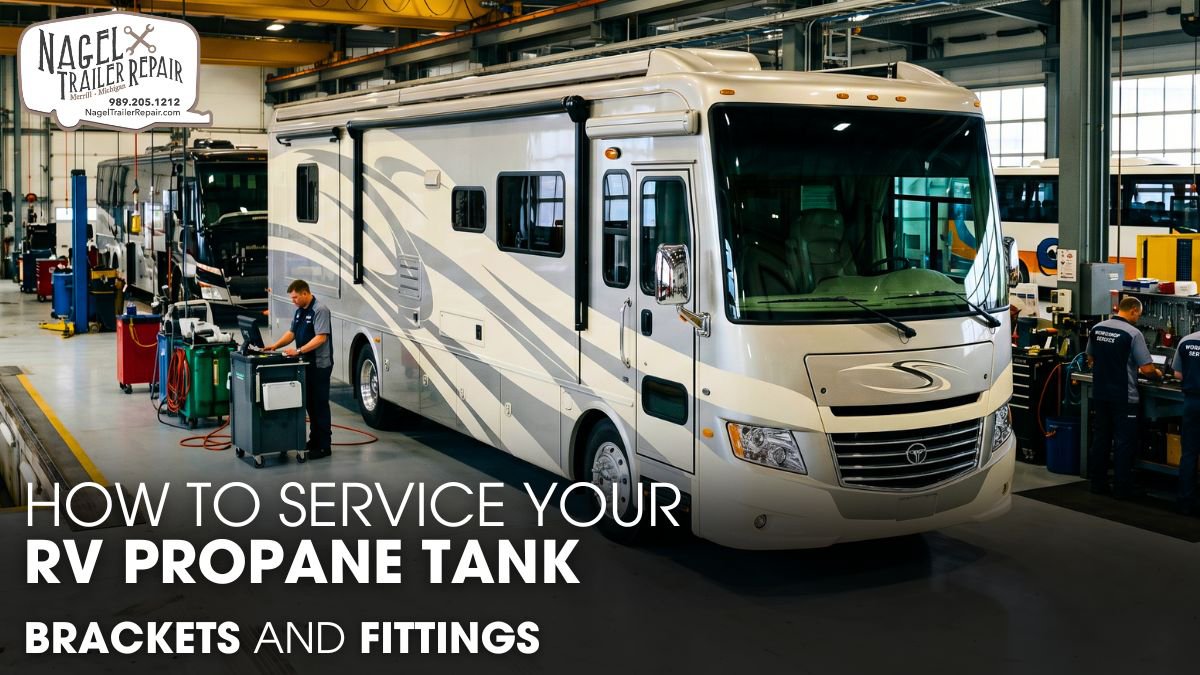
Your RV propane system keeps appliances running, but worn brackets and loose fittings can quickly turn into a serious safety risk. Rusted mounts, cracked connectors, and unnoticed leaks may lead to propane loss, unstable tanks, or costly repairs on the road. Ignoring these small issues often creates bigger problems over time.
Many RV owners struggle to identify early warning signs or service propane components safely. Without proper inspection and maintenance, tank brackets can weaken while fittings lose their secure seal. Even minor damage can affect propane flow and overall RV safety during travel or camping.
This guide will show you how to service your RV propane tank brackets and fittings step by step. But for major issues, trust an RV repair shop in Michigan to ensure safety, extend component life, and avoid costly breakdowns.
Understanding RV Propane Components:
Your RV propane system does much more than fuel a stove or water heater. It operates as a pressurized fuel delivery network that depends on secure mounting hardware, leak-free fittings, and stable gas regulation. If one component weakens, the entire system becomes less reliable and potentially unsafe.
Most travel trailers and fifth wheels use DOT propane cylinders mounted on the trailer tongue, while many motorhomes rely on permanently installed ASME tanks. Both systems store propane as a liquid under pressure. Once propane leaves the cylinder, the regulator converts that high pressure into a controlled flow that appliances can safely use.
The brackets and fittings around the propane tank often receive the least attention, even though they absorb constant stress from road vibration, potholes, rain exposure, and temperature changes. Over time, those conditions slowly weaken steel brackets, loosen mounting hardware, and dry out rubber seals.
A standard RV propane setup usually includes:
- Tank mounting tray
- Retaining straps or threaded hold-down rods
- Two-stage propane regulator
- High-pressure rubber pigtail hoses
- POL or ACME connectors
- Copper or flexible propane lines
- Manual shutoff valves
Every one of these parts matters. For example, a loose retaining bracket can allow the cylinder to shift during hard braking. That movement places stress on the regulator and pigtail hose, which may eventually crack or leak. A damaged fitting may also allow propane vapor to escape under pressure, creating a serious fire hazard around the RV.
Understanding how these components work together makes inspection and servicing much easier.
Tools Needed for Safe Servicing:
You should never service propane components with random garage tools alone. Propane fittings require precise tightening force, clean sealing surfaces, and careful handling. Using the wrong tool can damage threads, distort fittings, or create hidden leaks.
Before starting any work, gather the proper equipment. A well-prepared propane service kit should contain:
- Adjustable wrench
- Flare nut wrench
- Torque wrench
- Socket set and ratchet
- Wire brush
- Leak detection spray
- Yellow gas-rated PTFE tape
- Flashlight or inspection light
- Clean microfiber cloths
Flare nut wrenches work especially well on propane fittings because they grip more surface area than open-end wrenches. This reduces the chance of rounding soft brass fittings during removal or installation.
Safety equipment also matters. Always wear gloves and safety glasses while servicing propane systems. Rust flakes, metal debris, and pressurized contaminants can cause injuries during cleaning or disassembly.
Before touching any propane fitting or bracket:
- Shut off the propane tank valve
- Turn off all propane appliances
- Disconnect nearby ignition sources
- Work outdoors with good airflow
- Allow the regulator to depressurize
Many RV owners rush this process, but pressure trapped inside the system can still force gas through fittings after the valve closes. Waiting a few minutes before disconnecting components makes the system safer to handle.
You should also inspect your tools regularly. Worn wrench jaws or damaged sockets can slip under pressure and damage propane fittings.
Inspecting RV Tank Brackets:
Tank brackets handle far more stress than most RV owners realize. Every bump, turn, and sudden stop transfers force directly into the mounting tray and retaining hardware. Over thousands of miles, even strong steel brackets begin showing signs of fatigue and corrosion.
Start by removing the propane cylinders from the tray. This gives you a clear view of the mounting surface, threaded rods, weld seams, and anchor points. Dirt and road grime often hide rust damage underneath the tanks, so clean the entire assembly thoroughly before inspecting it.
Pay close attention to:
- Rust buildup around welds
- Bent retaining rods
- Loose mounting bolts
- Cracked metal brackets
- Elongated bolt holes
- Corroded tray surfaces
Surface rust usually appears first along bracket edges and weld joints because moisture collects there. You can remove light corrosion with a wire brush or abrasive pad, but deeper rust pitting weakens the metal structure itself. If the bracket feels thin, brittle, or heavily flaked, replace it immediately.
Loose mounting hardware creates another common problem. When tanks shift slightly during travel, vibration transfers directly into the regulator and hose assembly. Over time, that constant movement damages fittings and increases the chance of leaks.
Use a torque wrench to tighten mounting bolts according to the manufacturer’s specifications. Avoid overtightening because excessive force can distort the tray or crack welded mounting tabs.
After cleaning and tightening the assembly, apply a corrosion-resistant coating to exposed metal. Many RV technicians use rust converters followed by outdoor-grade enamel paint to protect steel brackets from moisture and road salt exposure.
Servicing Propane Tank Fittings:
Propane fittings seal pressurized gas connections, so even minor damage can become dangerous quickly. Dirt, corrosion, cross-threading, and worn seals often create slow leaks that go unnoticed until the propane odor becomes strong.
Begin by disconnecting the propane cylinders completely. Inspect the tank valve outlet and all threaded fittings under bright light. Look carefully for damaged threads, corrosion buildup, or signs of brass deformation.
Clean every connection point using compressed air or a lint-free cloth. Dirt trapped inside fitting threads can prevent proper sealing and create microscopic leak paths.
You should also inspect the propane pigtail hoses closely. These flexible high-pressure hoses experience constant movement and weather exposure. Replace them immediately if you notice:
- Surface cracking
- Dry rot
- Bulges or swelling
- Abrasion marks
- Loose crimp fittings
- UV damage
The propane regulator also deserves careful attention. Most RV systems use a two-stage regulator that reduces tank pressure into appliance-safe operating pressure. If the regulator vent becomes blocked with dirt or insect nests, pressure regulation may become unstable.
Common signs of regulator trouble include:
- Weak stove flames
- Inconsistent burner performance
- Frost buildup on the regulator
- Sudden appliance shutdowns
- Strong propane odor near the vent
When reinstalling fittings, tighten connections carefully. Brass propane fittings seal effectively with moderate force, but excessive tightening can crack flare seats or distort threads.
Use yellow gas-rated PTFE tape only on tapered pipe threads. Never apply tape to flare fittings because flare connections seal through metal-to-metal contact, not thread compression.
Testing for Propane Leaks:
Leak testing is the most critical step in the entire servicing process. Even a tiny propane leak can create dangerous conditions inside storage compartments or around ignition sources.
After reconnecting the propane system, open the tank valve slowly. Rapid pressurization can shock the regulator diaphragm and create false leak readings. Once the system stabilizes, apply leak detection solution to every fitting and connection point.
Focus especially on:
- Tank valve outlets
- Regulator fittings
- Hose crimp joints
- Quick-connect couplers
- Shutoff valves
- Threaded pipe joints
Watch carefully for growing bubbles. Steady bubbling indicates escaping propane gas and confirms a leak. If you find one, close the propane valve immediately and repair the connection before testing again.
Electronic propane detectors provide another layer of protection. These devices can identify very small leaks that soap solutions sometimes miss, especially in enclosed RV compartments.
You should also verify propane system pressure after servicing. Most RV propane systems operate at approximately 11 inches water column pressure. A faulty regulator may supply inconsistent pressure, causing appliance performance problems or incomplete combustion.
Never ignore the smell of propane during testing. Manufacturers add mercaptan odorant specifically so leaks become easier to detect. If you smell strong propane odor, stop working immediately, ventilate the area, and shut off the cylinder valve.
Maintenance Tips for Long-Term Use:
Routine maintenance keeps RV propane systems safe, efficient, and reliable over the long term. Small inspections performed several times each year can prevent expensive repairs and dangerous failures later.
Create a regular maintenance schedule that includes:
- Cleaning the tank tray
- Tightening mounting hardware
- Inspecting hose condition
- Checking regulator vents
- Testing fittings for leaks
- Removing corrosion buildup
Inspect the system before every major trip and again after driving through rough weather or salted roads. Moisture and road chemicals accelerate corrosion quickly, especially around steel brackets and fasteners.
Proper propane tank storage also extends component life. Always store cylinders upright and secured firmly in place. Never leave loose propane tanks inside the RV cabin or storage compartments without ventilation.
During long-term storage:
- Install protective valve caps
- Cover the regulator from rain exposure
- Keep mounting trays dry
- Remove debris around fittings
- Inspect hoses before reuse
Most propane regulators and hoses do not last forever. Even if they appear functional externally, internal seals and diaphragms gradually wear out with age. Replacing aging components proactively reduces the chance of roadside failures or unexpected propane leaks.
Consistent maintenance protects not only the propane system itself but also the appliances connected to it. Stable propane pressure helps furnaces, refrigerators, water heaters, and stoves operate more efficiently and safely.
The Role of Professional Maintenance:
Professional RV maintenance helps prevent serious safety and structural problems before they become expensive repairs. Skilled technicians inspect propane components for leaks, pressure irregularities, corroded fittings, and weakened mounting hardware that many owners may overlook during routine checks. They also use specialized tools to test regulators, secure fuel connections, and ensure the entire gas system operates safely under proper pressure.
The same level of expertise matters when dealing with hidden moisture damage and mold growth inside RV walls. Professionals identify the source of water intrusion, remove contaminated materials safely, and treat affected areas without spreading harmful spores through the cabin. Regular inspections and timely servicing improve RV safety, extend component lifespan, and help maintain a healthier living environment on the road.
Conclusion:
RV propane tank brackets and fittings may seem like small components, but they play a major role in overall RV safety. Corroded brackets, worn hoses, loose fittings, and neglected regulators can quickly turn into dangerous problems if left unaddressed.
Regular maintenance of your propane system is essential for a safe journey. By inspecting connections, tightening hardware, and performing leak tests, you ensure peak efficiency. When complications arise, visiting a trusted RV repair shop in Michigan provides the professional oversight needed to protect your investment and your passengers.
Promptly replacing damaged fittings prevents hazardous leaks and ensures your system remains reliable. Partnering with experts like Nagel Trailer Repair guarantees high-quality service that motivates you to explore with confidence, knowing your mobile home is in peak condition for the road ahead.