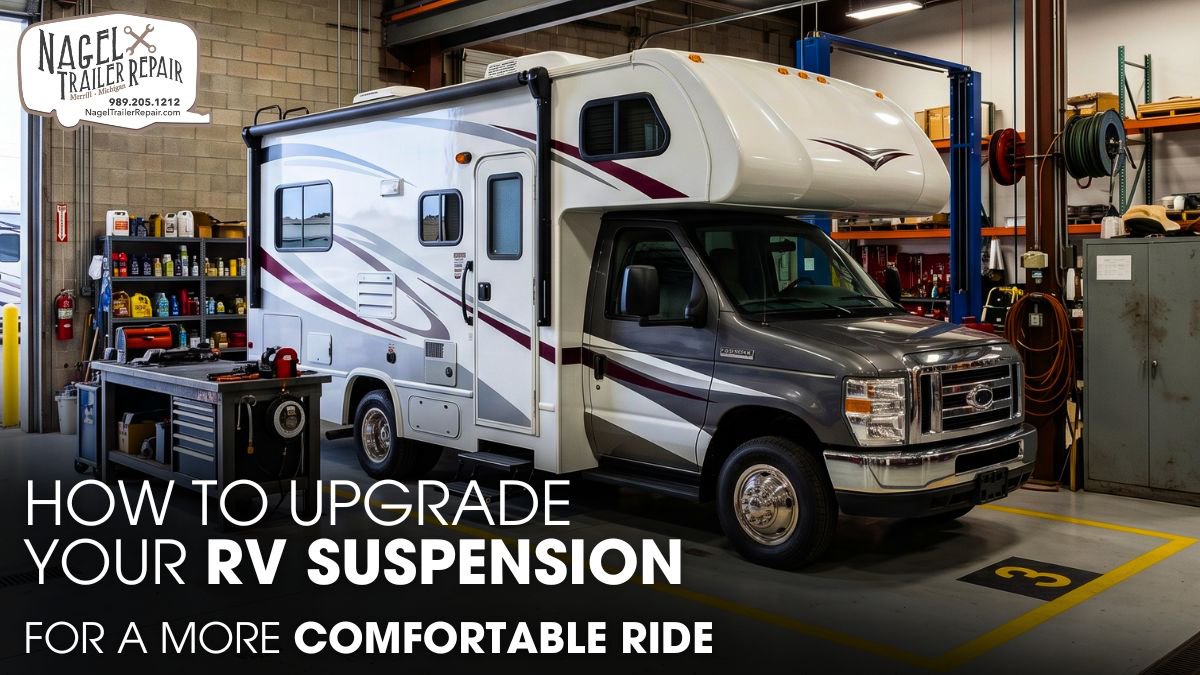
A smooth RV ride makes every road trip more enjoyable. Your suspension plays a major role in controlling bumps, reducing sway, and keeping your RV stable on the road.
Worn shocks, weak springs, and poor suspension components can create excessive bouncing, body roll, vibration, and uncomfortable handling. Ignoring these issues can also affect tire wear and overall driving confidence.
Upgrading your RV suspension boosts ride comfort, stability, and control. This guide covers inspection, smart upgrades, and maintenance—but for expert installation, turn to an RV expert in Michigan who knows local roads. Proper setup prevents sway and wear, so you travel safer and smoother. Don’t settle for DIY risks—let a pro handle your suspension, ensuring every trip feels like new.
Why RV Suspension Matters?
Your RV suspension acts as the mechanical link between the chassis and the road. It must support static vehicle weight while controlling dynamic forces created by potholes, expansion joints, braking, acceleration, cornering, and crosswinds. Springs carry the load, while dampers control how quickly those springs compress and rebound.
When damping or spring performance deteriorates, the chassis can continue moving after the wheels encounter an impact. That movement creates porpoising, excessive roll, tire unloading, and driver fatigue. Uncontrolled road shock can also transmit higher loads into the frame, fasteners, interior fixtures, and cargo.
Look for these warning signs before planning an upgrade:
- Repeated bouncing after bumps
- Excessive body roll in turns
- Front-to-rear porpoising
- Uneven ride height or spring sag
- Cupped or irregular tire wear
- Steering corrections during highway travel
Do not assume the suspension is the problem. Low tire pressure, excess axle weight, worn steering parts, or misalignment can cause similar handling issues. A complete chassis inspection by an RV repair shop in Michigan can identify the real cause and restore safer, smoother travel.
Inspect Your RV’s Current Suspension:
A thorough inspection establishes a critical baseline, safeguarding your budget by ensuring you purchase the correct replacement parts. Begin by positioning your RV on stable, level ground and securing it properly, then evaluate the suspension while it rests in its standard ride height. This method guarantees accurate readings of all components under normal load conditions.
Carefully examine each shock absorber for signs of hydraulic fluid seepage, bent piston rods, loose fasteners, and worn rubber bushings. For leaf-spring setups, meticulously scan the individual leaves, shackles, equalizer bars, spring eyes, U-bolts, and mounting hangers. Look closely for any stress fractures, rust damage, warping, or abnormal play that could indicate imminent failure.
Your inspection should include:
- Shock absorbers and mounting points
- Leaf or coil springs
- Bushings and shackles
- Sway bars and end links
- Air springs and pneumatic lines
- Bump stops and suspension brackets
- Tires, wheels, and alignment
Measure your RV’s actual axle weights rather than relying on its empty weight. Compare them with the manufacturer’s GAWR and GVWR to confirm safe operating limits. Even an upgraded suspension cannot compensate for overloading. If your RV needs professional inspection or repairs, choosing reliable RV services in Michigan can help improve safety, handling, and driving confidence.
Upgrade Your RV Shocks:
Shock absorbers control suspension velocity rather than carrying the RV’s static load. Inside a hydraulic damper, piston movement forces fluid through calibrated passages and valves, converting suspension motion into heat. That resistance prevents the spring from repeatedly oscillating after an impact.
A quality replacement shock should match the chassis, axle loading, suspension geometry, and expected travel conditions. Avoid choosing a damper simply because it has the highest advertised stiffness. Excessive damping can restrict wheel movement and make rough pavement feel harsher.
A properly matched shock upgrade can provide:
- Faster rebound control
- Reduced porpoising
- Better wheel-to-road contact
- More predictable steering response
- Improved braking stability
Current US pricing highlights how much RV suspension costs can vary. Replacement shocks and heavy-duty mounting kits vary widely in price. Professional installation adds labor and hardware costs based on chassis design and access. For reliable repairs, choosing RV repairs at our shop in Merrill, MI can help restore ride comfort and keep your RV road-ready.
Consider Upgraded Suspension Parts:
If new shocks do not address the main complaint, target the component responsible for that specific behavior. Sway bars primarily control body roll, while upgraded equalizers and cushioned suspension systems can reduce harsh fore-and-aft movement on towable RVs.
Anti-roll bars resist the difference in vertical movement between opposite wheels. That resistance limits chassis roll during cornering and can improve stability when a large truck passes or crosswinds hit the RV. Rubberized equalizers can also reduce the transmission of road shock and vibration through trailer suspension components.
Depending on the RV, useful upgrades may include:
- Heavy-duty sway bars
- Rubberized equalizers
- Auxiliary air springs
- Improved spring packs
- Reinforced suspension hardware
- Application-specific bump stops
Budget carefully before committing. Manufacturer-listed options vary widely in price, from a tandem rubberized equalizer kit to tandem-axle and triple-axle air-ride systems, before installation costs. If you’re searching for “RV repair near me”, professional guidance can help you choose the right suspension upgrade and avoid costly mistakes.
Improve RV Stability and Handling:
Comfort does not come from making the suspension soft. The objective is controlled compliance: the wheels should follow the road while the chassis remains stable. Spring rate, damping force, roll stiffness, tire characteristics, alignment, and vehicle loading all interact.
Start with weight distribution. Keep dense cargo low, secure loose equipment, and distribute weight according to axle limitations. A suspension component that works well on a lightly loaded RV may behave very differently when the vehicle approaches its maximum rated mass.
After installing suspension components, check alignment and steering geometry where applicable. Verify ride height, toe, camber, and caster against chassis specifications. Changes in ride height can alter suspension geometry and therefore affect handling.
For a practical upgrade strategy:
- Fix worn components first
- Match parts to actual axle loads
- Address sway separately from ride harshness
- Verify tire pressure before testing
- Perform alignment after applicable chassis work
- Road-test the RV under representative load
A professionally installed suspension package can be a worthwhile investment when your motorhome needs better stability and ride comfort. One documented upgrade combining calibrated shocks, air-spring valves, and a rear anti-sway bar was installed as a complete package. An RV specialist in Michigan can assess your suspension and recommend the right repair or upgrade for safer, smoother travel.
Maintain Your RV’s Upgraded Suspension:
Despite upgrades, a suspension system remains under relentless mechanical strain. Every mile subjects it to punishing road impacts, persistent vibration, corrosive elements, extreme temperature swings, and cyclical loading. Over time, these forces can gradually loosen critical fasteners, while bushings, joints, and other wear-prone parts degrade from fatigue and friction. Even high-performance components are not immune—regular deterioration is simply part of their operating life.
To maintain safety and performance, always conduct a thorough inspection before any long journey. Adhere strictly to the service intervals and torque specifications outlined by the component manufacturer. This proactive approach helps catch early warning signs like hairline cracks, surface rust, or unusual play in moving parts, preventing minor issues from escalating into costly failures or roadside breakdowns.
Focus your visual and physical checks on mounting bolts, control arm bushings, sway-bar end links, spring seats and retainers, air-line connectors, pneumatic fittings, and shock absorber bodies. Look for leaks, scoring, or loose connections. A few extra minutes under the vehicle can ensure your suspension handles the road ahead with confidence and reliability.
A routine inspection should check for:
- Hydraulic fluid leakage
- Cracked or compressed bushings
- Loose mounting hardware
- Damaged air lines or fittings
- Abnormal ride-height changes
- New tire-wear patterns
After installation, take a controlled road test to assess rebound, steering correction, body roll, braking stability, and suspension travel. If instability remains, avoid adding parts without diagnosis. Check weight distribution, tire pressure, alignment, ride height, and suspension condition. For safe, lasting results, consider professional RV repair services in Michigan to identify issues and fine-tune the suspension correctly.
The Role of Professional Maintenance:
Professional maintenance plays a critical role in keeping an RV safe, comfortable, and dependable on the road. Experienced technicians can inspect shocks, springs, sway-control components, bushings, mounting hardware, and suspension geometry to identify wear that may not be obvious during a basic visual check.
They can also verify ride height, axle loading, alignment, and damper performance before recommending upgrades. A professional inspection helps prevent incorrect part selection and catches mechanical problems before they develop into expensive failures.
The same preventive approach applies to the RV electrical system, particularly during hot weather. Technicians can test battery voltage, charging-system output, terminal condition, electrolyte levels where applicable, and signs of heat-related deterioration.
High temperatures accelerate battery aging and can increase electrolyte loss and charging problems, making regular inspection especially important. Professional diagnosis can identify parasitic loads, faulty converters, poor connections, or charging faults before they leave you without dependable power.
Conclusion:
A comfortable RV ride starts with a suspension system that matches the chassis, axle loads, and operating conditions. Proper inspection helps identify whether shocks, springs, sway control, tires, or alignment require attention.
Choose application-specific components instead of simply installing the stiffest parts available. Correct damping, spring capacity, roll control, and weight distribution work together to improve stability and road feel.
Finally, maintain every upgraded component and stay within GVWR/GAWR limits. For expert care, trust Nagel Trailer Repair—your RV expert in Michigan—to inspect and tune your suspension. Their precision service ensures smoother travel, sharper control, and total confidence. Don’t risk the road; schedule a professional check today for safer, happier towing.