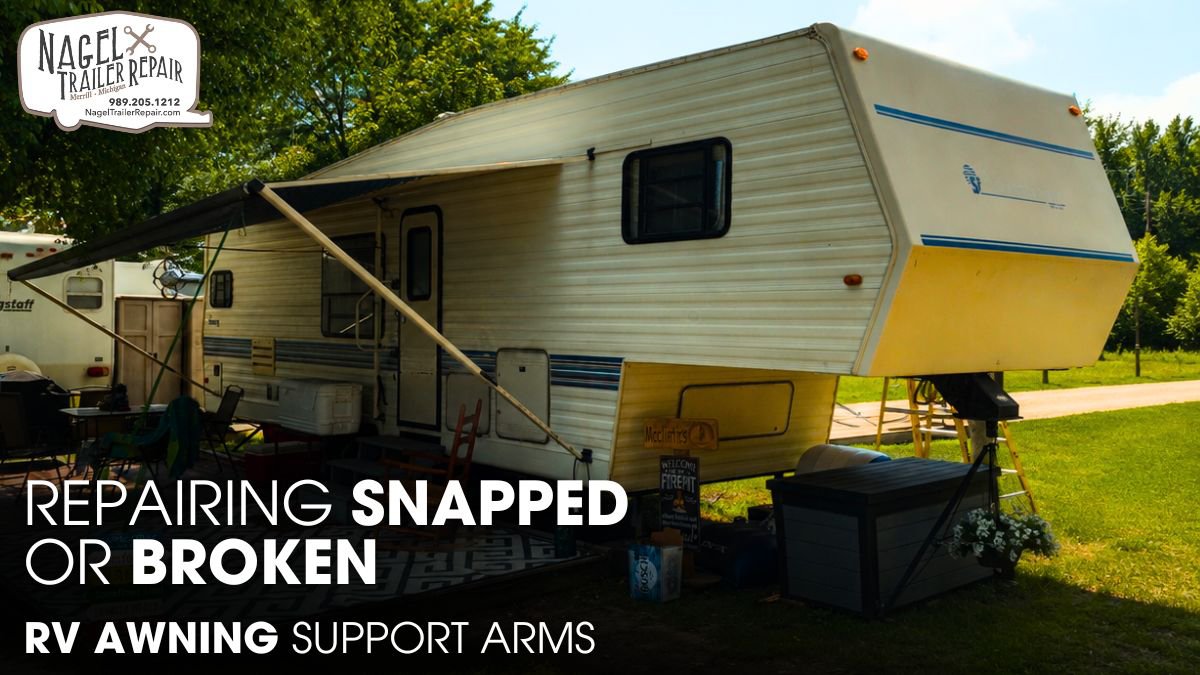
A damaged RV awning support arm can turn a relaxing trip into a frustrating experience. Whether a strong gust of wind, accidental impact, or years of wear caused the damage, a snapped awning arm affects both the safety and functionality of your outdoor setup.
Many RV owners struggle with bent, cracked, or completely broken support arms. Ignoring the issue can lead to further damage, unstable awning operation, and costly repairs that disrupt future travel plans.
The good news is that repairing or replacing a broken RV awning support arm is often more manageable than it seems. This guide helps you assess damage, pick tools, and finish the job—but for lasting safety and precision, trust a certified RV repair expert in Michigan to handle it flawlessly.
Understanding RV Awning Support Arms:
Most RV owners pay attention to the awning fabric because it is the most visible part of the system. However, the support arms are the components that make the entire awning function properly. They control extension and retraction, maintain structural stability, and keep the awning aligned during operation.
Modern RV awning support arms are usually manufactured from lightweight aluminum alloys. Manufacturers choose aluminum because it provides excellent strength while minimizing weight. Although these components are designed to handle years of use, they constantly experience stress from wind loads, movement, vibration, and environmental exposure.
Every time you extend the awning, the support arms distribute the weight of the roller tube and fabric while maintaining proper geometry throughout the system. During operation, the arms must resist several forces simultaneously, including vertical loading, lateral wind pressure, and torsional stress caused by uneven tension.
A typical support arm assembly includes:
- Upper and lower arm channels
- Pivot joints and hinge mechanisms
- Mounting brackets
- Gas struts or spring-assisted systems
- Locking mechanisms
- Fasteners and structural rivets
Because these components work together as a single structural unit, damage to one section often affects the entire assembly. A cracked pivot point, loose bracket, or bent arm can change load distribution and place additional stress on surrounding components. This is why a complete inspection is always necessary when diagnosing support arm failures.
Causes of Broken Awning Arms:
Support arms rarely fail without warning. In most cases, environmental conditions, operational stress, or impact damage gradually weaken the structure before a complete failure occurs.
Wind damage is one of the most common causes of broken support arms. An extended awning creates a large surface area that acts like a sail during windy conditions. Even moderate gusts can generate significant uplift forces that transfer directly into the support arms and mounting brackets. A sudden wind event can bend aluminum components, twist hinge assemblies, or even pull mounting hardware from the RV wall.
Impact damage is another major contributor. RV owners frequently encounter low-hanging branches, campground obstacles, utility poles, and building overhangs. Even a seemingly minor collision can alter the shape of a support arm. Once metal bends beyond its intended design limits, its structural strength decreases significantly.
Material fatigue also plays a major role in support arm failures. Each extension and retraction cycle creates stress within the metal. Over time, microscopic cracks can develop around high-stress areas such as pivot joints, rivet holes, and mounting points. These cracks continue to grow until the component eventually fails.
Other factors that commonly contribute to support arm damage include:
- Corrosion around hardware and joints
- Water intrusion inside arm channels
- Loose fasteners
- Improper adjustment settings
- Uneven fabric tension
- Lack of preventive maintenance
In many cases, support arm failures result from a combination of these issues rather than a single cause. For example, corrosion may weaken a component over time, while a strong gust of wind ultimately causes the arm to snap.
Tools and Materials Needed:
Recommended tools include:
- Socket wrench set
- Combination wrenches
- Torque wrench
- Cordless drill
- Rivet gun
- Locking pliers
- Measuring tape
- Rubber mallet
- Digital level
- Alignment punch set
Selecting the correct replacement parts is equally important. Support arms vary considerably among manufacturers and product lines. Installing a component that does not match the original specifications can lead to alignment issues, uneven loading, and premature wear.
Common replacement parts include:
- OEM support arm assemblies
- Mounting brackets
- Stainless steel bolts and screws
- Structural rivets
- Pivot bushings
- Spacer washers
- Electrical connectors for powered awnings
Safety should remain a top priority throughout the repair process. Many awning systems use spring-loaded mechanisms that store significant energy. Improper disassembly can release this energy unexpectedly.
Before starting any repair, use:
- Safety glasses
- Cut-resistant gloves
- Closed-toe footwear
- Long-sleeve protective clothing
Taking time to gather proper tools and safety equipment can prevent costly mistakes and reduce the risk of injury.
Step-by-Step Repair Process:
Repairing a snapped or broken support arm requires careful planning and attention to detail. Rushing through the process often leads to alignment problems that affect long-term performance.
Start by performing a thorough inspection of the entire awning system. Do not focus solely on the visibly damaged arm. Examine the roller tube, mounting brackets, fabric track, wall attachments, and opposite support arm. Compare both sides of the awning and look for signs of distortion, wear, or misalignment.
If your RV uses a powered awning, disconnect electrical power before beginning work. This precaution prevents accidental activation during the repair process.
Next, stabilize the awning assembly. Use temporary supports or adjustable stands to hold the roller tube securely in position. Removing a support arm without proper support can place excessive stress on the remaining components.
Once the system is secure:
- Remove all mounting hardware.
- Drill out damaged rivets if necessary.
- Disconnect electrical connections on powered systems.
- Carefully detach the broken support arm.
- Inspect surrounding structures for hidden damage.
Proper Awning Arm Installation Guide:
Inspect the mounting hardware and connection areas carefully before starting the repair. Look for signs of wear such as widened bolt openings, fractured brackets, loose fittings, or damage to the RV wall surface. These issues can weaken the structure and reduce the stability of the awning system, making it difficult for a replacement arm to perform properly.
Once the faulty support arm has been removed, install the new part by following the manufacturer’s recommended measurements and positioning guidelines. Accurate placement is essential, as even a slight misalignment can place uneven stress on the awning mechanism and affect its smooth operation over time.
During installation:
- Verify bracket positioning
- Ensure pivot joints move freely
- Install proper hardware
- Follow manufacturer torque specifications
- Confirm equal arm geometry on both sides
Once installation is complete, cycle the awning through multiple extension and retraction operations. Observe movement carefully and watch for any signs of binding, twisting, or abnormal noise.
Check for:
- Smooth operation
- Consistent arm movement
- Proper fabric tension
- Secure mounting points
- Roller tube alignment
- Stable bracket performance
Correct any issues immediately before placing the awning back into regular service.
When to Repair or Replace:
Determining whether to repair or replace a damaged support arm depends on the severity of the damage and the overall condition of the awning system.
Minor issues can often be repaired effectively. Problems such as worn bushings, loose hardware, damaged rivets, or adjustment mechanism failures usually do not require complete arm replacement. Replacing these components can restore normal operation at a relatively low cost.
Structural damage presents a different situation. Aluminum support arms rely on their original shape and material properties to maintain strength. Once the metal experiences significant deformation, its structural integrity becomes compromised.
Replacement is generally recommended when you find:
- Cracked aluminum sections
- Severely bent arm channels
- Failed welds
- Twisted structural members
- Extensive corrosion
- Recurring repair problems
Although straightening a bent arm may seem like an economical solution, the process cannot restore the material’s original strength. The arm may appear functional but remain vulnerable to future failure. From a long-term perspective, replacement often provides better value than repeated repairs. A new support arm restores original load-carrying capability and reduces the likelihood of additional failures.
Maintenance and Prevention Tips:
Preventive maintenance is the most effective way to extend the lifespan of RV awning support arms and avoid costly repairs. Many support arm failures begin as small issues that remain unnoticed until significant damage occurs. Establishing a routine inspection schedule allows you to identify developing problems before they become serious.
Inspect the following components regularly:
- Pivot joints
- Fasteners
- Mounting brackets
- Roller tube connections
- Arm alignment
- Fabric attachment points
Tighten loose hardware promptly and replace worn components before they affect surrounding parts. Small maintenance tasks often prevent major structural repairs. Weather awareness also plays a critical role in awning longevity.
Even a properly maintained awning can suffer damage during severe weather. Whenever strong winds or storms are expected, retract the awning immediately.
Additional preventive measures include:
- Cleaning debris from moving parts
- Removing standing water from the awning
- Lubricating approved pivot points
- Inspecting mounting sealants
- Applying corrosion protection products
- Monitoring fabric tension
Before traveling, always verify that the awning is fully secured and locked in the retracted position. Road vibration can gradually loosen hardware and increase wear on support arm assemblies. Consistent maintenance not only improves reliability but also enhances safety and reduces long-term ownership costs.
A few minutes of inspection and care can significantly extend the service life of your RV awning system.
The Role of Professional Maintenance:
Even the most diligent RV owners can overlook early warning signs that lead to expensive repairs and system failures. Professional maintenance helps identify hidden structural damage, loose mounting hardware, worn pivot points, communication faults, and performance issues before they become major problems.
Technicians use specialized tools and diagnostic procedures to inspect mechanical components, verify system alignment, test electrical connections, and evaluate overall operational reliability. Regular professional servicing also improves safety by ensuring that moving assemblies operate smoothly and electronic control systems communicate correctly across the RV.
Preventive inspections can extend component lifespan, reduce unexpected breakdowns, and help maintain consistent performance during travel. By addressing minor issues early, owners can avoid costly replacements, improve system efficiency, and enjoy greater confidence on every trip.
Conclusion:
A snapped or broken RV awning support arm should never be ignored because it directly affects the stability, safety, and performance of the entire awning system. By understanding how support arms function, identifying the root cause of failure, using the correct tools, and following proper repair procedures, RV owners can restore reliable operation while preventing additional damage.
Consistent inspections, timely maintenance, and proactive weather protection are your best defenses against awning wear. But when issues arise, trust Nagel Trailer Repair—your RV repair expert in Michigan—for honest, skilled service.
Don’t let small cracks become costly failures; protect your investment and travel peace of mind. Schedule a professional checkup today and hit the road with confidence, knowing your RV is in capable, caring hands.