


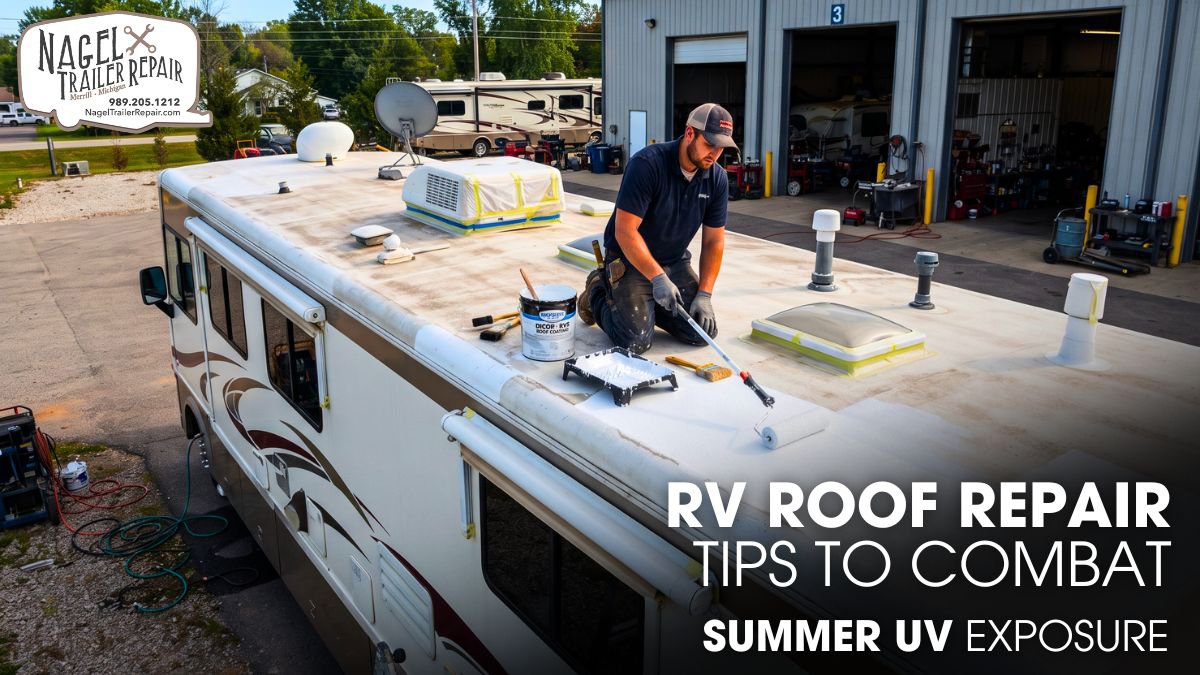
Summer sunshine makes every RV adventure more enjoyable, but intense UV rays can silently damage your roof. Constant exposure dries out roofing materials, weakens sealants, and creates small cracks that grow into expensive problems if left unchecked.
Many RV owners overlook early signs of sun damage until leaks, soft spots, or water stains appear. By then, repairs often take more time and money than simple preventive maintenance would have required.
This guide shares practical RV roof repair tips before damage spreads. You’ll learn how to inspect, fix minor issues, apply protectants, and build a maintenance routine—but for lasting peace of mind, trust an RV roof expert in Michigan to handle complex repairs and ensure your rig stays trip-ready all season.
Why Summer UV Damages RV Roofs?
Most RV owners expect storms, falling branches, or road debris to damage their roofs. However, the biggest threat often comes from something much less noticeable—continuous summer sunlight. Ultraviolet (UV) rays slowly break down roofing materials every day, even when your RV is parked.
This process, known as photo-oxidation, weakens the molecular structure of rubber, plastic, and protective coatings, making the roof less flexible and more likely to crack. High summer temperatures make the problem even worse. Roof surfaces can easily reach 150°F (65°C) on sunny days.
As the roof heats up, it expands; at night, it contracts. This daily cycle stresses your RV’s membrane, adhesives, and sealants. Over time, they fail—especially without proper RV roof sealing in Michigan, where extreme weather accelerates wear. Don’t wait for leaks. Protect your investment now with professional repair services that ensure lasting, watertight protection.
Every roofing material reacts differently to prolonged UV exposure.
- EPDM rubber roofs gradually oxidize and develop a chalky surface.
- TPO roofs generally resist UV better but can shrink if they age without proper maintenance.
- Fiberglass roofs often experience fading, gel coat oxidation, and fine surface cracks.
- Aluminum roofs resist UV damage well but still suffer from repeated thermal movement that stresses seams and rivets.
RV Roof Maintenance Prevents Costly Leaks:
When it comes to RV roof durability, the real trouble spots aren’t the broad expanses of membrane or metal—they’re the tight perimeters around every bolted-on fixture. Vent fans, AC units, satellite dishes, and solar panel mounts create natural interruptions in the roof’s continuous seal, inviting water intrusion, flex cracks, and UV degradation over time.
These accessory edges endure constant vibration, thermal expansion, and pooling runoff, making them the first to fail if neglected. Regular inspection of caulking, lap sealant, and mounting hardware around these zones is critical—because a leak that starts small at a vent base can quickly spread into costly rot below.
UV radiation accelerates the aging of sealants around:
- Air conditioning units
- Plumbing vents
- Skylights
- Solar panel brackets
- TV antennas
- Roof racks
Once those seals begin to dry out or separate, water can enter the roof structure. Moisture trapped beneath the membrane may damage plywood decking, insulation, wiring, and interior ceiling panels long before you notice visible leaks.
From a financial standpoint, early prevention delivers significant savings. Replacing deteriorated sealant may cost less than $100 in materials, while repairing water-damaged roof decking can easily exceed $1,500 to $5,000, depending on the extent of structural damage. Preventive maintenance almost always costs less than major reconstruction.
Inspect Your RV Roof Regularly:
Routine inspections remain the most effective way to catch UV damage before it becomes a serious repair. During the summer, inspect your roof every four to six weeks and after severe weather events such as hail, heavy rain, or prolonged heat waves.
Begin with a slow visual inspection from the front cap to the rear. Look for discoloration, wrinkles, bubbles, lifted edges, cracked sealants, or loose trim. Small imperfections often indicate larger problems developing underneath the roofing membrane.
Pay close attention to:
- Roof membrane condition
- Lap sealant around accessories
- Front and rear termination bars
- Roof edge moldings
- Air conditioner gasket
- Skylight frames
- Vent flanges
- Solar panel hardware
- Ladder mounting points
Roof seams deserve extra attention because they experience the greatest movement during temperature changes. Check carefully for:
- Hairline cracks
- Loose sealant
- Lifted membrane edges
- Adhesive failure
- Moisture staining
Detecting Hidden RV Water Leaks Early:
Professional RV inspectors don’t rely on visible stains alone. Instead, they deploy moisture meters and infrared thermal imaging—two non-invasive technologies that reveal what eyes cannot see. These precision tools scan walls, floors, and ceilings, detecting subtle temperature variations and elevated dampness levels long before a single drip reaches the interior.
By identifying wet insulation in its earliest stage, these methods turn a potential catastrophe into a manageable fix. A small patch of saturated foam or wood can be dried or replaced without tearing apart entire sections of the coach. This proactive approach saves thousands of dollars and weeks of workshop downtime, preserving both structural integrity and resale value.
Ultimately, early detection means localized action. Rather than chasing widespread rot or mold years later, owners benefit from targeted, minimal repairs. Moisture mapping gives technicians a clear roadmap, ensuring that every intervention is precise, effective, and cost-efficient—keeping your home-on-wheels safe, dry, and road-ready for seasons to come.
Don’t forget the interior inspection. Check ceilings, cabinets, wall corners, and upper storage compartments for warning signs such as:
- Brown water stains
- Soft ceiling material
- Delaminated wall panels
- Mold growth
- Musty odors
Finding these signs early may reduce repair costs dramatically. Replacing a small section of damaged membrane is far less expensive than rebuilding a roof structure compromised by rot and mold.
Repair Minor Roof Damage Early:
Small roof problems rarely stay small. A tiny crack or failing sealant can allow water to enter the roof system during the next rainstorm. Once moisture reaches the wooden roof decking, deterioration accelerates quickly.
Before making any repair, identify your roofing material. EPDM, TPO, fiberglass, and aluminum roofs each require compatible primers, adhesives, tapes, and sealants. Using the wrong product can create poor adhesion and shorten the lifespan of the repair.
A proper repair process typically includes:
- Remove old or damaged sealant.
- Clean away oxidation and contaminants.
- Allow the surface to dry completely.
- Apply primer if recommended.
- Install a compatible repair patch.
- Seal all repair edges evenly.
Pressure-sensitive repair tapes work well for many membrane repairs because they create a durable waterproof bond when installed correctly. Using a hand roller helps eliminate trapped air and ensures maximum adhesion across the repair area.
Costly Roof Repair & Maintenance Errors:
Avoid costly roof repair & maintenance errors that shorten your RV’s life. Leaks, wrong sealants, and neglected inspections spike expenses. Trust a certified RV roofing shop in Michigan for expert care—save money, enjoy peace of mind, and hit the road with a leak-proof roof. Don’t wait; schedule your professional service today!
Avoid these common mistakes:
- Applying sealant over dirt or oxidation
- Mixing incompatible repair products
- Skipping surface preparation
- Ignoring curing times
- Repairing wet roofing materials
If water has already soaked into the plywood decking, inspect for soft spots, fungal growth, or structural weakening before installing a new membrane. Covering damaged wood without replacing it only hides the problem temporarily.
Financially, addressing a small membrane repair immediately may cost only a few hundred dollars. Waiting until structural damage develops often multiplies labor costs because technicians must remove roofing materials, replace decking, reinstall insulation, and reseal the entire assembly.
Protect the Roof From UV Exposure:
Repairing damage is important, but preventing it delivers the greatest long-term value. A well-maintained protective system reduces UV exposure, limits oxidation, and slows the aging process of the roofing membrane.
Elastomeric roof coatings provide one of the best defenses against summer sunlight. These flexible coatings reflect a significant amount of solar radiation while creating an additional waterproof barrier. Because they remain flexible after curing, they move with the roof during temperature changes instead of cracking.
Before applying any coating:
- Wash the roof thoroughly.
- Remove oxidation completely.
- Repair existing damage.
- Allow the roof to dry fully.
- Follow the recommended coating thickness.
Reflective coatings also improve energy efficiency. By lowering roof temperatures, they reduce heat transfer into the RV, allowing the air conditioner to work less. Over time, this may reduce energy consumption, decrease wear on the cooling system, and improve interior comfort during hot weather.
Additional protection methods include:
- Store the RV under a covered structure whenever possible.
- Use a breathable RV cover during long-term storage.
- Remove standing water after heavy rain.
- Trim branches that may scratch the roof.
- Wash bird droppings and tree sap promptly.
Protecting plastic roof accessories matters as well. Vent covers, skylights, and AC shrouds often become brittle after years of UV exposure. Replacing aging plastic components before they crack helps prevent secondary roof damage and water intrusion. For lasting protection, trust professional RV roof repair in Michigan—experts who spot hidden flaws and seal weak points, saving you costly interior rot and keeping your adventures worry-free all season long.
Maintain the Roof All Summer:
Consistent maintenance extends the life of every roofing system, and that’s especially true for your recreational vehicle. Instead of waiting for leaks to appear, develop a routine that keeps every component in good condition throughout the summer.
Protecting your investment starts with proactive care—like scheduling professional RV roof coating in Michigan—to seal out moisture, prevent UV damage, and avoid costly repairs. Don’t let small cracks turn into big headaches; act now to ensure your RV stays road-ready and leak-free all season long.
A simple maintenance schedule includes:
- Wash the roof monthly.
- Remove leaves and debris after trips.
- Inspect sealants every 30 days.
- Tighten loose hardware.
- Clean drainage channels.
- Check solar panel brackets.
- Inspect roof-mounted accessories.
- Examine AC gaskets.
Avoid petroleum-based cleaners on rubber roofs; they can harm the membrane and shorten its lifespan. Instead, choose pH-neutral, manufacturer-approved products whenever possible to keep the surface safe and functional.
Regular washing removes harmful debris like pollen, bird droppings, tree sap, and industrial fallout. These contaminants trap heat and slowly break down protective coatings, so consistent cleaning directly preserves the roof’s integrity over time.
Maintain a detailed log after each inspection. Note dates, repairs, sealant replacements, and coating work. This history helps track performance, supports warranty claims, and boosts resale value by proving diligent care to future property buyers.
Though monthly upkeep takes a small effort, it pays off by preventing costly emergencies and adding years to your roof’s service life. Smart maintenance today means fewer surprises and greater long-term savings.
Prevent Costly Roof Repairs:
The most expensive RV roof repairs usually begin as inexpensive maintenance issues. A neglected seam or cracked sealant may remain unnoticed for months while moisture slowly damages insulation, electrical wiring, and structural framing beneath the membrane.
Scheduling a professional roof inspection once each year provides an additional layer of protection. Experienced technicians use electronic leak detection, infrared imaging, and moisture mapping equipment to locate hidden problems that standard visual inspections may miss.
Professional service becomes necessary if you notice:
- Large membrane tears
- Soft roof decking
- Persistent water leaks
- Structural sagging
- Extensive seam separation
- Mold contamination
- Saturated insulation
- Interior ceiling deformation
Before installing heavy equipment such as solar arrays or cargo racks, verify that the roof structure can safely support the additional weight. Improper installations often create stress points that weaken waterproof seals and shorten roof life.
From a financial perspective, preventive maintenance delivers one of the highest returns on investment for any RV owner. Spending a few hundred dollars each year on inspections, cleaning supplies, sealants, and protective coatings can help avoid repair projects costing several thousand dollars.
More importantly, a well-maintained roof protects your RV’s structural integrity, preserves resale value, and cuts costly travel interruptions from water damage. For RV roofing in Michigan, harsh winters and humid summers accelerate wear—don’t wait for leaks. Schedule a professional inspection today and drive with confidence, knowing your roof is season-ready and repair-proof.
The Role of Professional Maintenance:
Professional maintenance helps identify hidden issues that routine inspections often miss. Experienced technicians use specialized tools to detect moisture beneath the roof membrane, evaluate sealant performance, and inspect structural components before small defects develop into costly repairs. Their expertise also ensures that repairs match the roof material and manufacturer specifications.
Regular service appointments can also reduce long-term ownership costs. Preventive maintenance lowers the risk of major roof failures, extends the lifespan of critical components, and helps owners avoid unexpected repair expenses. In many cases, documented maintenance records also support warranty claims and simplify future resale.
Professionals can also explain available repair coverage and recommend cost-effective protection plans that fit your RV’s age, condition, and travel habits. Choosing the right maintenance schedule alongside affordable insurance coverage provides stronger financial protection and keeps your RV ready for safe, reliable adventures throughout the year.
Conclusion:
Summer UV exposure never stops working against your RV roof, but a proactive maintenance strategy can significantly slow its effects. Regular inspections, prompt repairs, and the use of compatible roofing materials help preserve the membrane and prevent hidden water intrusion before it compromises structural components.
Protective coatings, quality sealants, and routine cleaning work together to reduce photo-oxidation, thermal stress, and seal failure. Consistent seasonal maintenance also improves roof performance during extreme weather and extends the lifespan of critical roofing components.
By following these RV roof repair , you can reduce expensive repair bills, maintain structural integrity, and ensure lasting reliability. For professional care, trust Nagel Trailer Repair—the RV roof expert in Michigan—to inspect, seal, and protect your investment. Don’t wait for leaks; schedule expert service today for peace of mind on every adventure.