
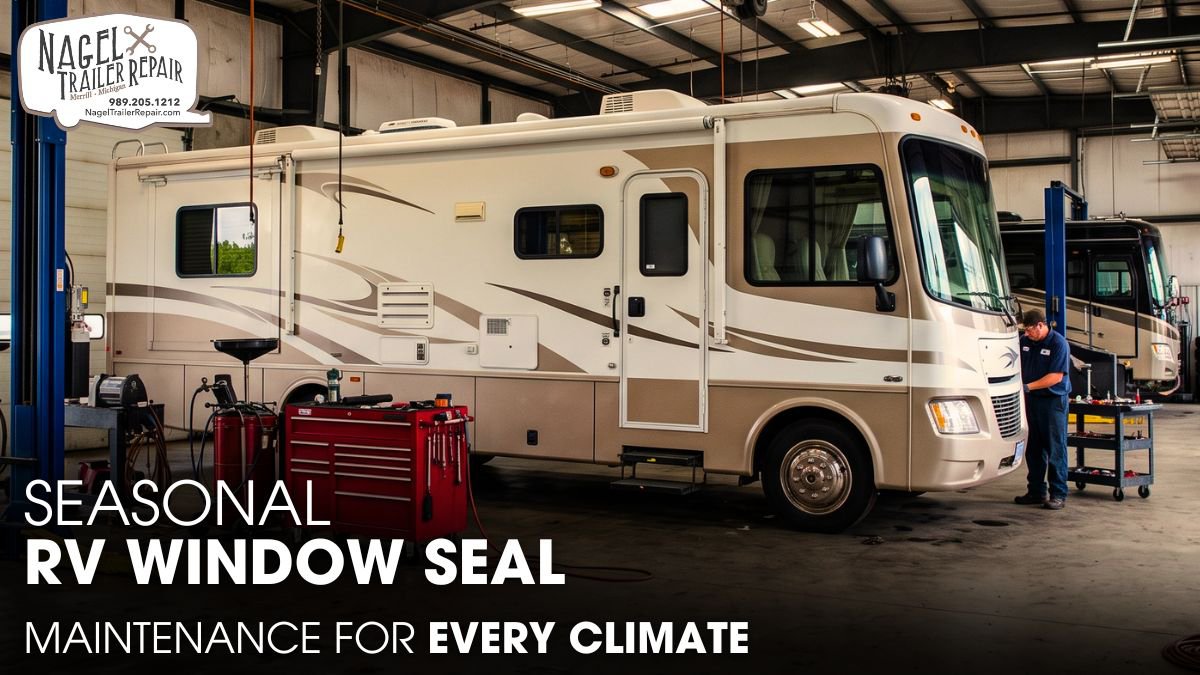
Your RV windows face changing weather every time you travel or park outdoors. Heat, freezing temperatures, humidity, UV exposure, and heavy rain can gradually weaken window seals. A small seal problem can quickly become a costly repair if you overlook it.
Many RV owners inspect their windows only after noticing drafts, condensation, or water stains. By then, cracked, hardened, or shrunken seals may have already allowed moisture to reach the interior. Different climates also create different stress points, so one maintenance routine cannot cover every condition.
Seasonal RV window seal maintenance gives you a practical way to prevent leaks and extend seal life. In this guide, you will learn how to inspect, clean, condition, and protect RV window seals throughout the year, regardless of the climate you travel through. For lasting protection, trust an RV expert in Michigan to handle complex repairs and keep your home-on-wheels worry-free.
Inspect RV Window Seals by Season:
Treat your RV window seals as part of the vehicle’s weatherproofing system, not simply as rubber trim. The gasket and sealant around a window work together to control air and water movement. Temperature changes, vibration from driving, frame movement, and environmental exposure can gradually reduce their sealing performance.
Start every seasonal inspection with a visual check of the entire window perimeter. Look closely at corners, joints, mounting points, sliding sections, and areas where different materials meet. EPDM rubber, thermoplastic elastomers, butyl compounds, and exterior sealants can show different failure patterns, so do not judge a seal only by its color.
Run your fingers gently along accessible gasket sections. A healthy flexible seal should not feel excessively brittle, sticky, cracked, or permanently flattened. Inside the RV, inspect the wall and trim around every window. Water staining, swollen materials, peeling finishes, soft wood, or a persistent musty smell can indicate hidden moisture.
- Inspect windows at least once each season.
- Check seals after heavy storms or long storage.
- Look for cracking, shrinkage, and compression damage.
- Clean dirt before evaluating seal condition.
- Keep drainage and weep paths open.
Keep RV seals clean with mild soap, water, and a soft cloth. Avoid harsh solvents and petroleum products that can damage rubber. If you notice cracks, stiffness, or loss of flexibility, contact professionals offering RV services in Michigan for proper inspection and timely repair before leaks cause costly damage.
Prepare Window Seals for Cold Climates:
Freezing temperatures create a combination of material contraction, reduced elastomer flexibility, ice formation, and repeated freeze-thaw cycling. These conditions can turn a small sealing defect into a significant water-entry point. The problem becomes more serious when trapped moisture freezes inside a joint because expanding ice can force materials apart.
Inspect your windows before the first sustained freeze. Check exterior sealant joints, gasket corners, lower frame sections, and sliding-window interfaces. Look for small openings that may not leak during mild weather but could become vulnerable when the surrounding materials contract.
- Repair failed joints before winter arrives.
- Remove snow without scraping the gasket.
- Never force a frozen window open.
- Keep drainage channels free of ice and debris.
- Use products rated for the expected temperature.
Pay attention to interior condensation as well. A cold window surface can produce condensation when warm, humid interior air contacts the glass. That moisture does not automatically mean the exterior seal leaks. Improve ventilation and humidity control before assuming every wet window requires resealing.
Cold-weather sealant repairs require careful surface preparation and proper curing conditions to prevent leaks and adhesion problems. If you notice damaged seals, professional RV repairs in Michigan can help restore protection, prevent moisture intrusion, and keep your RV ready for safe travel.
Maintain Seals in Hot Dry Climates:
Hot climates attack window seals through UV radiation, elevated surface temperatures, dust, and repeated thermal expansion and contraction. Direct sunlight can heat exterior components significantly above ambient air temperature. That repeated thermal cycling gradually affects the flexibility and dimensional stability of exposed sealing materials.
Inspect seals for fading, chalking, surface crazing, brittleness, shrinkage, or small splits. Pay particular attention to the top edge of windows because it receives substantial solar exposure. Dust can also accumulate in sliding-window tracks and act as an abrasive contaminant when you operate the window.
- Clean dust before applying any treatment.
- Choose conditioners compatible with the seal material.
- Avoid unapproved petroleum-based products.
- Use shades to reduce direct solar exposure.
- Inspect more frequently during extreme heat.
A seal conditioner can help maintain flexibility when the manufacturer approves it for the specific material. However, no conditioner can repair a gasket that has cracked through its sealing surface or permanently lost its shape. Replace severely deteriorated components instead of masking the damage with a surface treatment.
Using window shades, smart parking, and reduced sun exposure can limit heat-related stress on RV seals during storage. For lasting protection, an RV repair shop in Michigan can inspect aging seals, identify early deterioration, and perform timely repairs before minor issues lead to costly water damage.
Protect Seals in Humid Wet Climates:
Rain and high humidity create constant challenges because water can exploit extremely small gaps. Once moisture enters behind a window frame, it can migrate laterally through wall materials before producing a visible stain inside the RV. That delayed symptom makes preventive inspection especially important.
After prolonged rainfall, inspect both the exterior and interior of every window. Check the upper frame, side joints, lower corners, and nearby wall surfaces. A water stain below a window does not necessarily identify the exact entry point because gravity can move water away from the original defect.
- Inspect windows after severe rainfall.
- Keep weep holes and drainage paths clear.
- Check trim for staining or swelling.
- Investigate musty odors promptly.
- Dry wet substrates before resealing.
If you find failed exterior sealant, remove loose and deteriorated material instead of simply covering it. Clean the bonding surfaces and allow them to dry completely. Follow the sealant manufacturer’s preparation instructions because some products require specific cleaners, primers, or surface conditions.
Never block engineered drainage openings with caulk, as these paths help direct incidental water outside. Improper sealing can trap moisture and lead to hidden damage. For safe repairs, homeowners can rely on our shop in Merrill, MI to inspect, correct, and protect window systems before minor issues become costly repairs.
Handle Coastal and Harsh Conditions:
Coastal environments add salt aerosols, wind-driven moisture, sand, and corrosive deposits to the normal weathering process. Salt residue can remain on window frames and hardware after water evaporates. Over time, this contamination can accelerate corrosion and interfere with moving components.
Rinse the exterior window assembly with fresh water after significant salt exposure. Use a mild, compatible cleaning solution when necessary and avoid aggressive pressure directly against gaskets or frame joints. High-pressure water can push contaminants into vulnerable interfaces and may expose an already weak seal.
- Remove salt deposits from frames regularly.
- Inspect screws and fasteners for corrosion.
- Clean sand from sliding-window tracks.
- Check frame movement and alignment.
- Increase inspections in coastal storage areas.
Do not overlook the mechanical condition of the window. A loose screw, corroded fastener, distorted frame, or damaged mounting surface can reduce gasket compression. Even a new gasket may leak if the frame cannot maintain consistent contact around the opening.
Address corrosion based on the component manufacturer’s guidelines and replace damaged hardware promptly. A window seal depends on proper structure, alignment, and compression to prevent leaks. If these areas show wear, searching for “RV repair near me” can help you get professional service before minor issues become costly damage.
Year-Round RV Window Seal Care Routine:
The most effective window-seal maintenance program combines regular inspection with timely corrective work. Instead of waiting for visible water damage, establish a schedule around your RV’s storage, travel, and local climate conditions.
Inspect the windows before severe-weather seasons and after major storms, extreme heat, freezing conditions, or long periods of inactivity. Operate each window during the inspection. Difficult movement, unusual friction, or poor closure can indicate contamination, gasket deformation, frame movement, or hardware problems.
- Maintain a seasonal inspection checklist.
- Photograph defects before making repairs.
- Record gasket and sealant replacement dates.
- Track recurring leak locations.
- Repair small defects before they expand.
Keep records of the products you use, including gasket material and sealant type. This information helps you avoid chemical incompatibility during future repairs. Do not assume that household silicone, generic caulk, or automotive products will work on an RV window. The product must match the substrate, environmental exposure, movement requirements, and manufacturer’s specifications.
When a leak persists after resealing, investigate beyond the visible joint. Check the window frame, mounting fasteners, surrounding wall structure, interior trim, and drainage system. Water can enter through one location and emerge somewhere else, so simply adding more sealant may not solve the actual problem.
Replacing a worn gasket or failed sealant joint promptly can stop costly secondary damage. Persistent moisture may weaken insulation, wood substrates, adhesives, wall coverings, and interior trim. An RV specialist in Michigan can identify seal failures early and complete proper repairs, helping protect your RV’s structure and prevent bigger repair expenses.
The Role of Professional Maintenance:
Professional maintenance provides an important layer of protection when RV window seals face changing temperatures, UV exposure, moisture, and road vibration. A trained technician can identify early gasket deterioration, failed sealant joints, frame movement, drainage problems, and hidden water intrusion that routine visual checks may miss.
Proper material selection and surface preparation also help prevent premature seal failure. When black mold develops beneath wall laminate, professionals should first locate and correct the moisture source instead of simply treating the visible growth.
They can assess the affected substrate, isolate contaminated materials, use appropriate containment and protective equipment, and remove damaged material without spreading spores. Thorough drying and moisture control remain essential before rebuilding the affected area.
Conclusion:
Seasonal RV window seal maintenance protects the window assembly against thermal cycling, UV exposure, moisture, freezing conditions, and chemical contamination. Regular inspections help identify deterioration before it becomes a structural or interior water-damage problem.
Use climate-specific cleaning, inspection, protection, and repair methods instead of applying one maintenance routine to every environment. Focus on gasket flexibility, sealant adhesion, drainage paths, frame condition, and moisture evidence.
A disciplined maintenance schedule costs far less than extensive water-intrusion repairs. For trusted care, Nagel Trailer Repair and every RV expert in Michigan recommend addressing damaged seals early. Document seasonal inspections to preserve weather resistance, boost cabin comfort, and extend window life.
Don’t wait—protect your investment today. Schedule your expert check now!