Michigan’s harsh winters, heavy rain, and constant temperature shifts can destroy a camper roof faster than most owners expect. A small crack or leak can quickly turn into major structural damage, leaving you with costly repairs and unexpected downtime.
Many camper owners struggle with replacement decisions, unreliable contractors, and confusion about which roofing materials actually last in Michigan’s climate. Without the right approach, you could end up repeating repairs that fail too soon.
The good news is that you can reduce camper roof replacement costs without compromising quality. Working with a trusted camper roof expert in Michigan helps you choose effective repair solutions, compare reliable service options, and prevent future damage. Timely maintenance not only protects your camper but also extends its lifespan and helps you avoid major repairs later.
Why Camper Roof Damage Happens?
Camper roof damage rarely happens overnight. In most cases, small structural weaknesses slowly develop into serious roofing failures. Michigan’s climate accelerates that process because camper roofs constantly face snow accumulation, heavy rain, road salt exposure, freeze-thaw cycles, and intense UV radiation during summer months.
Most campers use EPDM rubber, TPO membrane, fiberglass, or aluminum roofing systems. Each material reacts differently to weather stress and maintenance neglect. EPDM roofs remain affordable and flexible, but UV exposure gradually dries out the membrane and weakens lap sealants.
TPO roofs resist heat better and improve energy efficiency, although poorly installed seams often separate after repeated thermal expansion. Fiberglass roofs deliver longer service life, but repair costs rise sharply once cracking or delamination begins.
Moisture entering the structural decking is where roof failure becomes severe. Water intrusion damages insulation, plywood, electrical wiring, wall framing, and ceiling panels. A small seam leak repaired early stays a minor fix, but untreated water damage can spread through the entire roof assembly within months.
Several technical issues commonly trigger roof deterioration:
- UV-related membrane shrinkage
- Cracked lap sealants around vents
- Water pooling near roof edges
- Loose AC mounting brackets
- Corroded fasteners and flashing
- Poor factory adhesive bonding
Freeze-thaw stress creates one of the biggest threats for Michigan camper owners. Water enters microscopic cracks during warmer temperatures and expands when frozen overnight. That expansion widens seams, weakens adhesives, and damages roof decking underneath the membrane.
Many owners ignore early warning signs because interior damage develops slowly. Unfortunately, delayed repairs almost always increase the total damage. A camper that needs resealing today could require a complete structural roof rebuild next season if water spreads beneath the membrane.
Camper Roof Replacement Factors:
Camper roof replacement in Michigan varies significantly in scope depending on roof size, material selection, and hidden structural damage. Basic membrane replacement for smaller travel trailers is a much smaller project than a full structural restoration on a luxury fifth wheel or Class A motorhome.
Material choice directly affects both the installation and long-term maintenance needs. EPDM rubber roofing remains one of the most economical options. However, EPDM systems usually require resealing every few years, which adds to long-term maintenance.
TPO roofing systems offer better puncture resistance and improved heat reflectivity. Many Michigan owners prefer TPO because reflective surfaces reduce summer heat buildup and improve energy efficiency during storage.
Fiberglass roofs involve the most labor-intensive replacement because installation requires resin application, sanding, gel-coat finishing, and structural reinforcement. Although fiberglass roofs can last more than 20 years, repairs are often more involved than rubber membrane systems.
Labor is the largest part of a roof replacement project. Complex restoration jobs involving mold removal, insulation replacement, or electrical rewiring may require many labor hours.
Additional work often includes:
- Roof deck replacement
- Mold remediation
- Interior ceiling repair
- AC removal and reinstallation
- Disposal of damaged materials
Many owners make the mistake of comparing only installation prices instead of evaluating long-term durability. A cheaper roof system with higher maintenance demands may ultimately require far more work over 10 years.
For example:
- EPDM roof lifespan: 10–12 years
- Premium TPO roof lifespan: 15–20 years
- Fiberglass roof lifespan: 20+ years
A higher-quality roof often reduces long-term repair frequency, maintenance needs, and resale depreciation.
Practical Camper Roof Repair Options:
Complete roof replacement is not always necessary. In many situations, targeted repairs and restoration methods can extend roof lifespan and avoid a full replacement.
Localized leaks around vents, skylights, antennas, or roof seams usually respond well to sectional repairs. If technicians confirm that the roof deck remains structurally stable, patching damaged membrane sections is a far smaller project than full replacement.
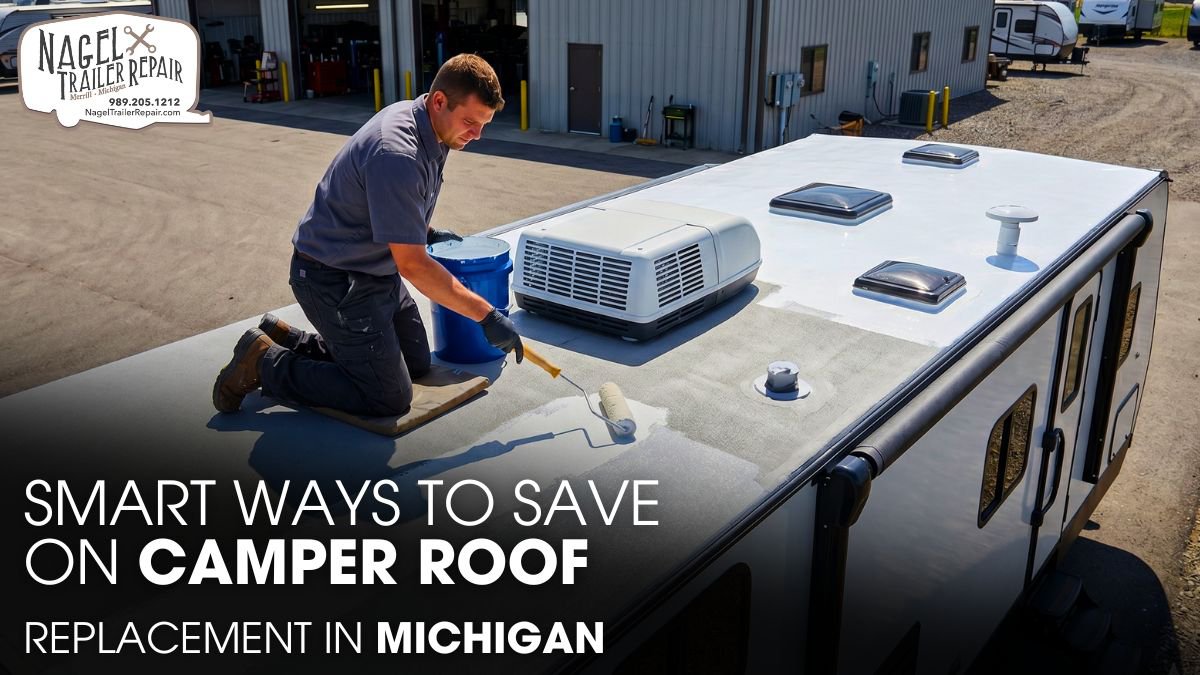
Roof coating systems also provide an effective restoration strategy. Silicone and elastomeric coatings create a waterproof barrier that protects aging membranes from UV exposure and moisture intrusion. Professional coating systems involve far less work than complete roof replacement projects.
Benefits of roof coatings include:
- Less labor-intensive
- Improved waterproof protection
- Lower summer heat buildup
- Better membrane flexibility
- Extended roof service life
A professionally applied silicone coating may extend roof lifespan by 5–10 years when the underlying structure remains in good condition. That additional lifespan delays major roof work.
Some owners attempt DIY repairs to save on labor, but poor installation frequently creates larger problems later. Incompatible adhesives, incorrect seam preparation, and low-quality sealants often fail during Michigan winters. A failed DIY repair can allow hidden moisture damage to spread beneath the membrane for months.
Smart material sourcing also helps keep replacement projects manageable. Many wholesale RV suppliers sell roofing membranes, adhesives, and sealants at significantly lower prices than repair facilities. Owners who independently purchase approved materials can provide their own materials for the project.
However, technical compatibility remains critical. Owners should always verify:
- Adhesive bonding requirements
- UV resistance ratings
- Freeze-thaw tolerance levels
- Moisture curing specifications
- Manufacturer warranty compliance
Cheap materials usually create more long-term maintenance because premature failure leads to recurring leak repairs.
How to Avoid Full Roof Replacement:
Avoiding camper roof replacement requires proactive maintenance rather than emergency decision-making. Owners who maintain their roofs consistently almost always face smaller repairs over the lifetime of the camper.
Preventive maintenance is one of the smartest habits in RV ownership. Annual inspections and resealing services are minor compared to structural water damage restoration.
Michigan camper owners should inspect roofs at least twice per year:
- Before winter storage
- Before peak travel season
Timing also affects scheduling. Most RV repair facilities experience peak demand during spring and early summer. Scheduling roof work during late fall or winter often means shorter wait times because repair shops face slower seasonal workloads.
Comparing multiple estimates remains wise. Some repair facilities propose dramatically different scopes for identical projects. A professional estimate should clearly separate:
- Materials
- Labor
- Structural repairs
- Disposal
- Warranty coverage
Insurance coverage may also apply to storm-related damage. Storm damage, hail impact, falling branches, and severe weather incidents sometimes qualify under RV insurance policies. Owners should document damage immediately and review deductibles carefully before approving repairs.
Bundling services can reduce duplicate labor as well. Combining roof replacement with AC servicing, vent replacement, or skylight upgrades avoids repeat teardown because technicians already have roof access during the project.
Financing decisions also matter. High-interest financing can increase what you ultimately pay over time. Owners should compare financing terms carefully before accepting dealer-sponsored loan programs.
Choosing the Right RV Roof Expert:
Hiring the wrong contractor can turn a manageable roofing project into a major structural disaster. Many general roofing companies lack RV-specific experience, which increases the risk of installation failure, recurring leaks, and warranty disputes.
Camper roofs require lightweight construction techniques, flexible membranes, vibration-resistant sealants, and proper thermal expansion management. Residential roofing methods often fail because campers constantly flex during travel and temperature fluctuations.
Experienced RV roofing contractors understand:
- Membrane expansion behavior
- Weight distribution limitations
- Moisture barrier systems
- Flexible adhesive applications
- Roof penetration sealing techniques
Before hiring a contractor, owners should verify licensing, liability insurance, and workers’ compensation coverage. Uninsured contractors expose owners to significant liability if workplace accidents occur during repairs.
Warranty protection also deserves careful evaluation. Reliable contractors typically provide:
- Manufacturer material warranties
- Labor workmanship guarantees
- Leak protection coverage
Material warranties alone do not cover poor installation practices. Many low-cost contractors cut corners by skipping surface preparation steps, using cheap sealants, or rushing membrane installation.
Owners should also analyze customer reviews carefully. Instead of focusing only on ratings, look for comments about:
- Leak recurrence
- Warranty response time
- Project completion delays
- Hidden charges
- Communication quality
A detailed written contract helps eliminate surprises later. Contracts should clearly define payment schedules, work scope, warranty terms, and approved material specifications before work begins.
Long-Term Roof Caring Tips:
Long-term roof maintenance remains the simplest strategy for protecting your camper. Small maintenance expenses consistently prevent major structural repairs and protect resale value over time.
Routine inspections help owners detect problems before leaks spread into insulation and framing systems. During inspections, owners should carefully examine roof seams, AC mounts, skylights, and drainage areas for early signs of deterioration.
Important inspection points include:
- Cracked lap sealants
- Membrane punctures
- Water pooling areas
- Corroded fasteners
- Surface oxidation
- Vent and skylight seals
Cleaning also affects roof lifespan significantly. Dirt, mold, tree sap, and road debris trap moisture against the membrane surface and accelerate deterioration. Owners should use non-petroleum RV roof cleaners because harsh chemicals weaken rubber membranes and shorten service life.
Storage conditions directly impact long-term maintenance needs. Indoor storage reduces UV damage, freeze-thaw stress, snow accumulation, and moisture exposure, and it can prevent major future repairs.
If indoor storage is unavailable, breathable RV covers provide better protection than standard plastic tarps. Cheap tarps trap condensation underneath the roof surface, which encourages mold growth and hidden moisture damage.
Routine resealing also protects long-term value. Most RV roofing experts recommend inspecting and resealing vulnerable areas every 12–24 months depending on weather exposure and travel frequency. Preventive sealing almost always means far less damage than repairing structural water damage later.
The Role of Professional Maintenance:
Professional maintenance plays a major role in protecting an RV camper roof from long-term structural damage and expensive repairs. Experienced technicians can identify hidden leaks, weak sealants, membrane shrinkage, and moisture buildup before those issues turn into major financial problems.
Regular inspections, seasonal roof sealing, and proper cleaning help extend roof lifespan while improving waterproof protection throughout changing weather conditions. Professional maintenance also reduces the risk of insulation damage, mold growth, and interior ceiling deterioration.
Instead of waiting for severe roof failure, RV owners can avoid major repairs by following a preventive maintenance schedule and using high-quality roofing materials designed for long-term durability and weather resistance.
Conclusion:
Camper roof replacement in Michigan can become a major project if owners ignore early warning signs or choose low-quality repair solutions. Understanding roofing materials, labor, environmental stress factors, and preventive maintenance strategies allows you to make sound decisions while extending roof lifespan.
The smartest approach combines proactive inspections, seasonal maintenance, and timely repairs before damage spreads.
Working with trusted professionals like Nagel Trailer Repair, a reliable camper roof expert in Michigan, helps camper owners protect their RV investment, avoid major future repairs, and extend roof life through expert care and preventive maintenance.