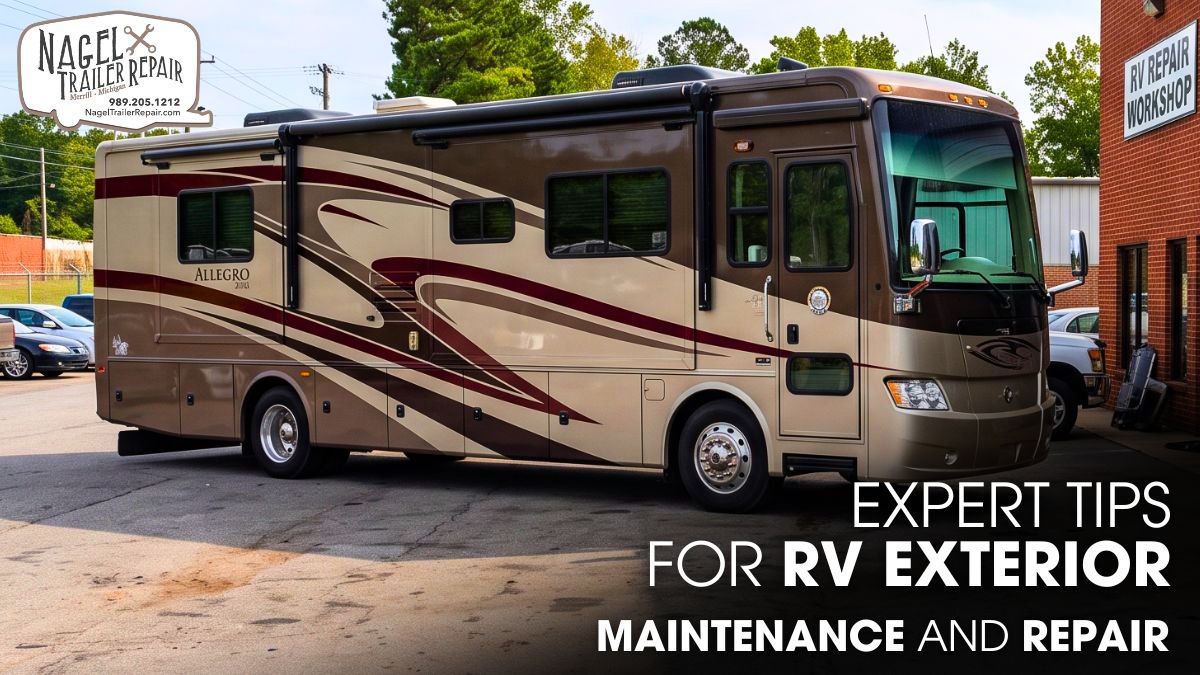
Keep your RV looking sharp and road-ready with consistent exterior maintenance. A well-maintained exterior not only improves curb appeal but also protects your investment from costly damage, harsh weather, and premature wear.
Neglecting small cracks, worn seals, roof damage, dirt buildup, or loose exterior components can quickly lead to water intrusion and structural problems. Without timely inspections and repairs, minor issues can become expensive restoration projects.
This guide shares practical strategies for maintaining and repairing your RV exterior. With guidance from an RV expert in Michigan, you can learn how to inspect, clean, seal, repair, and protect exterior components. These steps help preserve durability, improve appearance, and keep your RV ready for every adventure.
Inspect the RV Exterior Regularly:
A thorough exterior inspection should form the foundation of every RV maintenance program. RVs constantly experience vibration, road debris, UV radiation, moisture, thermal expansion, and contraction. These stresses can gradually weaken exterior materials even when the damage remains difficult to see.
Walk around the entire RV and inspect the roofline, front and rear caps, sidewalls, slide-outs, windows, doors, storage compartments, vents, exterior lights, trim, and body seams. Look for cracks, dents, bubbling, discoloration, corrosion, loose fasteners, and gaps around joints. Run your hand carefully across suspicious areas to identify surface irregularities.
Water intrusion deserves immediate attention because moisture can migrate behind exterior panels and damage insulation, framing, adhesives, and interior finishes. A moisture meter can help locate elevated moisture levels when visual inspection does not reveal the source.
- Inspect the exterior after long trips.
- Check seams for sealant separation.
- Look for bubbling that may indicate delamination.
- Examine soft or distorted exterior sections.
- Record defects and monitor recurring problem areas.
Do not treat inspection as a once-a-year task. Schedule quick checks before and after major trips to catch developing issues early. An RV repair shop in Michigan can help identify hidden damage, assess critical components, and recommend timely repairs before minor concerns become costly problems.
Clean and Protect RV Exterior Surfaces:
Exterior cleaning does more than improve appearance. Road grime, salt, mud, bird deposits, tree sap, oxidation, and industrial pollutants can attack protective coatings and retain moisture against vulnerable surfaces. Regular cleaning removes these contaminants before they contribute to premature deterioration.
Use an RV-compatible detergent and soft cleaning equipment. Fiberglass gel coat, painted aluminum, vinyl graphics, plastic trim, and composite panels respond differently to cleaning chemicals and abrasion. Avoid assuming that a household cleaner or aggressive automotive compound will work safely on every RV surface.
Begin at the highest point and work downward. Rinse thoroughly so loosened contaminants do not remain on the surface. Avoid directing concentrated high-pressure water at windows, roof accessories, vents, seams, and aging sealants because water can penetrate compromised interfaces.
After washing, dry the exterior and inspect it again. Cleaning often exposes small cracks, oxidation, scratches, and sealant defects that dirt previously concealed.
- Use non-abrasive RV-safe cleaners.
- Avoid aggressive pressure around seals.
- Remove road salt promptly.
- Dry seams and trim after washing.
- Apply compatible UV and surface protection.
Using a quality wax, polymer sealant, or manufacturer-approved coating helps protect an RV’s exterior from UV exposure, oxidation, and surface contaminants. These protective treatments can preserve the finish while making routine cleaning easier and more effective.
For RV repairs in Michigan, always verify that the selected product is compatible with decals, rubber seals, roof membranes, and specialty exterior materials. Proper product selection prevents chemical damage and supports long-term exterior durability.
Maintain Roofs, Seals, and Caulking:
The roof carries one of the highest moisture risks on an RV because it contains numerous penetrations and exposed joints. Inspect the roof membrane, seams, edges, vents, skylights, antennas, plumbing fixtures, air-conditioning units, and mounting hardware for deterioration.
Examine sealant for cracking, shrinkage, hardening, lifting, or loss of adhesion. A sealant bead may appear intact while separating from the adjoining surface underneath. Pay particular attention to corners and transition points where different materials meet and experience thermal movement.
Never repair failed sealant by simply covering it with a new layer. Remove loose or deteriorated material carefully, clean the bonding surface, allow it to dry, and apply a sealant approved for the specific roof material. EPDM, TPO, fiberglass, and aluminum roofs can require different products and preparation procedures.
- Inspect roof penetrations during every major inspection.
- Remove failed sealant before resealing.
- Keep bonding surfaces clean and dry.
- Use only compatible roof-repair materials.
- Check window and door seals for adhesion loss.
Checking slide-out seals, compartment doors, windows, and exterior trim matters just as much. These parts need to flex with movement yet still keep rain and drafts outside. Swap out brittle or cracked weatherstripping early, before moisture sneaks into the walls or floor. For RV owners seeking RV repairs at our shop in Merrill, MI, addressing these seals promptly prevents costly rot and mold later.
A thorough seal inspection takes little time and saves major headaches. If you spot gaps, hardening, or tears, replace the material right away. Catching small failures now keeps the interior dry and the structure sound through every season and every mile.
Repair RV Siding and Body Damage:
RV exterior panels protect the internal structure from weather and physical impact, so body damage requires more than cosmetic attention. A dent, crack, or loose panel can create an entry point for moisture and may indicate damage beneath the exterior skin.
Fiberglass repairs require particular care. A crack can extend beyond the visible surface and weaken the laminate. Technicians may need to remove compromised material, restore the damaged area with compatible fiberglass reinforcement and resin, fair the surface, and reproduce the appropriate finish.
Aluminum siding presents different challenges. Inspect damaged panels for sharp deformation, corrosion, loose fasteners, and movement. Corrosion around fasteners can signal prolonged moisture exposure or galvanic interaction between dissimilar metals.
- Identify the cause before repairing damage.
- Inspect framing behind major impact areas.
- Treat corrosion before installing replacement panels.
- Replace severely compromised structural materials.
- Match repair materials to the original construction.
Delamination requires especially careful diagnosis. Bubbling or separation can occur when moisture reaches the substrate or when bonding between layers fails. Pressing or tapping the panel can help identify suspicious areas, but extensive delamination may require professional diagnostic equipment and controlled repair procedures.
A cosmetic patch can’t restore structural integrity once the laminate, substrate, or framing has deteriorated. If you’re searching for “RV repair near me”, focus on fixing the root cause, not just hiding the symptom. Lasting results come from proper repairs, not quick cover-ups that fail again.
Protect Windows, Doors, and Awning Systems:
Windows, entry doors, and storage compartments contain multiple joints that must resist water while accommodating vibration and temperature changes. Inspect the perimeter seal, mounting flange, glazing interface, drainage channels, hinges, latches, and weatherstripping.
Blocked drainage channels can allow water to accumulate around window assemblies. Check these pathways for dirt and debris, and make sure water can exit freely. Inspect door frames for movement and verify that latches engage correctly without excessive force.
Awning systems also need mechanical and material inspections. UV exposure can weaken fabric, while moisture can encourage mildew and accelerate deterioration. Examine the fabric, stitching, roller tube, support arms, brackets, pivots, and mounting hardware.
- Clean and dry awning fabric before storage.
- Inspect brackets for looseness or movement.
- Check hardware for corrosion.
- Lubricate approved moving components.
- Replace severely degraded fabric.
Always use lubricants made for your manufacturer’s components. Too much grease can collect dirt or damage rubber seals. If you notice odd noises, loose parts, or an awning that moves unevenly, don’t wait—these often signal wear or mounting issues. For expert help, consider RV services in Michigan to keep your awning safe and working smoothly.
Prepare Your RV for Every Season:
Seasonal maintenance becomes particularly important when an RV faces freezing temperatures, road salt, high humidity, heavy rain, and intense summer UV exposure. These environmental factors repeatedly stress sealants, coatings, metals, plastics, and exterior membranes.
Before winter storage, wash the RV thoroughly and remove road salt and other corrosive deposits. Inspect all seams, roof penetrations, body panels, windows, and doors. Repair failed sealant before storage rather than allowing moisture to remain trapped in vulnerable areas.
Freezing temperatures can worsen existing cracks because trapped moisture expands when it freezes. Preventing water entry therefore protects more than the exterior finish; it also protects the underlying structural materials.
- Clean and dry the exterior before storage.
- Remove corrosive road deposits.
- Inspect seals before and after winter.
- Maintain clear roof drainage paths.
- Use appropriate storage protection and ventilation.
- Keep a detailed maintenance record.
When using an RV cover, select one designed for the vehicle and climate. A poorly fitted cover can trap moisture, create abrasion, or restrict ventilation. Inspect the RV again before spring travel and check every exterior system for damage caused during storage.
Maintain a written service history that records inspections, sealant replacements, body repairs, roof work, and recurring defects. This record helps you identify failure patterns and plan preventive maintenance instead of waiting for a visible problem to become a major repair.
When damage is extensive—delamination, ongoing water intrusion, structural softening, major collision impacts, or widespread corrosion—turning to an RV specialist in Michigan offers a safer path. These professionals assess whether the problem is limited to the exterior skin or has reached the underlying structure, guiding accurate repairs and informed decisions.
The Role of Professional Maintenance:
Professional RV maintenance goes beyond routine cleaning and visual checks. Skilled technicians can identify hidden water intrusion, sealant failure, delamination, corrosion, substrate deterioration, and structural movement before these issues become major repairs. They also use compatible materials, proper surface preparation, moisture-testing methods, and manufacturer-approved repair procedures to restore exterior integrity.
Regular professional inspections help maintain weather resistance and extend the service life of critical exterior components. Expert technicians also play an important role when exterior paint becomes scratched, chipped, faded, or oxidized.
They can assess whether damage affects only the finish or has exposed the underlying substrate to moisture and corrosion. Proper preparation, sanding, priming, color matching, and controlled paint application create a durable repair instead of a temporary cosmetic patch. Timely professional intervention keeps the exterior protected, improves appearance, and helps prevent minor finish damage from developing into expensive body repairs.
Conclusion:
Consistent RV exterior maintenance protects the vehicle’s weather barrier, structural components, and exterior finishes. Routine inspections help owners identify sealant failure, corrosion, delamination, and impact damage before these defects become expensive repairs.
Technical maintenance also requires material compatibility. Using the correct cleaners, sealants, repair compounds, and protective coatings preserves the integrity of fiberglass, aluminum, roofing membranes, and exterior hardware.
A documented seasonal maintenance program gives every exterior component systematic attention. Pair preventive inspections with timely repairs from Nagel Trailer Repair, your trusted RV expert in Michigan, to extend service life, boost reliability, and keep your rig road-ready. Book your inspection today!