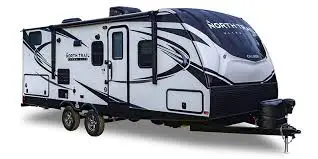
There are many types and designs of travel trailers out there today. If this is the first time you will be buying one, you may be unsure about what to look for. Lightweight travel trailers under 6,000 lbs can be a practical choice for many tow vehicles, but a lower weight does not mean a trailer needs less attention. This guide explains what to inspect before you buy, so you can choose a trailer that is sound, safe, and ready for the road.
If you are shopping for an even lighter trailer, you can also look at travel trailers under 4,000 lbs. The same inspection principles apply at any weight.
Start With the Weight Ratings
Before anything else, confirm that the trailer suits your tow vehicle. The advertised dry weight is only part of the story: water, propane, food, gear, and personal belongings all add weight. Compare the trailer’s gross vehicle weight rating, its cargo carrying capacity, and the hitch weight against your tow vehicle’s ratings, and check the owner’s manuals for both.
Ask the seller for the trailer’s weight placard and any available weigh records. If possible, have the trailer weighed loaded for travel. A trailer that is overloaded, poorly balanced, or hitched beyond its rating will tow badly and wear out tires, brakes, and bearings faster.
Inspect the Frame and Running Gear
The frame and running gear carry everything, so inspect them closely. Look for cracked welds, bent members, rust-through, and previous repairs. Check the axles, springs, and suspension components for damage or sagging, and look at the coupler, safety chains, and jack for wear.
Tires deserve special attention on a lightweight trailer. Check tire age, sidewall cracking, tread condition, and load rating, and confirm the pressure matches the trailer manufacturer’s specification when cold. Inspect the brakes, magnets, wiring, breakaway switch, drums or rotors, hubs, bearings, and seals. Service wheel bearings according to the axle manufacturer’s schedule, and test the trailer lights and turn signals.
Check the Roof and Exterior Seals
Water intrusion is the most common and most expensive problem in a used travel trailer. Start at the roof and examine every seam, vent, skylight, antenna mount, ladder attachment, and air-conditioner opening. Look for cracked sealant, gaps, lifted membrane edges, soft spots, and interior water staining.
Check slide-out seals, window gaskets, entry-door weatherstripping, and storage-compartment seals. Press gently on exterior walls to feel for soft spots or delamination, and look inside cabinets and under beds for stains, swelling, or musty odors that point to past leaks.
Inspect the Floor and Interior Structure
Walk the entire floor and feel for soft or springy areas, especially near the entry door, bathroom, kitchen, and slide-outs. Open every cabinet and compartment, check for warped panels, and look for signs of previous water damage or pest activity. Test doors, drawers, latches, and slide-out operation, and make sure the slide-out seals evenly when extended and retracted.
Test the Plumbing and Water System
Pressurize the freshwater system and inspect every connection for leaks, including faucets, toilet valves, shower valves, exterior water connections, and the water pump. Check the water heater, freshwater tank, gray tank, and black tank for damage, and confirm that all drain valves operate. Run water through each fixture and watch for slow drains, odors, or dampness in compartments below.
Test the Electrical System and Appliances
Test the battery condition, terminals, and ground connections, and confirm the converter and charger operate correctly. Check shore-power plugs and cables, the breaker panel, and all 12-volt circuits. Test exterior marker lights, brake lights, and turn signals, along with interior lights, fans, and outlets.
Run each appliance through a full cycle where possible: refrigerator, furnace, air conditioner, water heater, stove, and microwave. Test smoke and carbon-monoxide alarms, and confirm that propane hoses, regulators, and connections show no deterioration. Unusual odors, delayed ignition, soot, or repeated shutdowns require professional diagnosis.
Pre-Purchase Inspection Checklist
- Confirm weight ratings, cargo capacity, and tow vehicle compatibility.
- Inspect the frame, axles, suspension, coupler, and jack.
- Check tire age, pressure, sidewalls, tread, and load rating.
- Inspect brakes, bearings, seals, and the breakaway system.
- Examine the roof, seams, vents, skylights, and all exterior seals.
- Feel walls and floors for soft spots, delamination, or water damage.
- Pressurize the water system and inspect every plumbing connection.
- Test batteries, converter, shore power, lights, and 12-volt circuits.
- Run each appliance and test smoke and carbon-monoxide alarms.
- Test slide-out operation and seal contact.
- Review maintenance records and note any unresolved defects.
Conclusion
A lightweight travel trailer under 6,000 lbs can serve you well for years when it is structurally sound and properly maintained. Take your time, work through this checklist, and do not rush past signs of water damage, frame trouble, or worn running gear. If you would like a second opinion before you buy, bring the trailer to our shop in Merrill, MI for a pre-purchase inspection, and our technicians can help you spot hidden problems before they become major repairs.