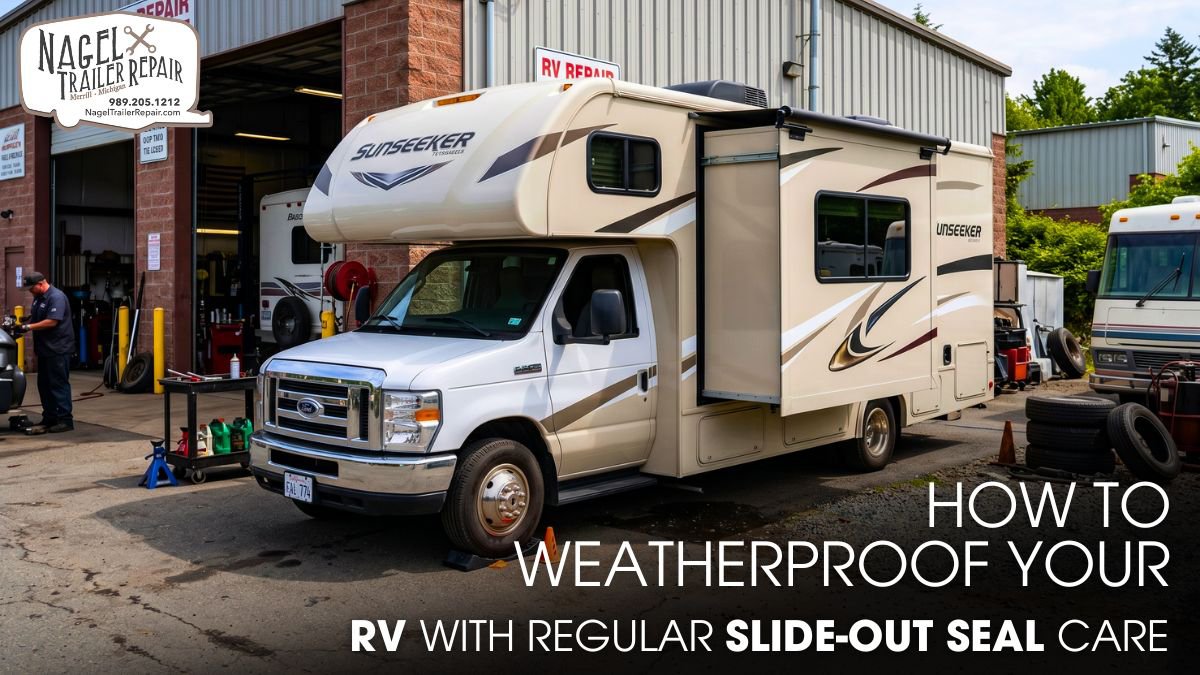
Your RV faces rain, snow, UV rays, and changing temperatures every time you hit the road or park for the season. While many owners focus on roofs and windows, slide-out seals often receive less attention despite playing a critical role in keeping moisture and drafts out.
Neglected slide-out seals can crack, dry out, collect debris, and lose flexibility over time. These issues allow water to seep inside, leading to costly repairs, mold growth, insulation problems, and damage to your RV’s interior.
The good news is that regular slide-out seal care can help weatherproof your RV and avoid preventable damage. This guide covers inspection, cleaning, conditioning, and maintenance—but for complex issues, trust a certified RV repair expert in Michigan to keep your rig adventure-ready.
Why RV Slide-Out Seal Care Matters?
When most RV owners think about weatherproofing, they usually focus on the roof, windows, and exterior seams. While those areas certainly deserve attention, slide-out seals are just as important. Every slide-out room creates a large opening in the RV’s structure, and the seals around that opening are responsible for keeping water, air, dust, and debris outside where they belong.
Modern slide-out systems use multiple sealing components to create a reliable weather barrier. Wiper seals remove water and debris during slide movement, while bulb seals compress against the RV body to create a tight seal when the room is fully extended or retracted. Together, these components protect the interior from harsh weather conditions and environmental contaminants.
The challenge is that slide-out seals operate under constant stress. They flex, compress, expand, and contract every time you use the slide room. At the same time, they remain exposed to sunlight, rain, snow, road grime, and temperature extremes. Over time, these conditions gradually reduce the seal’s ability to perform effectively.
Ignoring seal maintenance can lead to serious consequences. Water intrusion often starts as a minor issue but quickly develops into a costly repair. Moisture can travel behind walls, beneath flooring, and into insulation without producing obvious symptoms. By the time stains, odors, or soft spots appear, structural damage may already exist.
Regular slide-out seal care helps:
- Prevent water intrusion
- Improve climate control efficiency
- Reduce energy loss
- Extend seal lifespan
- Protect interior components
- Minimize expensive repairs
A few minutes of maintenance several times a year can significantly improve your RV’s long-term durability and weather resistance.
Causes of RV Slide-Out Seal Damage:
Slide-out seals face continuous exposure to environmental and mechanical stress. Understanding what causes deterioration can help you take preventive measures before damage affects the performance of the entire weatherproofing system.
One of the biggest threats to slide-out seals is ultraviolet radiation. Most RV manufacturers use EPDM rubber or synthetic elastomer materials because they offer excellent resistance to weather and moisture. However, prolonged exposure to UV rays gradually breaks down the molecular structure of these materials. As oxidation occurs, the rubber loses flexibility and becomes increasingly brittle.
Temperature fluctuations also contribute to seal deterioration. During summer, direct sunlight can raise seal temperatures far above the surrounding air temperature. In winter, freezing conditions can cause the material to stiffen and lose elasticity. These repeated expansion and contraction cycles create stress within the rubber, accelerating wear over time.
Environmental contaminants add another layer of risk. Dust, dirt, sand, road salt, pollen, and tree sap collect on seal surfaces throughout the year. Every time the slide-out moves, these particles create friction between the seal and the RV body. Over time, this abrasion wears down protective surface layers and reduces sealing efficiency.
Several common factors accelerate seal damage:
- Prolonged UV exposure
- Extreme heat and cold
- Dirt and debris accumulation
- Road salt contamination
- Improper storage conditions
- Misaligned slide mechanisms
- Operating frozen slide-outs
Mechanical issues can be equally damaging. If a slide room becomes slightly misaligned, certain sections of the seal may experience excessive compression while others receive insufficient pressure. This uneven loading causes localized wear and often leads to premature seal failure.
Understanding these causes allows RV owners to address potential issues before they evolve into larger weatherproofing problems.
Inspecting RV Slide-Out Seals:
Routine inspections are one of the most effective ways to prevent seal-related failures. Many problems develop gradually and provide warning signs long before they result in leaks or structural damage.
Start by fully extending the slide-out room. This position exposes most sealing surfaces and allows for a thorough inspection. Before evaluating the condition of the seals, remove any visible dirt or debris that could hide defects.
Healthy seals should appear smooth, flexible, and uniform. They should compress easily and return to their original shape without remaining flattened.
Look carefully for signs such as:
- Surface cracks
- Tears or splits
- Flattened sections
- Seal shrinkage
- Loose adhesive areas
- Hard or brittle rubber
- Distorted seal shapes
Pay special attention to corners and transition areas. These locations experience the highest amount of stress because they flex repeatedly during slide operation. In many cases, the first signs of deterioration appear in these sections.
Visual inspection alone may not reveal every problem. It is also important to evaluate seal performance. When the slide-out closes, the seal should maintain even compression around the entire perimeter. Uneven contact often indicates alignment issues that require adjustment.
A flashlight leak test can help identify hidden gaps. Place a bright light inside the RV while inspecting the exterior perimeter after dark. If light escapes through the seal area, water and air may also pass through the same opening.
For a more advanced evaluation, moisture meters can detect elevated moisture levels behind walls and flooring. These tools often reveal hidden water intrusion before visible damage develops. By inspecting your seals regularly, you can identify minor issues early and avoid major repair costs later.
Cleaning Seals the Right Way:
Many RV owners underestimate the importance of seal cleaning. While clean seals certainly improve appearance, the real benefit lies in preventing premature wear and maintaining optimal sealing performance.
Before washing the seals, remove loose dirt and debris using a soft brush or microfiber cloth. This step prevents abrasive particles from scratching the seal surface during cleaning.
Once loose contaminants are removed, wash the seals using mild soap and water or a cleaner specifically designed for RV rubber components. Gentle cleaning is usually sufficient. Aggressive scrubbing often causes more harm than good.
Avoid harsh chemicals whenever possible. Many household cleaners contain ingredients that can damage rubber compounds and accelerate aging.
Products to avoid include:
- Petroleum-based solvents
- Acetone cleaners
- Strong degreasers
- Bleach products
- Ammonia-based solutions
A proper cleaning routine should include:
- Removing debris
- Cleaning all exposed surfaces
- Washing contact areas thoroughly
- Rinsing away residue
- Allowing complete drying
Focus particularly on the areas where the seal contacts the RV sidewall. These surfaces experience the greatest friction and tend to collect the most contamination.
Regular cleaning provides several technical benefits. It reduces abrasive wear, improves seal flexibility, minimizes friction during slide movement, and allows conditioners to penetrate more effectively. Clean seals also make inspections easier because damage becomes more visible.
Depending on environmental conditions and travel frequency, most RV owners should clean slide-out seals every one to three months.
Conditioning and Protecting Seals:
Cleaning removes contaminants, but conditioning protects the seal material from future deterioration. Without proper protection, even clean seals gradually lose flexibility due to UV exposure, ozone attack, and oxidation.
Seal flexibility is critical for weatherproofing performance. The rubber must compress evenly against the RV body to create a reliable barrier. As the material hardens, it loses its ability to conform to surface irregularities, creating pathways for water and air infiltration.
Quality seal conditioners help preserve the mechanical properties of the rubber. These products create a protective layer that slows oxidation and reduces moisture loss from the material. As a result, seals remain flexible and continue to perform as intended.
For best results:
- Clean the seals thoroughly first
- Allow the surface to dry completely
- Apply a thin, even coating
- Follow manufacturer recommendations
- Remove excess product if necessary
More conditioner does not always produce better results. Excess product can attract dust and dirt, increasing contamination rather than preventing it.
UV protection should remain a top priority for RV owners who store their vehicles outdoors. Continuous sunlight exposure significantly accelerates seal degradation. In addition to conditioners, you can reduce UV damage by using RV covers, covered storage facilities, slide toppers, or shaded parking locations.
Regular conditioning offers several advantages:
- Maintains elasticity
- Slows oxidation
- Improves weather resistance
- Reduces cracking
- Extends seal lifespan
- Supports smooth slide operation
Combined with routine cleaning, conditioning helps ensure long-term seal performance and reliable weather protection.
Creating an RV Slide-Out Seal Maintenance Plan:
The best way to protect your RV is to make slide-out seal care part of your regular maintenance routine. Waiting until a leak develops often results in higher repair costs and unnecessary damage.
A structured maintenance plan allows you to identify issues early and maintain consistent seal performance throughout the year. Seasonal inspections provide an excellent starting point because weather conditions change significantly between summer and winter.
An effective maintenance schedule should include:
- Quarterly seal inspections
- Routine cleaning sessions
- Seal conditioning treatments
- Moisture monitoring
- Slide alignment checks
- Maintenance documentation
Keeping maintenance records can be surprisingly valuable. Tracking inspection dates, cleaning schedules, and conditioner applications helps you identify wear patterns and predict replacement needs before problems occur.
Although proper maintenance extends seal life, no seal lasts forever. Factors such as climate, travel frequency, storage conditions, and UV exposure all affect longevity. Monitoring seal condition regularly allows you to replace aging components before they compromise weatherproofing performance.
It is also important to remember that slide-out seals work alongside other protective systems throughout the RV. Roof seals, window seals, drainage channels, slide toppers, and exterior sealants all contribute to moisture control. Maintaining these systems together creates a comprehensive defense against water intrusion and environmental damage.
The Role of Professional Maintenance:
Professional maintenance plays a vital role in protecting an RV from weather-related damage and premature system deterioration. Experienced technicians can identify early warning signs that many owners may overlook, including hidden moisture intrusion, seal compression issues, roof membrane wear, and drainage problems.
Regular inspections help ensure that slide-out seals maintain proper flexibility and compression, preventing water leaks and air infiltration. At the same time, timely application of RV roof coatings creates a protective barrier against UV exposure, standing water, and temperature extremes.
By addressing minor issues before they escalate, professional maintenance improves weather resistance, extends component lifespan, reduces repair costs, and helps keep the entire RV structure operating efficiently for years to come.
Conclusion:
Weatherproofing an RV involves more than maintaining the roof and exterior walls. Slide-out seals play a critical role in protecting your investment from water intrusion, air leaks, and environmental damage. Through routine inspection, proper cleaning, regular conditioning, and a structured maintenance schedule, you can significantly extend seal life while improving comfort and energy efficiency.
Consistent slide-out seal care not only prevents expensive repairs but also ensures your RV remains protected in every season. For trusted service, turn to Nagel Trailer Repair—your RV repair expert in Michigan. By making seal maintenance a regular habit, you travel confidently, knowing your coach withstands any weather.
Don’t wait for leaks or damage; proactive care saves money and stress. Schedule an inspection today with Nagel Trailer Repair and keep your home-on-wheels road-ready all year long.