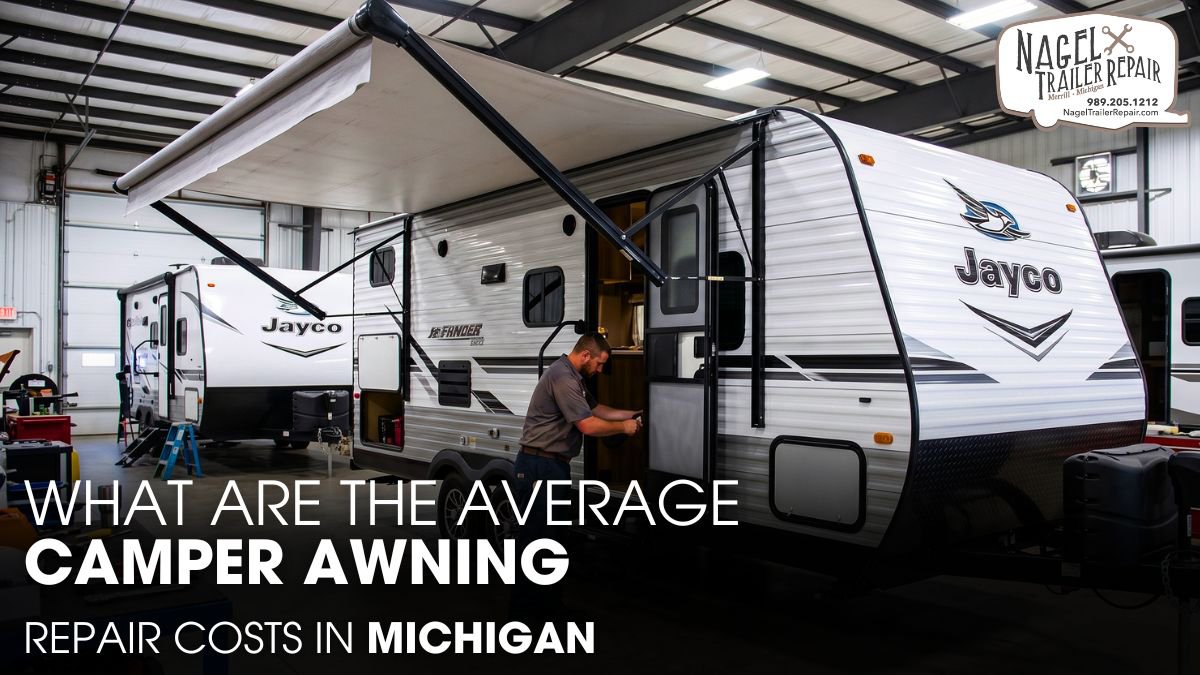
Michigan’s unpredictable weather can damage camper awnings when you least expect it. Heavy rain, strong winds, and constant outdoor exposure often lead to torn fabric, bent arms, or broken motors. Many RV owners only notice the problem after the damage becomes too costly to ignore.
Repair costs can vary widely depending on the awning type, labor charges, and replacement parts. Without proper guidance, camper owners may overpay for repairs or delay maintenance that could prevent bigger expenses later.
This guide explains average camper awning repair costs in Michigan, factors affecting pricing, and money-saving tips. As a trusted camper specialist in Michigan, we help you keep your RV awning in excellent condition year-round—so you can hit the road with confidence and avoid costly breakdowns.
Why Camper Awnings Need Repairs?
Camper awnings deal with constant stress every time you extend or retract them. In Michigan, weather conditions make the situation even tougher. Heavy snowfall, strong wind gusts, road salt, humidity, and rapid temperature shifts slowly weaken both the fabric and the mechanical components inside the awning system.
Most modern camper awnings combine multiple moving parts, including aluminum support arms, torsion springs, roller tubes, mounting brackets, electric motors, and weather-resistant fabric. When one component starts to fail, the entire system loses stability and performance.
Wind damage remains one of the biggest reasons RV owners pay for awning repairs. Even moderate wind pressure can twist support arms or pull fabric out of alignment. Water pooling creates another serious issue because trapped rainwater places excessive downward pressure on the roller tube and mounting hardware. Over time, that weight can bend structural components and damage the awning frame.
Several factors commonly cause camper awning damage:
- UV exposure that weakens vinyl fabric
- Corrosion from moisture and road salt
- Cracked seams and stitching failure
- Electric motor burnout
- Loose mounting brackets
- Improper winter storage
- Spring tension imbalance
Michigan’s freeze-thaw cycles also create hidden structural problems. Moisture enters small seams and hardware gaps, then expands during freezing temperatures. This process weakens adhesive seals, damages stitching, and accelerates metal fatigue.
Many RV owners ignore small warning signs because the awning still appears functional. Unfortunately, minor issues often become expensive repairs within a single camping season. A small tear can spread across the entire canopy during highway travel, while a loose mounting bracket can eventually damage the RV sidewall itself.
Routine inspections help identify problems early and prevent major repair bills later.
Average Camper Awning Repair Costs:
Camper awning repair costs in Michigan vary widely depending on the damage severity, awning size, labor rates, and replacement part availability. Minor repairs may cost less than a few hundred dollars, while complete awning replacements can easily exceed several thousand dollars.
Fabric repairs usually represent the lowest-cost repair category. Technicians often repair small punctures, seam separation, and surface cracking without replacing the entire canopy. However, once the fabric loses structural tension or develops widespread dry rot, replacement becomes the safer long-term option.
Electric awnings typically cost more to repair than manual systems because technicians must diagnose electrical components, recalibrate motor assemblies, and test voltage output. Many modern awnings also include smart features such as automatic wind sensors and LED lighting systems that increase repair complexity.
Average Camper Awning Repair Costs in Michigan include:
- Vinyl Patch Repair : $150–$250
- Seam Reinforcement : $200–$350
- Roller Tube Replacement : $350–$800
- Mold Treatment : $100–$220
- Torsion Spring Repair : $250–$650
- Waterproof Resealing: $120–$300
Motor and Arm Repair Prices: Electric awnings use DC motors, gear assemblies, limit switches, and control modules. When these systems fail, repair costs rise substantially due to electrical diagnostics and component replacement.
Typical pricing includes:
- Motor Replacement : $400–$900
- Gearbox Repair : $250–$600
- Arm Replacement : $300–$800
- Sensor Recalibration : $100–$250
Full Awning Replacement Price Breakdown:
Complete awning replacement becomes necessary when structural damage affects multiple components simultaneously. Severe wind incidents frequently damage roller tubes, mounting rails, motors, and canopy fabric together.
Replacement costs generally range from:
- Manual Awnings : $900–$1,800
- Electric Awnings : $1,500–$3,500
- Luxury Smart Awnings : $4,000+
Installation complexity, wiring requirements, and RV height also influence labor charges.
Labor expenses significantly affect final pricing. RV repair facilities in larger Michigan cities often charge between $110 and $180 per hour. Emergency mobile repair services usually add travel charges based on campground location and repair urgency.
Average Michigan labor pricing:
Region | Hourly Labor Rate
Detroit Metro : $120–$180
Grand Rapids : $100–$160
Northern Michigan : $80–$140
Mobile RV repair technicians may add travel surcharges ranging from $50 to $200.
Replacement part quality also changes overall repair costs. OEM parts from manufacturers like Dometic, Solera, and Carefree of Colorado generally cost more than aftermarket components, but they often provide better durability and system compatibility.
Insurance coverage can reduce out-of-pocket expenses if storms or falling debris caused the damage. However, most insurance providers exclude normal wear, corrosion, and poor maintenance from standard coverage policies.
Factors That Affect Repair Pricing:
Several technical and financial factors influence camper awning repair pricing in Michigan. The size of the awning plays a major role because larger systems require more fabric, stronger support hardware, and additional labor time.
A simple 10-foot manual awning costs much less to repair than a 20-foot electric awning equipped with automatic sensors and integrated electronics. Motorized systems contain more moving parts, electrical wiring, and calibration requirements, which increases both labor and diagnostic costs.
Material quality also affects repair expenses. Entry-level awnings often use thinner vinyl fabric and lightweight aluminum arms that wear out faster under Michigan’s harsh climate conditions. Premium awnings use marine-grade acrylic fabric, reinforced stitching, and corrosion-resistant hardware designed for long-term outdoor exposure.
Common pricing factors include:
- Awning size and projection depth
- Electric or manual operation
- OEM versus aftermarket parts
- Structural frame condition
- Motor torque capacity
- Electrical system complexity
- Seasonal labor demand
Michigan RV repair centers often become extremely busy during spring and early summer as travelers begin preparing their campers for road trips and vacations. Increased demand during this period can lead to longer wait times, higher labor charges, and delays in obtaining replacement parts. Scheduling repairs ahead of peak travel season may help RV owners avoid unnecessary expenses and extended downtime.
Extensive storm-related damage can significantly increase overall repair bills. Strong winds may affect more than just the awning fabric or frame, often causing damage to mounting brackets, rails, and even the RV’s exterior sidewall structure. In many cases, technicians must repair or strengthen internal support sections before installing new awning components to ensure long-term durability and safety.
Additional hidden structural issues are common during major awning repairs and can quickly raise total service costs. Repair specialists may need to replace damaged backing materials, reseal exterior panels, or correct moisture-related problems discovered during inspection.
DIY vs Professional Repairs:
Some camper awning repairs work well as DIY projects, especially if the damage remains minor and the awning system uses basic mechanical components. RV owners can often handle routine maintenance tasks themselves and save money on labor costs.
Common DIY maintenance tasks include:
- Cleaning dirt and mildew buildup
- Tightening loose hardware
- Lubricating moving joints
- Applying UV protectant coatings
- Replacing worn weather seals
These maintenance steps improve awning lifespan and reduce long-term repair expenses. Regular cleaning also prevents mold growth and fabric deterioration caused by trapped moisture.
However, major awning repairs require technical expertise and specialized tools. Electric awning motors contain high-torque gear systems that can cause serious injuries if handled incorrectly. Torsion springs also store significant mechanical energy and may snap unexpectedly during disassembly.
Professional RV technicians use diagnostic equipment such as:
- Digital voltage meters
- Torque calibration tools
- Structural alignment systems
- Motor testing equipment
- Load-balancing instruments
These tools help technicians identify hidden alignment issues, electrical faults, and structural weaknesses that DIY repairs often miss.
Incorrect repairs may also create additional problems later. Poor fabric alignment can place uneven stress on the roller tube, while improper spring calibration may overload the motor assembly. Small installation mistakes often shorten the entire system’s operational lifespan.
Professional repair services become essential for:
- Motor replacement
- Electrical troubleshooting
- Structural arm repairs
- Full canopy replacement
- Sidewall reinforcement
- Smart awning recalibration
While professional RV and camper awning repairs may require a higher upfront investment, they typically deliver stronger durability, dependable performance, and added warranty coverage. Expert repair services can also help prevent recurring issues, reducing future maintenance expenses and improving the overall lifespan of your awning.
How to Reduce Awning Repair Costs:
Routine maintenance plays a major role in reducing unexpected camper awning repair expenses. Addressing minor issues early helps prevent serious damage that often leads to costly replacements and lengthy repairs. Simple upkeep measures can extend the lifespan of the awning and improve overall camper performance during travel seasons.
Camper owners should examine their awnings regularly, especially before and after frequent trips. Checking for loose brackets, fabric wear, moisture buildup, wiring faults, and small cracks allows problems to be fixed before they worsen. Consistent inspections not only improve safety but also help avoid expensive structural or electrical repairs in the future.
Important maintenance practices include:
- Retracting awnings during storms
- Removing standing water quickly
- Cleaning fabric regularly
- Inspecting mounting brackets
- Lubricating pivot points
- Checking electrical connections
Storage practices also matter significantly in Michigan. Snow accumulation places heavy pressure on support arms and roller tubes during winter months. Indoor storage or heavy-duty awning covers help protect the system from freeze-related stress and moisture exposure.
Long-Term Camper Maintenance Strategies:
Investing in premium replacement materials can reduce long-term ownership costs as well. Higher-quality acrylic fabrics resist UV damage more effectively than low-cost vinyl options. Stainless steel fasteners and powder-coated aluminum components also provide stronger corrosion resistance.
Insurance planning can further reduce repair expenses. Comprehensive RV insurance policies sometimes cover:
- Storm-related damage
- Tree limb impact
- Collision-related awning damage
- Emergency roadside repairs
- Mobile technician services
Keeping detailed service records and inspection reports can make the insurance claim process much smoother for RV owners. Many insurance providers ask for proof of regular maintenance before they approve repair coverage, making proper documentation an important part of protecting your investment.
Addressing minor RV issues without delay can also save a significant amount of money over time. Spending a small amount on early repairs often helps prevent severe damage that may later require expensive replacements and major restoration work.
Finding Camper Repair Experts:
Choosing the right RV repair provider directly affects repair quality, long-term durability, and financial value. Not every RV service center specializes in awning systems, so experience and technical knowledge matter.
Qualified technicians understand structural load distribution, spring tension calibration, motor synchronization, and sidewall reinforcement requirements. They also know how Michigan weather conditions affect awning performance over time.
Before hiring a repair shop, RV owners should evaluate:
- RVIA certifications
- Experience with specific awning brands
- Warranty coverage options
- OEM parts availability
- Mobile repair capability
- Customer review history
Reliable repair shops provide detailed written estimates that explain labor costs, replacement components, repair timelines, and warranty terms. Clear pricing reduces the risk of hidden fees or unnecessary repairs.
Mobile RV repair services have become increasingly popular across Michigan because many seasonal campers prefer on-site service at campgrounds or storage facilities. Mobile technicians help owners avoid towing costs and transportation-related risks. However, emergency mobile service rates usually cost more due to travel charges and scheduling limitations.
Customer reviews provide valuable insight into repair quality and business reliability. Repeated complaints about delayed repairs, poor communication, or recurring mechanical issues may indicate weak technical standards. Working with experienced awning specialists usually leads to better installation quality, stronger long-term performance, and fewer repeat repairs.
The Role of Professional Maintenance:
Professional maintenance helps camper owners avoid expensive repairs and reduce long-term ownership costs. Regular inspections allow technicians to detect small issues like loose brackets, worn fabric seams, weak torsion springs, or motor strain before they turn into major structural failures. Proper servicing also improves awning performance, extends component lifespan, and protects the camper from weather-related damage common in Michigan.
Routine maintenance records can also support lower insurance risks because insurers often view well-maintained campers as less likely to experience costly claims. Technicians use specialized tools to inspect electrical systems, calibrate moving parts, and reinforce mounting hardware, helping owners prevent sudden breakdowns and unexpected repair bills during travel seasons.
Conclusion:
Camper awning repair costs in Michigan depend on several technical and financial factors, including awning design, weather exposure, labor rates, and replacement component quality. Minor repairs may cost only a few hundred dollars, while complete electric awning replacements can exceed several thousand dollars.
Protect your investment with expert care. Whether fixing a small tear or a major motor failure, proactive maintenance is vital.
For reliable service, trust Nagel Trailer Repair, the premier camper specialist in Michigan. Our professional repairs ensure safety and longevity, saving you money long-term. Contact us today to keep your adventures on the road without worry!