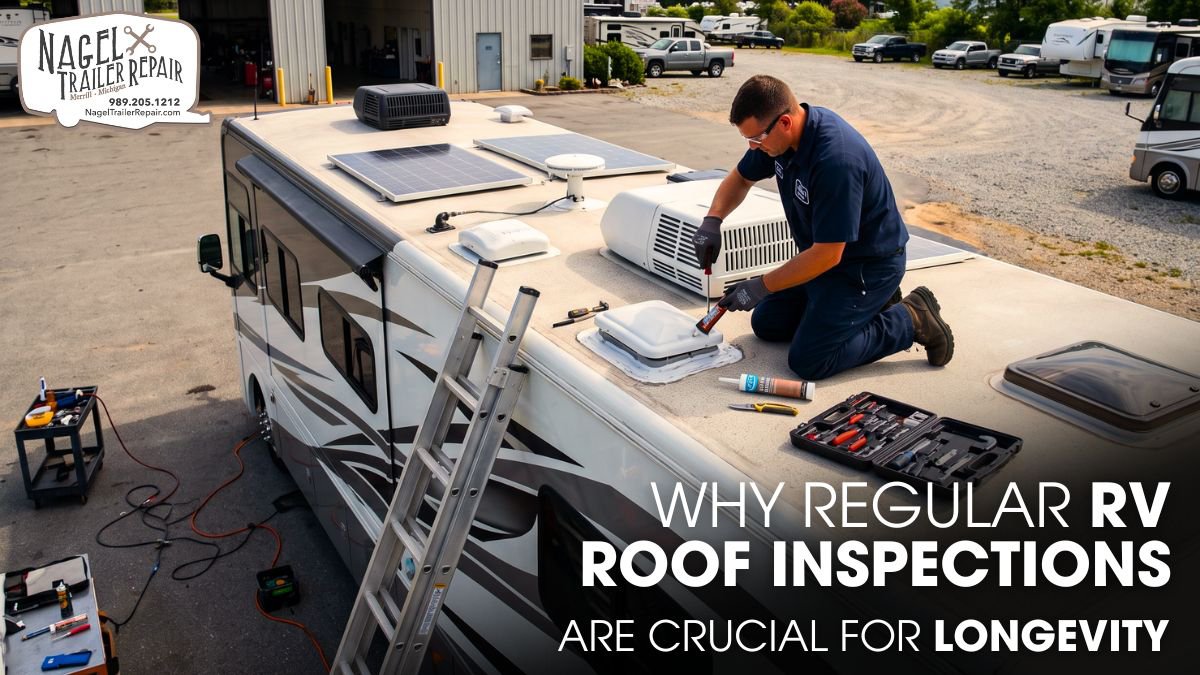
Regular RV roof inspections can mean the difference between years of reliable travel and thousands of dollars in unexpected repairs. Your RV roof constantly faces harsh sunlight, heavy rain, snow, falling debris, and temperature swings that gradually weaken its protective barrier.
Many owners overlook minor cracks, worn sealants, or hidden leaks until moisture reaches the insulation, walls, and structural framing. By then, repair costs rise sharply, interior damage spreads, and the RV’s lifespan begins to decline.
Routine roof inspections help you detect problems early, protect your investment, and avoid expensive structural repairs. This guide explains why consistent checks are vital, how they boost your RV’s lifespan, and the best seasonal maintenance tips. For trusted care, consult an RV roof expert in Michigan—prevent leaks, preserve value, and schedule professional service today.
The Role of an RV Roof:
Your RV roof does much more than keep the rain out. It protects every major component inside the vehicle, including the insulation, electrical wiring, cabinetry, ceiling panels, and structural framework. As you travel, the roof endures constant vibration, road flex, ultraviolet exposure, heavy rainfall, snow, hail, and changing temperatures.
Over time, these conditions gradually weaken roofing materials, sealants, and adhesive bonds. Even a tiny crack or loose seam can allow water to penetrate the roof assembly and spread unnoticed.
During every inspection, pay close attention to:
- Roofing membrane condition (EPDM, TPO, fiberglass, or aluminum)
- Roof seams and edge moldings
- Vent pipes, skylights, and antennas
- Air conditioner mounting gaskets
- Solar panel brackets and cable entry points
- Sealants around all roof penetrations
Regular RV roof inspections help ensure every component stays watertight and performs as designed. For lasting protection, connect with an RV roofing shop in Michigan—experts who spot hidden leaks, reseal seams, and restore strength. Don’t wait for costly interior damage. Schedule a professional roof check today and drive with confidence, rain or shine.
Spot Roof Damage Before It Spreads:
Most serious RV roof repairs begin with a problem that was once small and inexpensive to fix. Hairline cracks, aging lap sealants, loose fasteners, or a tiny puncture in the roofing membrane may not seem urgent, but they can quickly become major leak sources. Water rarely drips straight into the RV. Instead, it often travels beneath the membrane, saturating insulation and roof decking long before visible stains appear inside.
Professional technicians use moisture meters and infrared thermal imaging to locate hidden moisture that cannot be seen with a visual inspection alone. These advanced diagnostic methods identify developing problems before they cause structural deterioration.
Common issues found during inspections include:
- UV-damaged roofing membranes
- Cracked or separated sealants
- Loose roof-mounted accessories
- Soft or weakened roof decking
- Membrane shrinkage
- Small punctures from tree branches or debris
- Blocked drainage channels
Finding and repairing these defects early prevents expensive structural damage and keeps your RV protected in every season—especially during harsh Michigan winters. For dependable RV roof repairs in Michigan, act now to seal leaks, avoid rot, and extend your camper’s life. Schedule a professional inspection today and drive worry-free tomorrow.
Extend Your RV’s Service Life:
Routine roof inspections are one of the smartest investments an RV owner can make. Moisture is the biggest enemy of an RV because it weakens plywood decking, causes wood rot, corrodes metal fasteners, and reduces the effectiveness of insulation. If water reaches laminated wall assemblies, it can also lead to delamination, where bonded layers begin separating and compromise the RV’s structural strength.
Preventive maintenance also protects the adhesives that secure the roofing membrane. These adhesives naturally expand and contract as temperatures change. Without regular inspections, aging adhesive bonds may fail, allowing sections of the membrane to lift under highway wind pressure and expose the roof to additional moisture intrusion.
Routine inspections help protect:
- Roof framing and decking
- Interior ceiling panels
- Thermal insulation
- Electrical wiring
- Cabinets and furniture
- Flooring systems
- HVAC roof openings
By identifying small issues before they become major repairs, you extend your RV’s life, boost reliability, and sidestep costly surprises. Yet even careful owners face wear from weather and road stress. That’s when searching “RV roof repair near me” connects you with local pros who seal leaks fast, protect your investment, and keep adventures rolling—saving you thousands.
Lower Long-Term RV Repair Costs:
Keeping up with regular roof inspections is one of the most effective ways to control RV maintenance expenses. A small repair completed at the right time is almost always less expensive than rebuilding water-damaged structural components. Replacing cracked lap sealant or repairing a minor membrane puncture typically requires limited labor and materials.
However, delaying those repairs can allow water to soak insulation, rot plywood decking, corrode fasteners, and damage interior finishes. In many cases, what begins as a simple leak eventually requires partial roof replacement or extensive structural restoration.
Water intrusion also affects systems beyond the roof itself. Moisture can corrode electrical connections, reduce insulation performance, damage ceiling panels, stain cabinetry, and encourage mold growth inside enclosed wall cavities. These secondary repairs often cost significantly more than fixing the original leak.
Routine inspections help you:
- Prevent costly emergency repairs
- Extend the lifespan of the roof membrane
- Reduce the risk of insurance claims
- Maintain complete service records
- Improve the RV’s resale value
- Plan maintenance before failures occur
A documented inspection history gives technicians critical insight into past repairs, ensuring future maintenance is precise. For RV roof sealing in Michigan, this record is invaluable—it helps spot recurring weak points, prevent leaks, and extend your roof’s life. Stay ahead of harsh weather with professional sealing.
Best Times for RV Roof Inspections:
Timing plays a major role in effective RV roof maintenance. While experts recommend inspecting the roof at least twice a year, additional inspections should follow severe weather events, long road trips, or extended storage periods. These situations place extra stress on roofing materials and can create damage that is not immediately visible.
Before winter storage, inspect the roof for cracked sealants, loose fixtures, clogged drainage paths, and worn membrane sections. Freezing temperatures allow trapped moisture to expand, making small cracks much larger. Likewise, after hailstorms or strong winds, inspect the roof for punctures, lifted seams, damaged vent covers, and displaced accessories before hidden leaks begin.
A practical inspection schedule includes:
- Early spring maintenance inspection
- Pre-winter roof inspection
- Inspection after severe storms
- Before extended road trips
- After seasonal storage
- Following impacts from tree branches or debris
Following a consistent inspection schedule helps preserve your RV’s waterproof barrier and greatly reduces the risk of unexpected leaks or structural damage during travel. If issues are found early, timely RV roof replacement in Michigan can prevent costly repairs, extend your RV’s lifespan, and keep every journey safe, comfortable, and worry-free.
Professional RV Roof Inspection Benefits:
Although regular visual checks by the owner are important, professional RV roof inspections provide a much deeper evaluation. Certified technicians understand how different roofing systems perform under stress and know where early signs of failure typically develop. They also use specialized equipment that identifies problems before they become visible to the naked eye.
A professional inspection evaluates the entire roofing system, including membrane adhesion, substrate condition, flashing, sealant integrity, fastener retention, roof penetrations, drainage efficiency, and potential moisture intrusion. Moisture meters and infrared thermal imaging can reveal hidden water beneath the membrane, while sealant adhesion testing confirms whether waterproof joints continue to perform as intended.
A comprehensive inspection generally includes:
- Complete roof condition assessment
- Moisture intrusion testing
- Sealant and flashing evaluation
- Membrane integrity inspection
- Roof penetration analysis
- Preventive maintenance recommendations
- Detailed inspection documentation
Professional inspections do more than identify existing damage—they build a long-term maintenance plan that keeps your RV roof in top condition. An experienced RV roofing expert in Michigan can repair minor issues before they become costly problems, extending roof life, protecting structural integrity, and giving you greater confidence to schedule timely RV roof repair services.
The Role of Professional Maintenance:
Professional maintenance goes far beyond a quick visual inspection. Experienced technicians evaluate roofing membranes, sealants, flashing, roof penetrations, and structural joints using specialized diagnostic tools to detect hidden moisture, weak adhesion, and early signs of deterioration.
They also use the correct cleaning products, compatible sealants, and precision repair techniques to restore the roof’s waterproof barrier without damaging the roofing material. This proactive approach helps prevent costly structural repairs and extends the service life of the entire RV.
Using the right maintenance supplies is equally important for long-term roof performance. High-quality sealants, cleaning solutions, application tools, moisture detection equipment, and repair materials ensure every maintenance task meets manufacturer standards.
When professional expertise is combined with the proper toolkit, RV owners can reduce unexpected repair costs, improve weather resistance, preserve structural integrity, and keep their RV ready for reliable travel in every season.
Conclusion:
Regular RV roof inspections are one of the most cost-effective preventive maintenance practices for maximizing vehicle longevity. Identifying minor defects before they evolve into structural failures reduces repair expenses, preserves waterproof integrity, protects interior components, and improves resale value.
A proactive inspection schedule ensures your RV remains safe, reliable, and road-ready throughout every season. Yet, many owners overlook the roof—until leaks appear. Don’t wait for costly interior damage. Trust Nagel Trailer Repair for thorough sealant checks and timely resealing.
As the leading RV roof expert in Michigan, we spot weak seams, punctures, and weather wear before they spread. Schedule your fall evaluation now. Protect your investment, avoid mold and rot, and hit the road with total confidence. One professional inspection today saves thousands tomorrow. Call Nagel—your roof’s best defense.