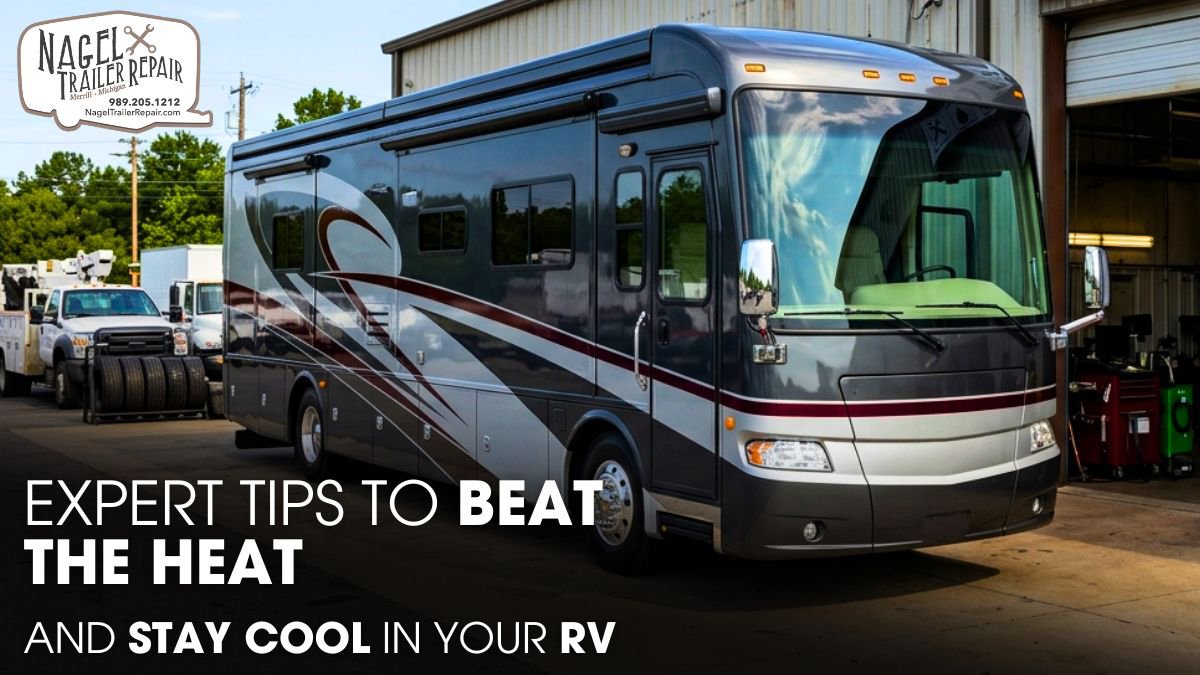
Summer heat can turn your RV into an uncomfortable oven within minutes. Whether you are traveling, camping, or enjoying a weekend getaway, rising temperatures can quickly affect your comfort and your RV’s cooling performance. Staying ahead of the heat starts with knowing how to keep your RV cool.
Extreme heat can push your air conditioner harder, increase indoor temperatures, and place extra stress on essential RV systems. Poor ventilation, direct sunlight, inadequate insulation, and neglected maintenance can make the problem worse and leave you struggling to stay comfortable.
The good news is that you can beat the heat with practical, proven strategies. From improving AC efficiency and blocking sunlight to enhancing airflow and maintaining your RV properly, these tips from an RV expert in Michigan will help you create a cooler, more comfortable RV and enjoy summer travels with confidence.
How Heat Affects Your RV?
Your RV is essentially a compact thermal envelope. Every part of that envelope—including the roof, walls, windows, doors, windshield, and slide-outs—can transfer heat between the outside environment and the living space. During summer, direct solar radiation can heat the roof and exterior surfaces to temperatures significantly higher than the surrounding air.
Windows create another major source of heat gain. Sunlight can pass through the glass and convert into heat inside the RV. Poorly sealed windows and doors then allow hot outdoor air to infiltrate the cabin, forcing the air conditioner to work even harder.
Your AC must remove more than just the heat coming through the walls. It also has to deal with heat generated inside the RV by people, cooking, lighting, refrigerators, televisions, computers, and other electrical equipment.
- Direct sunlight increases the RV’s thermal load.
- Poor insulation allows faster heat transfer.
- Damaged seals allow hot air infiltration.
- Appliances add sensible heat to the cabin.
- Humidity increases the AC’s workload.
- High temperatures extend compressor run time.
It helps to understand the difference between sensible heat and latent heat. Sensible heat directly raises the indoor temperature, while latent heat relates to moisture in the air. In hot, humid weather, your AC must remove both heat and moisture. That explains why an RV can still feel uncomfortable even when the thermostat reaches its target temperature.
Watch for AC warning signs such as weak airflow, extended cooling cycles, frequent breaker trips, heavy condensation, or uneven temperatures. These symptoms can point to clogged filters, blocked ducts, electrical faults, insulation gaps, or excess heat entering the RV. An experienced RV repair shop in Michigan can identify the cause and restore efficient cooling.
Optimize Your RV Air Conditioning:
Your RV air conditioner relies on a continuous heat-transfer cycle. The evaporator coil absorbs heat from indoor air, the refrigerant carries that heat through the system, and the condenser releases the heat outside. When airflow or heat transfer becomes restricted, the entire cooling process loses efficiency.
Start with the simplest component: the air filter. A dirty filter restricts return airflow and reduces the amount of air passing across the evaporator coil. This can reduce cooling performance and make the blower work harder. Follow the AC manufacturer’s maintenance schedule and inspect the filter more frequently when you travel through dusty environments.
- Clean or replace filters as recommended.
- Keep return-air openings completely clear.
- Remove debris from condenser airflow areas.
- Inspect accessible evaporator and condenser surfaces.
- Keep AC supply registers unobstructed.
- Check duct connections for separation or leakage.
RV ductwork deserves special attention because manufacturers often route ducts through compact spaces. Loose joints, crushed ducts, or poor sealing can allow conditioned air to escape before it reaches the living area. You may notice this problem when the AC sounds powerful but individual rooms receive very little airflow.
Electrical performance also affects cooling. An RV air conditioner can draw substantial current, particularly during compressor startup. Low campground voltage, damaged power cords, loose connections, overloaded circuits, or an undersized electrical supply can cause the compressor to struggle or the breaker to trip.
Low refrigerant is not always the reason an RV fails to cool properly. Clogged filters, dirty coils, weak capacitors, poor airflow, duct leaks, or electrical issues can cause similar symptoms. For reliable RV repairs in Michigan, have a qualified technician inspect the system before servicing the sealed refrigerant circuit.
Block Heat Before It Enters:
The easiest heat for your AC to remove is the heat you prevent from entering the RV in the first place. Effective summer cooling starts outside the HVAC system by reducing solar gain and uncontrolled air infiltration.
Your RV awning provides more than shade for outdoor seating. When you deploy it correctly, it can prevent direct sunlight from striking windows and sections of the exterior wall. Exterior shading works particularly well because it blocks solar radiation before the window transfers that energy into the cabin.
- Use reflective windshield and window covers.
- Deploy awnings during intense sunlight.
- Shade large windows whenever possible.
- Inspect window and door weatherstripping.
- Maintain slide-out seals.
- Repair deteriorated exterior sealant.
Reflective window coverings work best when you use them consistently during periods of strong sunlight. Pay particular attention to the windshield and large side windows because these surfaces can contribute substantial solar heat gain.
Do not ignore the roof. The roof receives direct solar radiation for much of the day and can become one of the hottest parts of the RV. Inspect the roof membrane, sealants, vents, skylights, and penetrations for deterioration.
RV slide-outs add joints to the thermal envelope, making proper sealing essential against water and air leaks. If seals crack, compress, or shift out of position, repair or replace them to the manufacturer’s specifications. For dependable protection, services at our shop in Merrill, MI can restore seal performance and prevent moisture damage and energy loss during travel.
Improve Airflow Inside Your RV:
Even a properly functioning AC cannot cool every part of an RV effectively if conditioned air cannot circulate. Compact RV layouts often create temperature differences between the main living area, bedroom, bathroom, and other enclosed spaces.
Use fans to distribute conditioned air rather than relying entirely on the AC blower. A ceiling fan can mix warmer and cooler air, while a portable fan can move conditioned air toward a room that consistently remains warmer.
- Keep supply vents free from obstructions.
- Never block return-air registers.
- Use fans to eliminate stagnant air pockets.
- Keep interior doors positioned for better circulation.
- Use roof vents when outside conditions permit.
- Create cross-ventilation during cooler periods.
Cross-ventilation works only when outdoor conditions support it. Opening windows during the hottest part of the afternoon can introduce additional sensible and latent heat. Instead, use ventilation when outdoor temperatures fall below indoor temperatures, such as during cooler mornings or evenings.
Roof vents can help remove accumulated hot air because warm air naturally rises. When outdoor conditions become favorable, opening a roof vent and strategically positioned windows can create a natural airflow path through the RV.
If one area stays hot even when the AC runs properly, inspect the air-distribution system. A loose duct, crushed passage, blocked vent, or poorly sealed joint can restrict airflow and leave certain sections warm. If the issue persists, searching for “RV repair near me” can help you find professional service to diagnose and correct hidden ductwork problems.
Reduce Indoor Heat Sources:
Your RV has a small interior volume, so heat from everyday activities can noticeably affect comfort. Cooking, electronics, lighting, and appliances all contribute to the total cooling load.
Cooking represents one of the biggest avoidable sources. An oven or stovetop releases sensible heat into the cabin while cooking also introduces moisture into the air. During extremely hot weather, outdoor cooking can significantly reduce the amount of heat your AC must remove.
- Avoid unnecessary oven use during peak heat.
- Turn off electronics you are not using.
- Replace incandescent bulbs with LEDs.
- Minimize operation of heat-producing appliances.
- Vent cooking moisture outside.
- Keep heat-generating equipment away from the thermostat.
LED lighting generally produces less waste heat while consuming less electrical power than incandescent lighting. This makes LED conversion useful not only for energy efficiency but also for reducing unnecessary heat inside a compact RV.
Electronics contribute heat as well. Televisions, computers, gaming equipment, chargers, converters, and other devices ultimately release consumed electrical energy as heat. Turn off equipment that does not need to operate continuously.
Also consider thermostat placement. If a TV, lamp, cooking appliance, or other heat-producing device sits directly beside the thermostat, it can cause it to sense a localized temperature increase, making the AC run longer than needed. For RV services in Michigan, proper thermostat positioning matters too.
Maintain Your RV for Hot Season:
A reliable cooling system starts with a well-maintained RV. Before heading into hot weather, inspect the roof, seals, HVAC equipment, electrical system, vents, and other components that influence thermal performance.
Start with the roof and exterior seals. Look for cracked sealant, separated seams, damaged vents, deteriorated gaskets, and other signs of weathering. Water intrusion can damage insulation and structural materials, while air leakage increases the amount of hot air entering the cabin.
- Inspect roof membranes and sealants.
- Check door and window gaskets.
- Examine slide-out seals.
- Clean AC filters regularly.
- Keep condenser airflow paths clear.
- Inspect electrical connections for damage.
- Test thermostat and blower operation.
The condenser needs unrestricted airflow to reject heat effectively. Leaves, insects, dirt, and other debris can restrict airflow around the condenser and reduce system efficiency. Clean accessible areas according to the manufacturer’s instructions and avoid damaging delicate fins or electrical components.
Electrical inspection is equally important. Check power cords, plugs, breakers, connections, and other accessible components for overheating, discoloration, physical damage, or unusual odors. Never install a higher-rated breaker simply to stop repeated trips. The breaker protects the circuit, and bypassing that protection can create a serious electrical hazard.
If your RV relies on an onboard power source or inverter to operate the AC, verify that the system can support the air conditioner’s running and startup demands. Compressor startup can briefly require significantly more current than normal operation.
When an AC keeps acting up, professional service matters. A qualified RV specialist in Michigan can check compressor operation, capacitors, blower motors, electrical supply, refrigerant performance, thermostat controls, ductwork, and airflow with proper diagnostic tools.
The Role of Professional Maintenance:
Professional maintenance helps keep your RV comfortable, reliable, and ready for demanding travel conditions. A qualified technician can inspect the air-conditioning system, clean critical components, check electrical connections, examine roof and window seals, and identify airflow or insulation problems before they become expensive failures.
Regular inspections also help the cooling system operate efficiently when outdoor temperatures climb, reducing unnecessary strain on key components. The same professional approach matters when selecting and maintaining your RV’s battery system.
A technician can evaluate your power consumption, travel habits, camping setup, charging equipment, and available battery space before recommending a suitable battery type and capacity. Proper installation, terminal inspection, charging-system testing, and routine battery maintenance can improve power reliability and help extend battery service life during both short trips and extended off-grid adventures
Conclusion:
Keeping an RV cool requires more than turning the thermostat lower. Reduce solar heat gain, maintain insulation and seals, protect airflow, and minimize unnecessary internal heat sources. These measures reduce the thermal load before your AC has to handle it.
Regular HVAC and electrical maintenance also protects expensive components from excessive operating stress. Clean filters, unobstructed coils, functional ductwork, stable electrical supply, and properly maintained seals help the cooling system operate more efficiently.
Get your RV summer-ready before the heat hits! Trust Nagel Trailer Repair for expert AC checks, airflow service & preventive maintenance. As your go-to RV expert in Michigan, we boost cooling, safety & comfort. Book now—don’t sweat the road ahead!