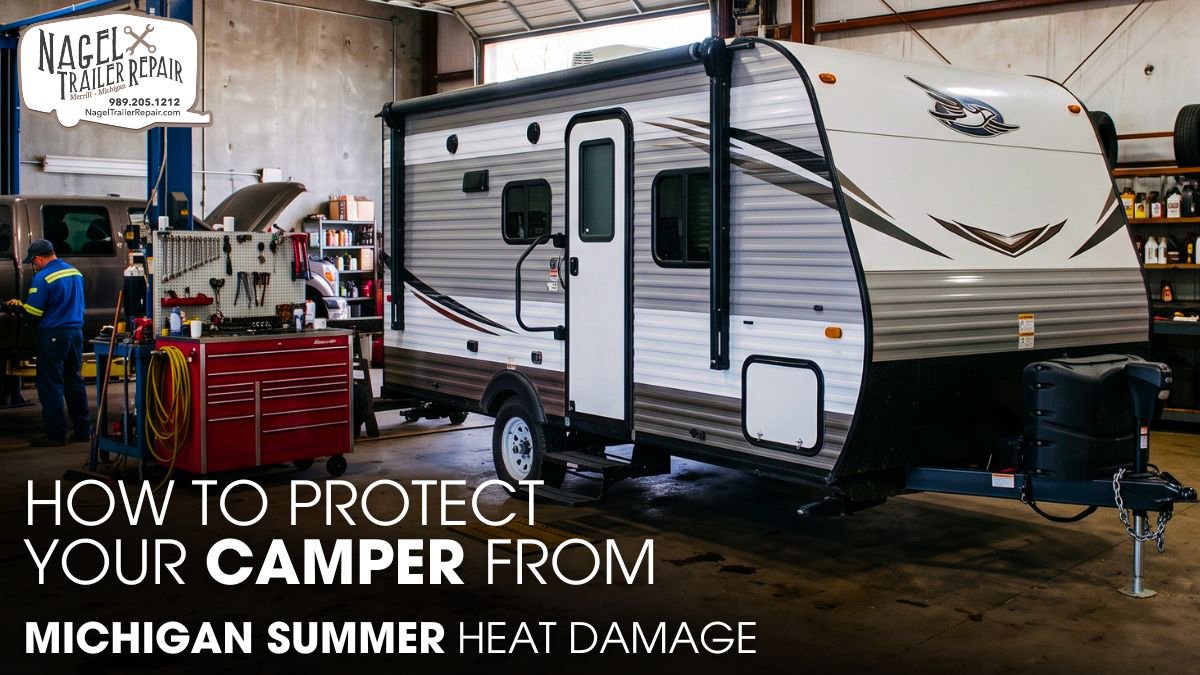
Michigan summers can bring intense sunshine, rising temperatures, and long periods of heat that put extra stress on your camper. While many owners focus on winter storage, summer heat can quietly damage roofs, tires, seals, batteries, and interior materials if left unchecked.
Excessive heat and UV exposure can cause fading, cracking, warping, and premature wear. Without proper protection, small issues can turn into costly repairs, shorten your camper’s lifespan, and affect your comfort during every trip.
The good news is that a few preventive measures can make a significant difference. In this guide, you’ll learn practical ways to prevent heat damage and discover when to consult a camper repair expert in Michigan to keep your camper protected, reliable, and adventure-ready all summer.
Summer Heat Risks for a Camper:
Many camper owners spend plenty of time preparing for Michigan’s cold winters but pay far less attention to summer heat. That can be a costly mistake. Although Michigan does not experience the extreme temperatures found in desert regions, prolonged sunshine, high humidity, and constant temperature fluctuations can still cause significant damage to an RV.
Heat affects nearly every part of a camper. As sunlight strikes the roof, sidewalls, windows, and exterior components, those surfaces absorb solar energy and convert it into heat. On a typical summer day with temperatures in the mid-80s, roof surfaces can easily exceed 140°F. This heat then transfers into the structure of the camper, placing stress on materials and systems that were never designed to remain at elevated temperatures for long periods.
One of the biggest concerns is thermal expansion. Materials expand when heated and contract when cooled. Since this process occurs every day throughout the summer, sealants, adhesives, fasteners, and joints experience continuous movement. Over time, this repeated expansion and contraction weakens connections and creates opportunities for leaks and structural damage.
Some of the components most vulnerable to summer heat include:
- Roof membranes and sealants
- Exterior graphics and decals
- Plastic vents and skylights
- Window seals and weatherstripping
- Tires and suspension components
- Batteries and charging systems
- Refrigerators and air conditioners
Understanding these risks is the first step toward protecting your camper and preventing costly repairs.
Protect the Camper Exterior:
Your camper’s exterior acts as its primary defense against the elements. Because it absorbs direct sunlight throughout the day, it experiences the greatest amount of heat stress. Protecting exterior surfaces can significantly reduce long-term deterioration and preserve the value of your RV.
Ultraviolet radiation is one of the most damaging environmental factors affecting campers. UV rays gradually break down the molecular structure of rubber, vinyl, fiberglass, and plastic components. As these materials deteriorate, they become faded, brittle, and more susceptible to cracking.
Applying a high-quality UV protectant can slow this process considerably. RV-specific waxes, polymer sealants, and ceramic coatings provide a protective layer that helps reflect sunlight and reduce oxidation. Ceramic coatings are especially effective because they offer long-lasting protection while helping to keep exterior surfaces cooler.
The roof deserves special attention because it receives the highest concentration of solar exposure. Whether your camper has an EPDM rubber roof, TPO membrane, aluminum roof, or fiberglass construction, routine inspections are essential.
Carefully inspect:
- Roof seams
- Vent openings
- Skylights
- Air conditioner mounts
- Antenna bases
- Solar panel attachment points
Look for cracking, shrinking sealant, bubbling, or signs of separation. Even a small failure can allow water to enter the structure, leading to mold, insulation damage, and expensive repairs.
If your camper remains outdoors for extended periods, invest in a breathable RV cover. A quality cover blocks UV rays while allowing moisture to escape, helping protect the exterior without trapping condensation underneath.
Keep Interior Temperatures Down:
While exterior protection is important, preventing excessive heat buildup inside the camper is equally critical. During sunny summer afternoons, interior temperatures can climb well above 120°F if ventilation is poor.
High interior temperatures can damage electronics, weaken adhesives, warp cabinetry, fade upholstery, and shorten the lifespan of appliances. The hotter the interior becomes, the harder cooling systems must work to maintain comfortable conditions.
Windows are often the biggest source of heat gain. Standard RV glass allows large amounts of solar radiation to enter the living space. Once inside, that heat becomes trapped, creating a greenhouse effect that rapidly raises indoor temperatures.
Reflective window insulation offers one of the most effective ways to reduce solar heat gain. Reflective inserts can block a significant percentage of radiant heat before it enters the cabin. UV-resistant window films provide additional protection while helping preserve interior furnishings.
Ventilation also plays a major role in temperature control. Hot air naturally rises and collects near the ceiling. Roof-mounted exhaust fans help remove trapped heat and improve airflow throughout the camper.
To improve interior cooling:
- Install powered roof vents
- Use reflective window coverings
- Open windows for cross-ventilation
- Install vent covers for continuous airflow
- Keep blinds closed during peak sunlight hours
Humidity control is another important consideration in Michigan. High humidity levels increase discomfort and contribute to condensation problems. Excess moisture can encourage mold growth and damage wood-based materials over time.
Whenever possible, park in shaded areas. Even partial shade can noticeably reduce surface temperatures and lower the cooling demands placed on your camper.
Tires and Rubber Parts Maintenance:
Tires are among the most heat-sensitive components on any camper. Summer temperatures affect tire pressure, structural integrity, and overall safety. Unfortunately, many tire failures occur because owners underestimate the impact of heat.
As temperatures rise, the air inside a tire expands. Properly inflated tires can handle these changes, but underinflated tires generate excessive internal heat through increased sidewall flexing. This heat weakens internal construction materials and raises the risk of blowouts.
RV tires face additional challenges because they often operate near their maximum load capacity. Long-distance travel on hot pavement can significantly increase operating temperatures and place extra stress on the tire structure.
To protect your tires:
- Check tire pressure before every trip
- Follow manufacturer load ratings
- Inspect sidewalls for cracking
- Monitor tread wear regularly
- Replace aging tires when necessary
Sunlight also contributes to tire deterioration. UV radiation gradually removes protective compounds from rubber, causing it to dry out and crack. Tire covers provide an inexpensive and highly effective way to reduce UV exposure during storage.
Beyond the tires themselves, numerous rubber components throughout the camper require regular attention. Door seals, window gaskets, slide-out seals, and compartment weatherstripping all experience continuous exposure to heat and sunlight.
Applying a quality rubber conditioner helps maintain flexibility and prevents premature cracking. Replacing damaged seals promptly can prevent leaks and improve energy efficiency.
Safeguard Appliances and Systems:
Summer heat places additional demands on every major system inside your camper. Batteries, refrigerators, air conditioners, and electrical components all operate less efficiently when exposed to high temperatures.
Battery systems are particularly vulnerable. Elevated temperatures accelerate internal chemical reactions and increase the rate of component degradation. While batteries may temporarily perform well in warm conditions, excessive heat often shortens their lifespan significantly.
Proper battery maintenance includes:
- Ensuring adequate ventilation
- Cleaning terminal connections
- Checking charging voltages
- Inspecting for corrosion
- Securing battery mounts
Refrigerators also struggle during hot weather. RV refrigerators depend on efficient heat transfer to maintain cooling performance. As outside temperatures increase, cooling efficiency naturally decreases.
To improve refrigerator performance:
- Keep exterior vents clean
- Inspect cooling fans
- Verify proper airflow
- Check door seals regularly
- Avoid overloading storage areas
Air-conditioning systems require routine maintenance as well. Dirty evaporator coils, clogged condenser fins, and restricted airflow can dramatically reduce cooling performance. Regular inspections help ensure maximum efficiency during the hottest days of summer.
Electrical systems deserve close attention because heat can worsen existing weaknesses. Thermal expansion may loosen electrical connections, creating resistance that generates even more heat.
Inspect the following regularly:
- Shore power connections
- Breaker panels
- Converter terminals
- Inverter wiring
- Solar charging equipment
Addressing minor electrical issues early can prevent major failures and improve system reliability.
Create a Summer Maintenance Plan:
The most effective way to protect your camper from heat damage is through consistent preventive maintenance. Rather than waiting for problems to appear, establish a routine inspection schedule that helps identify issues before they become expensive repairs.
A monthly inspection should include the roof, tires, batteries, seals, cooling equipment, and exterior surfaces. Keeping detailed maintenance records can help you track wear patterns and anticipate future service needs.
Regular cleaning is also important. Dirt, pollen, tree sap, and bird droppings can accelerate oxidation and reduce the effectiveness of protective coatings. Routine washing helps preserve exterior finishes while making it easier to spot developing problems.
Protective waxes and sealants should be reapplied according to manufacturer recommendations. These products provide a valuable barrier against UV radiation and environmental contamination.
Before long trips or anticipated heat waves, perform a complete system check. Verify tire pressures, test the air conditioner, inspect roof seals, evaluate battery condition, and confirm proper ventilation. Taking these steps before temperatures peak can help prevent unexpected breakdowns.
The Role of Professional Maintenance:
Professional maintenance plays a vital role in protecting a camper from long-term wear caused by heat, humidity, and constant outdoor exposure. Experienced technicians can identify early signs of roof seal deterioration, tire stress, battery overheating, and ventilation issues before they develop into costly repairs. Regular inspections also help ensure that critical systems continue operating efficiently during the hottest months of the year.
Routine service appointments provide an opportunity to evaluate components that many owners may overlook. Technicians can test electrical connections, inspect cooling systems, assess propane equipment, and verify that safety devices function correctly. This proactive approach reduces the risk of unexpected breakdowns and helps extend the overall lifespan of the camper.
Professional guidance is equally valuable when planning equipment upgrades or replacements. Whether evaluating storage systems, selecting replacement parts, or estimating camper propane tank cost, expert recommendations help owners make informed decisions. Consistent maintenance not only improves reliability and safety but also protects the long-term value of the camper while reducing future repair expenses.
Conclusion:
Michigan’s summer climate may not seem extreme, but months of UV exposure, humidity, and repeated heating and cooling cycles can gradually damage a camper. Left unchecked, these conditions can affect everything from roofing materials and tires to batteries and cooling systems.
The good news is that most heat-related damage is preventable. Regular inspections, proper ventilation, UV protection, tire maintenance, and system monitoring can dramatically reduce wear and extend the life of your RV.
By taking a proactive approach and following a consistent maintenance plan, you can keep your camper in excellent condition throughout the summer. When issues arise, trust Nagel Trailer Repair—your camper repair expert in Michigan—for fast, honest service.
A well-maintained RV stays safer, more reliable, and ready for years of adventures. Don’t let small problems grow; schedule your inspection today and travel with total peace of mind.