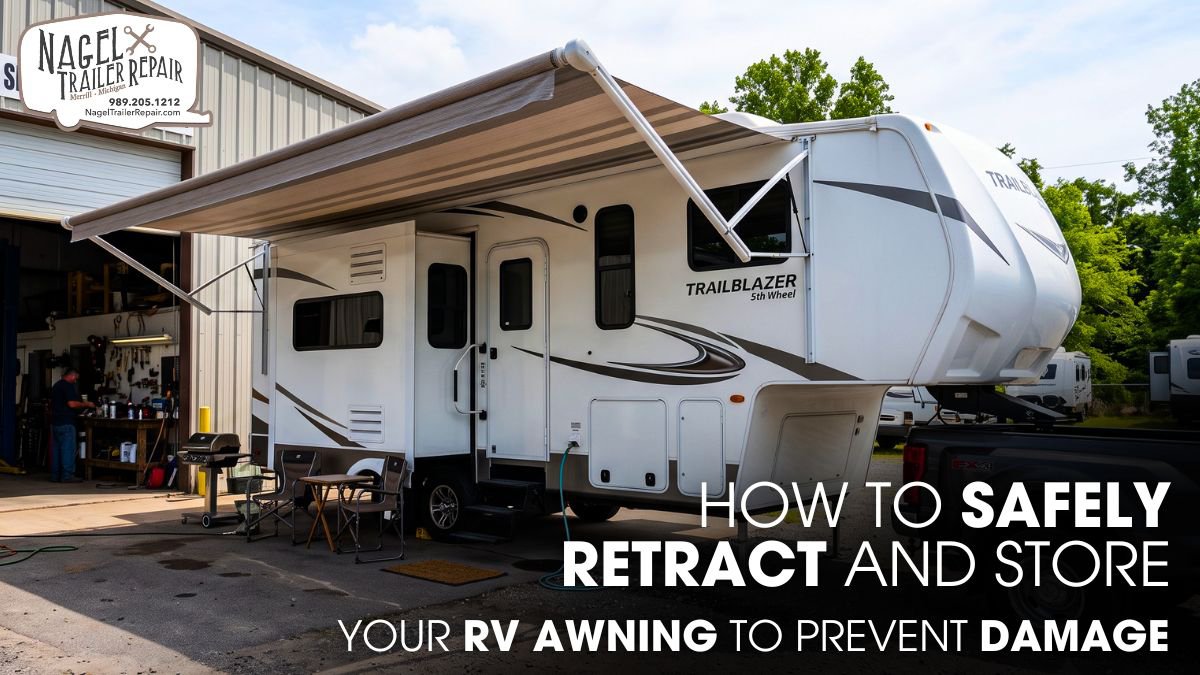
Your RV awning protects you from the sun and rain, but it also needs proper care to stay in great condition. A simple mistake while retracting or storing it can lead to torn fabric, bent arms, or expensive repairs that could have been avoided.
Many RV owners roll up their awning while it’s still wet, dirty, or exposed to strong winds. Over time, these habits cause mold, rust, mechanical issues, and unnecessary wear, reducing the awning’s lifespan and reliability on future trips.
This guide will show you how to safely retract and store your RV awning step by step. You’ll learn practical tips to prevent damage, improve safety, and keep your awning ready for every adventure. For complex issues, trust a certified RV expert in Michigan to ensure lasting performance and avoid costly repairs.
Why Proper Awning Storage Matters?
Most RV owners think of an awning as a simple shade, but it is actually a carefully engineered mechanical system. Every time you extend or retract it, several components work together to keep the movement smooth and balanced. The roller tube, torsion spring, support arms, mounting brackets, pivot joints, and, in powered models, the drive motor and gearbox all share the load.
When you store the awning correctly, you reduce stress on every one of these parts and help them last much longer. The awning fabric also deserves attention. Most manufacturers use either acrylic or vinyl because both materials handle outdoor conditions well.
Acrylic fabric allows air to circulate better and resists fading, while vinyl offers excellent water resistance and is easier to clean. Even so, constant exposure to ultraviolet rays slowly weakens either material. Over time, sunlight breaks down the protective coating, making the fabric brittle, faded, and more likely to tear around the seams.
Improper storage creates problems that many RV owners never notice until the damage becomes expensive. For example, if the fabric rolls unevenly around the roller tube, it creates uneven tension across the material. As the roller continues turning, that uneven tension stretches one side more than the other.
Eventually, wrinkles form, stitching loosens, and the edges begin rubbing against the roller hardware. Don’t wait for a total failure—search for a trusted RV repair shop in Michigan today to inspect, realign, and protect your investment before minor wear turns into costly replacement.
Protecting Your RV Awning on the Road:
Travel adds another layer of stress. Every mile on the road exposes the awning to vibration, road shock, and changing wind pressure. Even if the awning stays closed, repeated vibration can slowly loosen mounting bolts, enlarge fastener holes, and increase wear inside the hinge assemblies. These small changes often go unnoticed until the awning begins making unusual noises or fails to open smoothly.
Proper storage helps you:
- Reduce UV-related fabric deterioration.
- Prevent moisture damage and mildew growth.
- Protect moving joints from premature wear.
- Minimize vibration damage during travel.
- Extend the service life of both manual and electric awnings.
Spending a few extra minutes storing the awning correctly is far less expensive than replacing an entire fabric assembly, damaged support arm, or failed motor.
Inspect before Retracting:
A careful inspection before retracting your RV awning is one of the most effective ways to prevent future repairs. Many mechanical failures begin as small issues that owners simply overlook. A loose bolt, a tiny fabric tear, or a dirty pivot joint may seem insignificant today, but these problems often become much worse once the awning rolls under spring tension.
Start by cleaning the surface thoroughly. Remove leaves, twigs, sand, pine needles, bird droppings, and tree sap before closing the awning. Any debris trapped inside the rolled fabric creates pressure points that can scratch protective coatings or wear holes into the material over time.
Next, inspect the entire fabric while the awning remains fully extended. Look carefully at the stitched seams, reinforced corners, roller attachment points, and hem edges. These areas experience the highest amount of stress during every operating cycle.
Pay special attention to:
- Loose or broken stitching.
- Small punctures or pinholes.
- Surface cracks.
- Vinyl delamination.
- Mold or mildew stains.
- Faded or brittle fabric.
The mechanical components also require regular inspection. Check both support arms for smooth movement and proper alignment. If either arm twists, binds, or moves unevenly, investigate the cause before retracting the awning. Bent arms place additional stress on the roller tube and increase the load on torsion springs.
Essential RV Awning Maintenance Guide:
Inspect every mounting bracket where the awning attaches to the RV wall. Road vibration and seasonal expansion can gradually loosen fasteners. Even slight movement allows the bracket to flex, increasing fatigue within both the mounting hardware and the RV sidewall.
If your RV has a powered awning, inspect the electrical system as well. Examine wiring for cracked insulation, corrosion around connectors, or signs of moisture intrusion. A motor that receives inconsistent voltage may draw excessive current, creating unnecessary heat inside the windings and shortening motor life.
Lubrication is equally important, but using the correct lubricant matters just as much. Apply only a dry silicone lubricant to approved pivot points if the manufacturer recommends it. Heavy grease often attracts dust and grit, turning moving joints into abrasive contact surfaces that wear out much faster.
Never roll up a wet awning unless severe weather leaves you no other option. Trapped moisture invites mildew, weakens seams, stains fabric, and corrodes the roller tube. If forced to close it wet, reopen promptly and air-dry both sides fully. For expert maintenance and reliable care, trust professional RV service in Michigan to keep your gear safe season after season.
Steps to Retract the Awning:
Retracting an RV awning safely involves much more than pressing a switch or turning a crank. Controlled movement keeps the fabric centered on the roller tube and prevents unnecessary stress on the support arms and drive components.
Before you begin, remove everything beneath the awning. Camping chairs, tables, grills, bicycles, hanging lights, and outdoor rugs can interfere with the closing path or become trapped between the support arms.
If rainwater has collected on the fabric, remove it first. Water is surprisingly heavy, and even a shallow pool adds considerable weight across the roller tube. That additional load increases bending stress, strains electric motors, and may permanently deform lightweight aluminum components.
Operate the awning at a slow, steady pace—manual cranks need even pressure for uniform fabric rolling, while powered systems demand smooth, synchronized arm movement. If one side hesitates or twists, stop and inspect immediately. For expert help, search “RV repair near me” to prevent costly damage and keep your adventures safe.
Keep these best practices in mind:
- Watch both support arms throughout retraction.
- Keep the fabric centered on the roller tube.
- Listen for grinding or clicking sounds.
- Stop if the awning binds unexpectedly.
- Never force a jammed mechanism.
As the awning reaches the fully closed position, verify that the roller tube sits evenly against the RV sidewall. Uneven closure often signals fabric tracking issues, loose hardware, or structural misalignment that should be corrected before the next trip.
Secure for Safe Travel:
Closing the awning is only the first step. Properly securing it for travel is just as important because highway conditions constantly subject the assembly to vibration, airflow, and changing wind loads.
Always engage every travel lock or transport latch supplied by the manufacturer. These devices prevent the roller from rotating unexpectedly while the RV is moving. Even a slight opening allows air to enter beneath the awning, increasing aerodynamic lift and creating forces that can quickly damage the entire assembly.
Many experienced RV owners also use secondary travel straps designed specifically for awnings. These straps reduce movement without placing excessive compression on the roller tube or fabric.
Before leaving your campsite, complete a final inspection.
- Verify all travel locks are engaged.
- Confirm mounting bolts remain tight.
- Check roller tube alignment.
- Ensure support arms sit flush.
- Remove hanging lights and accessories.
- Inspect powered awning wiring.
This final walk-around takes only a few minutes, yet it can prevent thousands of dollars in repair costs caused by accidental deployment during highway travel.
Store the Awning Correctly:
Proper long-term storage protects both the fabric and the mechanical components from gradual environmental damage. Even while parked, the awning remains exposed to sunlight, humidity, dust, temperature changes, insects, and airborne contaminants.
Begin by washing the fabric with a manufacturer-approved cleaner and a soft brush. Avoid bleach, strong solvents, or pressure washers because they can damage protective coatings, weaken seam construction, and shorten fabric life.
Allow the awning to dry completely before rolling it closed. Dry fabric greatly reduces the chance of mildew growth, unpleasant odors, adhesive failure, and corrosion around internal roller components.
A breathable protective cover provides another level of protection during storage. Unlike sealed plastic covers, breathable materials allow moisture vapor to escape while shielding the awning from ultraviolet radiation, dirt, pollen, bird droppings, and tree sap.
If your RV remains in storage for several months, inspect the awning periodically instead of waiting until your next camping trip. Small maintenance issues are much easier and less expensive to correct when you discover them early.
During each inspection, check:
- Fabric condition.
- Roller tube alignment.
- Corrosion around hardware.
- Mounting bracket security.
- Electrical connections.
- Rodent or insect damage.
These routine inspections help ensure that your awning operates just as smoothly when camping season begins again.
Common Mistakes to Avoid:
Most awning failures happen because of everyday maintenance mistakes rather than manufacturing defects. Fortunately, nearly all of them are preventable with consistent care.
One of the biggest mistakes is storing the awning while it is still wet. Moisture trapped inside the rolled fabric encourages mold, mildew, staining, corrosion, and fabric deterioration. Even high-quality materials cannot withstand repeated moisture exposure indefinitely.
Ignoring loose hardware is another common problem. Road vibration gradually loosens bolts and fasteners, increasing movement throughout the entire assembly. Over time, that movement creates larger mounting holes, misaligned support arms, and higher stress on structural components.
Some owners also overlook lubrication or use products that attract dirt. Dust mixed with heavy grease creates an abrasive paste that accelerates wear inside hinges and pivot joints.
Wind is another major cause of damage. Strong gusts generate large torsional loads that twist support arms, overload gearboxes, and bend roller tubes. Even if the awning appears stable, sudden wind changes can exceed its design limits within seconds.
Finally, never force an awning that refuses to move. If the mechanism jams, identify the source of resistance before another cycle—forcing risks springs, gears, tubes, motors, or arms. A careful inspection costs far less than replacement. For trusted RV repair at our shop in Merrill, MI, call pros who save you time, money, and frustration.
The Role of Professional Maintenance:
Routine inspections by experienced RV technicians help identify issues that are easy to miss during regular maintenance. They can spot worn suspension components, loose mounting hardware, damaged bushings, misaligned parts, and early signs of awning wear before these problems turn into costly repairs or affect your safety on the road.
Professionals also use specialized tools to adjust suspension systems, inspect shocks, springs, bearings, and frame connections, while ensuring the awning’s moving parts, roller tube, support arms, and locking mechanisms operate smoothly. Their expertise helps maintain proper alignment, load distribution, and reliable performance.
Scheduling professional maintenance at regular intervals not only extends the life of critical RV components but also improves ride comfort, handling, and overall dependability. Preventive servicing reduces unexpected breakdowns, protects your investment, and gives you greater confidence every time you head out on a new adventure.
Conclusion:
Proper RV awning care begins with routine inspection, careful retraction, secure travel preparation, and appropriate storage practices. By keeping the fabric clean and dry, maintaining mechanical components, and avoiding common operating mistakes, you can significantly extend the service life of your awning.
A few minutes of preventive maintenance before and after every trip helps protect your investment, improves safety on the road, and ensures your RV awning remains dependable for years of outdoor adventures.
Yet when wear or damage appears, trust Nagel Trailer Repair—your RV expert in Michigan—for fast, honest diagnostics and skilled service. Don’t let small issues cut your journey short. Schedule a check-up, travel with confidence, and keep making memories knowing your rig is in expert hands. Because reliable repairs mean more worry-free miles ahead.