
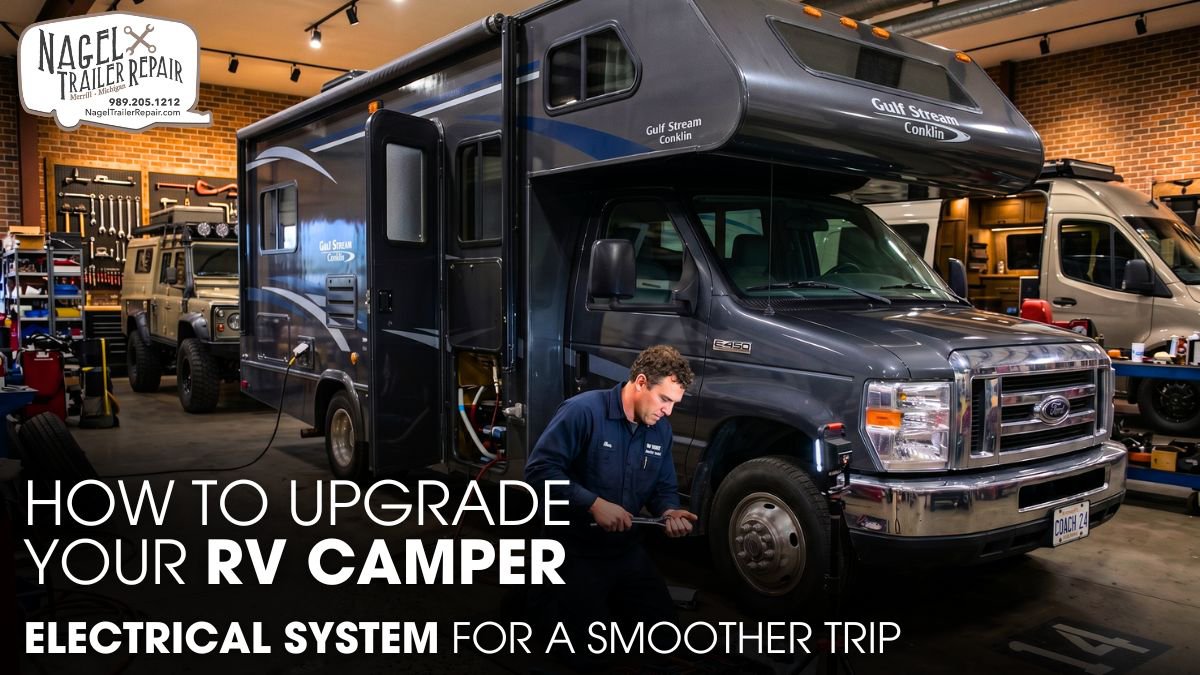
Your RV trip can quickly turn stressful when weak batteries, overloaded circuits, or unreliable power systems leave you without the comfort you depend on. From dead appliances to charging failures, electrical problems can disrupt even the best travel plans.
Many RV owners struggle with outdated wiring, poor battery performance, and limited power capacity. These issues not only reduce convenience but can also create safety risks during long road trips and off-grid camping adventures.
Upgrading your RV camper electrical system gives you better reliability, improved energy efficiency, and smoother travel experiences. In this guide, you’ll learn essential upgrades, smart power solutions, and maintenance tips—plus when to call an RV repair expert in Michigan for safe, lasting fixes that keep you on the road worry‑free.
Assess Your Current RV Power Setup:
Before you start buying lithium batteries, solar panels, or a powerful inverter, you need to understand how your current RV electrical system performs under real-world conditions. Most RVs use two separate electrical systems. The 12V DC system powers components such as water pumps, LED lights, vent fans, slide motors, and appliance control boards, while the 120V AC system handles high-demand appliances like microwaves, air conditioners, induction cooktops, and wall outlets.
Start with the battery bank because it acts as the foundation of the entire setup. Use a digital multimeter to check resting voltage after the batteries sit disconnected for several hours. A healthy AGM battery usually reads around 12.7 volts, while a fully charged LiFePO4 battery typically rests between 13.2 and 13.4 volts. However, voltage alone does not tell the full story. Perform a proper load test to identify weak cells, voltage sag, or declining amp-hour capacity.
Next, inspect the RV’s wiring system carefully. Many factory-installed RV electrical systems use undersized cables that struggle under heavy inverter loads. When current demand increases, resistance inside small cables creates voltage drop and heat buildup. That problem becomes more noticeable when you run appliances through an inverter or recharge batteries rapidly.
Pay close attention to:
- Battery cable gauge
- Corroded terminals
- Ground bonding points
- Fuse panel condition
- Shore power inlet connections
- Automatic transfer switches
You should also calculate your daily energy consumption before planning upgrades. For example, a residential refrigerator may consume 700Wh daily, while a microwave can draw over 1000 watts during operation. Once you calculate total watt-hours, you can properly size your battery bank, inverter, solar array, and charging equipment without overspending or underbuilding the system.
Choose the Right RV Battery System:
Your battery bank determines how long you can stay off-grid and how efficiently your RV handles electrical loads. Older lead-acid batteries still appear in many campers because they cost less upfront, but they come with several drawbacks. They charge slowly, lose voltage under heavy loads, and provide only about 50% usable capacity before performance starts dropping.
Lithium iron phosphate batteries completely changed RV electrical upgrades over the last few years. LiFePO4 batteries deliver stable voltage, faster charging speeds, lower weight, and significantly longer cycle life. Unlike lead-acid batteries, lithium batteries maintain steady voltage even during high-current inverter loads.
A quality lithium battery system usually includes an integrated Battery Management System (BMS) that protects against:
- Overcharging
- Deep discharging
- Short circuits
- Thermal overload
- Cell imbalance
Battery sizing should always match your actual power demand. If your RV consumes around 3000Wh daily, a 12V system requires roughly 250Ah of usable battery capacity. Most experienced RV owners install at least 300Ah to 400Ah of lithium storage to create reserve capacity during cloudy weather or extended camping trips.
Cable sizing becomes extremely important when upgrading battery systems. A 3000W inverter running at full load can pull more than 250 amps from the battery bank. Small cables create resistance heat and dangerous voltage drop under those conditions.
For safer power delivery:
- Use 2/0 AWG cable for 2000W inverters
- Use 4/0 AWG cable for 3000W systems
- Install Class-T or ANL fuses close to batteries
- Keep cable runs as short as possible
Proper cable management improves efficiency and reduces fire risk during heavy current draw.
Upgrade Your RV Power Components:
Upgrading the battery bank alone will not solve every electrical problem. The rest of the system must handle higher power demand safely and efficiently. That includes the inverter, converter charger, transfer switch, breaker panel, and shore power protection equipment.
One of the most important upgrades involves replacing a modified sine wave inverter with a pure sine wave inverter. Modified sine wave output creates electrical noise and unstable power that can damage sensitive electronics over time. Devices such as laptops, CPAP machines, smart TVs, and residential refrigerators operate far more efficiently on pure sine wave power.
A modern inverter should include:
- Automatic low-voltage shutdown
- Thermal overload protection
- High surge capacity
- Remote monitoring capability
- Built-in transfer switching
A 3000W pure sine wave inverter usually provides enough power for most full-time RV setups, including microwave ovens, kitchen appliances, and entertainment systems.
The converter charger also plays a major role in battery health. Older single-stage chargers constantly push fixed voltage into the battery bank, which shortens battery life and increases heat buildup. Multi-stage smart chargers work much more efficiently because they adjust charging voltage automatically during different charging phases.
Modern charging stages include:
- Bulk charging
- Absorption charging
- Float maintenance
- Equalization for lead-acid batteries
If you install lithium batteries, make sure the charger supports lithium charging profiles. Incorrect charging voltage can trigger BMS shutdowns or reduce battery lifespan significantly.
You should also add an Electrical Management System (EMS). Campground shore power often suffers from low voltage, open neutrals, and reverse polarity issues. An EMS monitors incoming power continuously and disconnects the RV automatically when unsafe conditions appear.
Add Solar Power for Efficiency:
Solar power gives RV owners greater energy independence. A properly designed solar charging system can keep batteries topped off during long camping trips while powering essential appliances throughout the day.
Most RV owners choose monocrystalline solar panels because they provide higher efficiency and better performance in limited roof space. Depending on energy demand, RV solar systems typically range between 400W and 1200W.
A complete RV solar setup normally includes:
- Solar panels
- MPPT charge controller
- Roof cable glands
- Inline fuses
- Battery monitor
- Disconnect switches
The charge controller acts as the brain of the solar charging system. MPPT controllers outperform PWM controllers because they convert excess panel voltage into additional charging current instead of wasting it as heat. This technology improves charging efficiency dramatically during colder weather or partial shading conditions.
For example, if your solar array produces 36 volts while your battery bank charges at 14.4 volts, an MPPT controller converts unused voltage into usable amperage. That process increases overall charging efficiency by as much as 30%.
Proper panel installation matters just as much as panel size. Use UV-resistant solar cable, waterproof MC4 connectors, and weather-sealed roof penetrations to prevent leaks and electrical failures. Poor rooftop sealing often causes water intrusion that damages insulation, plywood, and ceiling panels over time.
Battery monitoring systems also improve solar efficiency. A shunt-based battery monitor tracks:
- State of charge
- Current flow
- Charging efficiency
- Historical power usage
- Remaining runtime estimates
These monitoring systems help RV owners manage energy consumption more effectively during off-grid travel.
Improve Wiring and Safety:
Electrical safety must remain a top priority when upgrading an RV power system. Faulty wiring, unsecured connections, and circuits carrying excessive loads can quickly turn into major fire risks, especially within the compact structure of an RV. Even minor installation mistakes may damage appliances and compromise overall system reliability during travel.
Using the correct wire gauge for the required amperage and cable distance is essential for safe performance. Wires that are too small for the electrical load create higher resistance, causing overheating and unnecessary strain on the system. Properly sized conductors help maintain efficiency, reduce heat buildup, and ensure stable power delivery throughout the RV.
General wiring guidelines include:
- 14 AWG for 15A branch circuits
- 12 AWG for 20A circuits
- 10 AWG for solar charging circuits
- 2/0 or 4/0 AWG for inverter feeds
Use marine-grade stranded copper wire whenever possible because it handles vibration better than solid-core wiring.
Proper grounding also improves system stability. Weak or corroded grounds often cause inverter faults, flickering lights, and unstable charging behavior. Clean all chassis grounding points thoroughly and protect them against corrosion.
Install overcurrent protection throughout the system:
- DC breakers
- ANL fuses
- MIDI fuses
- GFCI outlets
- AFCI protection devices
Install fuse protection near every positive power connection to improve electrical safety and reduce the chances of severe wire damage during a short circuit. A properly placed fuse acts as a safeguard by cutting off excess current before overheating can harm the wiring system. This small precaution plays a major role in preventing costly repairs and dangerous electrical failures.
Routine thermal inspections can reveal hidden electrical issues before they turn into serious problems. Checking connections with an infrared thermometer or thermal camera helps detect overheating terminals, stressed wires, and loose connections while the system is under load. Early detection allows timely maintenance and keeps the electrical setup operating safely and efficiently.
Maintain Your RV’s Electrical System:
Your RV’s upgraded electrical system will only perform well when it receives proper maintenance. Constant exposure to vibration, heat, moisture, and rough road conditions can gradually weaken electrical connections and lower charging performance over time.
Check battery terminals regularly for corrosion, dirt buildup, or loose fittings. Clean and secure connections help high-powered systems run efficiently and safely. Applying dielectric grease to exposed terminals also helps protect against moisture and slows down corrosion, improving the overall lifespan of the electrical setup.
You should also monitor charging voltage regularly:
- AGM bulk charging: 14.4V to 14.8V
- AGM float charging: 13.2V to 13.6V
- LiFePO4 charging: 14.2V to 14.6V
Using the wrong charging settings can shorten battery life and lower overall performance over time. Poor charging management may also lead to slower power recovery, making the electrical system less reliable during travel.
Solar panels need regular cleaning to maintain proper energy production. Dust, dirt, pollen, and debris can block sunlight and reduce efficiency. Even small patches of shade may affect the output of the entire solar panel system, limiting its charging capability.
Routine inspections should include:
- Fuse checks
- Breaker testing
- Cable torque verification
- Inverter cooling fan inspection
- Transfer switch diagnostics
- Shore power cord inspection
If you notice flickering lights, warm battery cables, inverter alarms, or inconsistent charging behavior, investigate the issue immediately. Small electrical problems often become expensive failures when left unresolved for too long.
The Role of Professional Maintenance:
Professional maintenance plays a major role in keeping an RV safe, efficient, and ready for long-distance travel. Skilled technicians can inspect electrical wiring, battery systems, converters, and power connections before small issues turn into expensive repairs. They also test voltage stability, identify overheating components, and ensure every electrical upgrade works properly under heavy load conditions.
At the same time, professional servicing helps protect exterior components from avoidable damage. Experts can inspect awning arms, fabric tension, mounting brackets, and motorized mechanisms to ensure smooth RV awning operation during storage and travel.
Regular maintenance reduces wear caused by moisture, wind exposure, rust, and improper retraction. With scheduled inspections and timely repairs, RV owners can improve safety, extend equipment lifespan, and enjoy more reliable trips on the road.
Conclusion:
Upgrading your RV camper electrical system transforms both comfort and reliability on the road. A properly engineered setup with lithium batteries, pure sine wave inverters, smart charging systems, and solar integration delivers cleaner power, greater energy independence, and safer operation during every trip.
Whether you camp occasionally or live full-time in your RV, investing in a modern electrical system ensures smoother travel experiences, longer off-grid capability, and reduced maintenance issues.
For trusted care, turn to Nagel Trailer Repair—your RV repair expert in Michigan—to keep your home on wheels safe, reliable, and adventure-ready for years ahead.