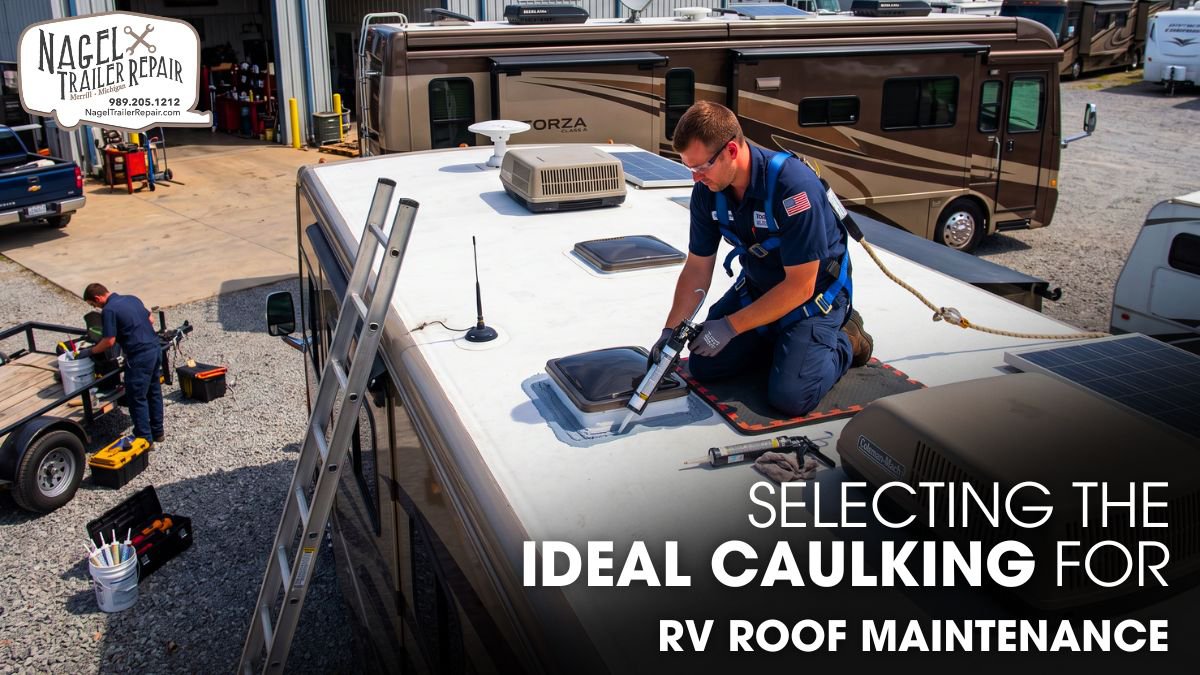
Your RV roof stands between your adventures and costly damage, yet many owners overlook one critical detail—choosing the right caulking. The right sealant protects your roof from rain, UV rays, temperature swings, and everyday wear, helping you travel with confidence.
Unfortunately, not all caulking products deliver the same results. Using an incompatible or low-quality sealant can lead to leaks, cracked seams, water intrusion, and expensive repairs. With so many options available, selecting the best one can feel confusing and time-consuming.
This guide simplifies RV roof care, but for lasting repairs, trust a RV roof expert in Michigan. Learn caulking types, material matching, and key features—then skip the guesswork and hire pros for guaranteed, weather-tough protection today.
Why RV Roof Caulking Matters:
Many RV owners focus on engines, tires, batteries, and appliances while overlooking the roof. However, the roof remains one of the most important systems in the entire vehicle. It protects every structural and interior component beneath it, and its effectiveness depends heavily on the condition of the sealant applied around seams, fasteners, and roof-mounted accessories.
Unlike residential roofs, RV roofs face constant movement. Every mile on the road exposes the roof structure to vibration, twisting forces, wind pressure, and changing weather conditions. These forces create stress around vents, skylights, antennas, air conditioners, solar panel mounts, and roof edges. Without a flexible and durable sealant, tiny gaps can form and allow water to penetrate the roofing system.
Water intrusion often causes far more damage than most owners realize. Moisture can travel beneath roofing membranes and enter insulation, wooden roof decking, wall assemblies, and electrical pathways. Because this process occurs gradually, significant structural deterioration may develop before visible signs appear inside the RV.
A quality RV roof sealant performs several important functions:
- Creates a watertight barrier around roof penetrations.
- Accommodates movement caused by road vibration.
- Protects seams from UV degradation.
- Prevents moisture migration into structural components.
- Helps reduce corrosion around metal fasteners and fixtures.
Choosing the right caulking product is not simply a maintenance decision. It is a critical step in preserving the long-term integrity of the entire RV.
Types of RV Roof Caulking:
Not all RV roof sealants use the same chemical composition. Manufacturers formulate different products to address specific roofing materials, environmental conditions, and application requirements. Understanding these differences helps ensure long-term sealing performance.
Self-leveling sealants remain the most commonly used products for horizontal roof surfaces. These sealants flow slightly after application, allowing them to spread evenly around vents, skylights, plumbing stacks, and mounting brackets. Their ability to settle naturally helps eliminate air pockets and creates a continuous waterproof seal.
For vertical surfaces and sidewall transitions, technicians typically use non-sag sealants. These products maintain their shape after application and resist running or dripping. As a result, they provide better control when sealing roof edges, side seams, and vertical joints.
Silicone sealants offer exceptional resistance to ultraviolet radiation and weather exposure. Their molecular structure remains stable even after years of direct sunlight. This stability makes silicone particularly effective in regions with intense solar exposure. However, silicone products can create challenges during future repairs because many coatings and sealants struggle to adhere to cured silicone surfaces.
Polyurethane sealants deliver superior mechanical strength and outstanding adhesion. These products bond aggressively to many roofing materials and perform well in areas exposed to significant vibration and movement. Their toughness makes them popular for demanding sealing applications where durability is a primary concern.
Modern hybrid sealants combine features from multiple chemistries. Many manufacturers now use advanced silyl-modified polymer technology to create products that provide excellent adhesion, flexibility, UV resistance, and weather performance. These hybrid formulations continue to gain popularity across the RV industry.
Matching Caulk to Roof Material:
One of the most common causes of sealant failure is material incompatibility. Even a premium sealant may perform poorly if it is not designed for the roof substrate.
EPDM roofing systems remain widely used throughout the RV industry. EPDM, or Ethylene Propylene Diene Monomer, is a synthetic rubber membrane known for flexibility and weather resistance. Because EPDM contains specialized rubber compounds, it requires sealants specifically engineered for rubber roof applications. Using incompatible petroleum-based products can damage the membrane and reduce its service life.
TPO roofing systems have become increasingly popular in modern RV manufacturing. Although TPO and EPDM may appear similar, they possess different chemical properties. TPO membranes often require sealants specifically approved by the roofing manufacturer to ensure proper bonding and long-term durability.
Fiberglass roofs offer excellent dimensional stability and structural strength. Their rigid surface provides a strong foundation for sealants, provided the surface is properly cleaned and prepared. Polyurethane and high-performance hybrid sealants generally perform exceptionally well on fiberglass roofs because they establish durable bonds while remaining flexible enough to accommodate thermal movement.
Aluminum roofs present unique engineering challenges. Metal expands and contracts significantly as temperatures fluctuate throughout the day. This movement places continuous stress on sealant joints. For this reason, aluminum roofing systems require highly elastic sealants capable of maintaining adhesion despite repeated expansion and contraction cycles.
Before purchasing any sealant, verify the following factors:
- Roof membrane type.
- Manufacturer recommendations.
- Expected temperature range.
- Exposure to sunlight and weather.
- Joint movement requirements.
- Future coating compatibility.
Selecting a compatible sealant significantly improves performance and reduces the likelihood of premature failure.
Key Features to Consider:
When evaluating RV roof caulking products, focus on performance characteristics rather than price alone. The least expensive option often leads to more frequent maintenance and higher repair costs over time.
Ultraviolet resistance should rank among the top priorities. Continuous UV exposure gradually breaks down many polymers through a process known as photo-oxidation. As degradation progresses, the sealant may become brittle, lose elasticity, and develop surface cracks. Premium sealants incorporate UV stabilizers that slow this process and extend service life.
Flexibility is equally important. RV roofs constantly expand, contract, and flex during travel. A sealant must stretch and recover without cracking. Manufacturers often measure this capability through elongation ratings, which indicate how much a material can deform before failure occurs.
Adhesion strength also plays a major role in long-term performance. Effective sealants must maintain a strong bond with the roofing substrate while resisting moisture, vibration, and thermal stress. Weak adhesion often causes edge lifting, separation, and eventual water intrusion.
Additional performance characteristics worth evaluating include:
- Resistance to standing water.
- Ozone resistance.
- Mold and mildew protection.
- Low-temperature flexibility.
- Chemical resistance.
- Long-term weather durability.
Cure time represents another important consideration. Moisture-cured sealants rely on atmospheric humidity to complete the curing process, while other formulations cure through chemical reactions or solvent evaporation. Understanding cure requirements helps ensure optimal installation conditions and maximum performance.
Application Best Practices:
Even the most advanced sealant cannot compensate for poor installation practices. Proper application techniques often determine whether a seal lasts for years or fails prematurely.
Surface preparation serves as the foundation of every successful sealing project. Dirt, oxidation, grease, moisture, and deteriorated sealant residues can interfere with adhesion. Thorough cleaning removes these contaminants and creates a suitable bonding surface.
After cleaning, inspect the roof carefully. Look for loose fasteners, damaged components, deteriorated substrates, or signs of water intrusion. Addressing these issues before sealing prevents future complications and ensures the sealant performs as intended.
When applying caulking, maintain a consistent bead size and avoid interruptions that create gaps. Uniform coverage distributes stress more evenly across the joint and reduces the likelihood of localized failure.
For best results:
- Follow manufacturer temperature guidelines.
- Avoid applying sealant to wet surfaces.
- Allow sufficient curing time.
- Use the correct application tools.
- Inspect completed seals immediately after installation.
Many sealant failures result from rushed installations rather than product defects. Taking time to prepare the surface and apply the material correctly significantly improves long-term reliability.
Maintenance and Replacement Tips:
Routine roof inspections remain the most effective way to prevent costly repairs. Small sealant issues are far easier and less expensive to address before they develop into major leaks.
Inspect the roof at least twice each year and after severe weather events. Seasonal inspections help identify damage caused by temperature fluctuations, UV exposure, heavy rain, hail, and debris impacts.
During inspections, pay close attention to:
- Roof seams.
- Vent assemblies.
- Skylight perimeters.
- Air-conditioning units.
- Solar panel mounts.
- Antenna bases.
- Ladder attachment points.
Watch for warning signs such as cracking, shrinkage, bubbling, lifting edges, discoloration, and loss of flexibility. These conditions often indicate that the sealant has reached the end of its effective service life.
Rather than relying solely on age-based replacement schedules, evaluate the actual condition of the sealant. Environmental conditions vary significantly across regions, meaning two identical products may age differently depending on climate and exposure levels.
Proactive maintenance helps prevent water intrusion, protects structural components, and extends roof lifespan. A few hours spent inspecting and maintaining roof seals each year can save thousands of dollars in future repair costs.
The Role of Professional Maintenance:
Professional maintenance plays a crucial role in protecting the long-term performance of an RV roof. When selecting the ideal caulking for RV roof maintenance, trained technicians evaluate roof materials, sealant compatibility, UV resistance, adhesion strength, and existing wear patterns before recommending a solution.
Their expertise helps prevent common issues such as premature sealant failure, hidden leaks, and moisture intrusion. Regular professional inspections also identify small defects before they develop into costly structural repairs.
The same expertise becomes valuable when repairing or replacing RV roof vent covers. Professionals assess the condition of the vent assembly, mounting hardware, surrounding sealants, and roof substrate to ensure the repair addresses the root cause of the problem.
Proper installation improves ventilation, prevents water penetration, and maintains roof integrity. By combining accurate diagnostics with quality materials and proven repair techniques, professional maintenance helps extend the lifespan of critical RV roofing components and reduces the risk of unexpected damage during travel
Conclusion:
Selecting the ideal caulking for RV roof maintenance requires a technical understanding of sealant chemistry, roof material compatibility, environmental exposure, and structural movement. A properly chosen sealant does more than fill gaps—it becomes a critical component of the RV’s weatherproofing system.
High-performance products with strong adhesion, UV resistance, flexibility, and long-term durability provide superior protection against moisture intrusion and roof deterioration. Equally important, proper surface preparation and installation techniques ensure the sealant performs as intended throughout its service life.
Routine inspections and preventive maintenance complete your protection strategy—but when issues arise, trust Nagel Trailer Repair and the RV roof expert in Michigan for durable solutions. Matching the right sealant to your material, plus professional monitoring, extends roof life, slashes repair costs, and ensures worry-free travel. Don’t wait—schedule expert care today!