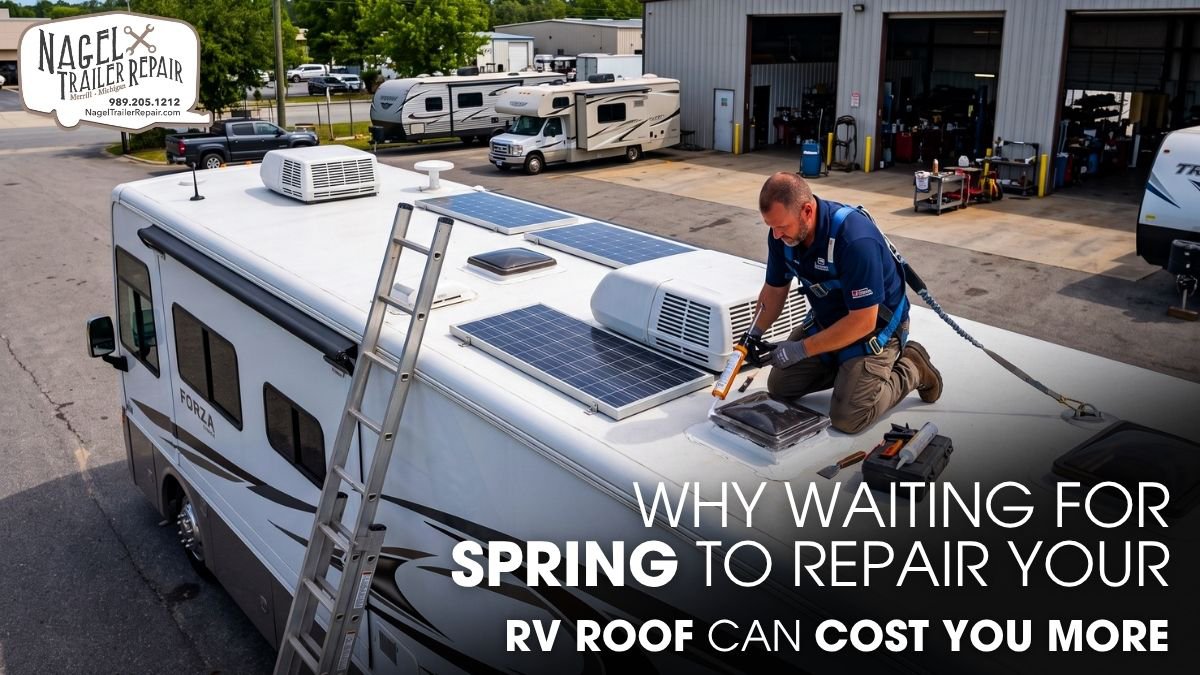
Waiting for spring to repair your RV roof may seem practical, especially when the RV is stored during winter. However, delaying a small roofing problem can allow moisture intrusion, sealant failure, and structural deterioration to progress unnoticed. RV roof systems depend heavily on properly maintained seams, penetrations, edge transitions, and sealants to prevent water from reaching the underlying deck and interior.
The problem starts when you ignore minor roof damage. Water can penetrate the RV, damage insulation, stain ceilings, weaken structural components, and encourage mold growth. By spring, what started as a simple seal repair may require extensive restoration or even roof replacement.
Don’t wait for winter weather to worsen roof damage. An RV roof expert in Michigan can inspect your RV, address leaks early, and prevent costly interior damage. Timely repairs protect your investment, reduce future expenses, and help keep your RV safe, dry, and ready for the road.
Small Roof Damage Gets Worse Over Winter:
An RV roof has several layers that work together to keep water outside. Depending on the model, the roof may use EPDM, TPO, fiberglass, aluminum, or another roofing material installed over a structural deck, insulation, and framing. The roof also contains numerous penetrations, including vents, skylights, antennas, plumbing fixtures, solar equipment, and air-conditioning units. Each penetration creates another area that depends on a reliable seal.
The trouble often begins with something that looks insignificant. A sealant bead may develop a hairline crack, pull away from a flange, shrink around a vent, or lose adhesion at the roof edge. You may not notice any water inside the RV immediately. However, once rain or melting snow finds that opening, moisture can travel beneath the roofing material and into the underlying structure.
Winter gives that moisture plenty of time to create problems. Even when you store the RV, existing moisture can remain trapped inside the roof assembly. Temperature changes can also make materials expand and contract, placing additional stress on already-deteriorated seals.
Watch for these early warning signs:
- Cracked, brittle, or shrinking sealant
- Small gaps around roof penetrations
- Loose or lifted membrane edges
- Soft or spongy areas on the roof
- Interior stains or ceiling discoloration
- Bubbling, wrinkling, or damaged roof material
One detail homeowners often miss is that an interior water stain may not appear directly beneath the actual roof leak. Moisture can travel through insulation, framing channels, and roof decking before reaching the ceiling, making the visible stain only a symptom of a hidden issue.
Scheduling an early exterior inspection with an experienced RV roofing shop in Michigan can help identify damaged seams, vents, flashing, or sealants before moisture spreads and causes more extensive structural damage. Acting early can also help reduce repair costs and protect your RV’s interior.
Water Damage Can Become Expensive:
Once water passes through a failed roof seal, the repair can quickly move beyond the roofing surface. Moisture can saturate insulation, weaken wood-based decking, damage ceiling materials, affect wall structures, and create conditions that support microbial growth. The longer the moisture remains, the more components a technician may need to inspect and replace.
For example, a technician may initially find a failed seal around an RV vent. If the owner addresses it immediately, the repair may require cleaning, surface preparation, and application of a compatible sealant. If the owner ignores the same defect for months, the technician may discover wet decking underneath the membrane.
That difference has a direct financial impact.
Typical U.S. RV roof repair costs can vary significantly depending on RV size, roof material, labor rates, accessibility, and the extent of hidden damage. As a general planning range:
- Minor leak or seal repairs: $180–$400
- Larger resealing projects: $500–$1,200
- Localized roof/decking repairs: $1,500–$4,000+
- Full roof replacement: $4,000–$12,000+
- Extensive water restoration: potentially $10,000–$15,000+
These figures reflect general industry ranges, not fixed or guaranteed costs. Every RV has different conditions, so a qualified technician should inspect the roof before giving an accurate estimate. Choosing professional RV roof repairs in Michigan at the first sign of damage can help control expenses and prevent further deterioration.
The basic financial principle is straightforward: repairing the original water-entry point is usually much less expensive than addressing the structural, interior, and material damage that prolonged moisture exposure can cause.
Cold Weather Can Accelerate Roof Wear:
Cold weather does not automatically destroy a healthy RV roof. The real concern arises when winter conditions repeatedly stress an already-compromised roofing system.
Roof membranes and sealants respond to temperature changes. Materials expand when temperatures rise and contract when temperatures fall. A properly installed system accommodates this movement, but aging or poorly bonded sealants may gradually lose their ability to maintain a continuous waterproof barrier.
Freeze-thaw cycling creates another concern. If water enters an existing crack or separation and then freezes, the water expands. That expansion can increase pressure around the damaged area. When the temperature rises, the ice melts and leaves another pathway for water. Repeated cycles can progressively enlarge a defect.
Snow and ice can trap moisture against vulnerable roof sections, allowing dampness to remain in place for long periods and gradually weaken roofing materials. Wind-driven rain and melting snow can create additional exposure, especially around roof penetrations, seams, vents, and perimeter transitions where water can find small entry points.
Professional RV roof sealing in Michigan can help reinforce these vulnerable areas before seasonal moisture causes more serious damage. Addressing minor sealing concerns early can reduce the risk of leaks, structural deterioration, and costly roof repairs later.
Before winter, pay particular attention to:
- Membrane-to-wall transitions
- Roof seams and lap joints
- Vent and skylight flanges
- Air-conditioning penetrations
- Plumbing and electrical penetrations
- Front and rear roof transitions
- Previous repair patches
Do not apply a generic sealant simply because it says “waterproof.” RV roofing systems require material compatibility. The sealant must adhere correctly to the existing roof material and surrounding substrates while accommodating movement. Following the roofing and sealant manufacturer’s specifications helps prevent adhesion failures and premature deterioration.
Delaying Repairs Raises RV Roofing Costs:
Roof deterioration often follows a progression. A small seal failure allows moisture inside. Moisture affects the substrate. The damaged substrate weakens surrounding materials. Continued exposure then increases the repair area. That progression explains why postponing a repair can become expensive even when the original problem looked minor.
Consider two RV owners with similar roof defects. Owner A discovers cracked sealant in the fall and repairs it before significant water enters the roof assembly. Owner B notices the same problem but waits until spring. If winter weather allows moisture to reach the decking, Owner B may now need material removal, drying, substrate replacement, and additional sealing.
The repair invoice can therefore shift from a few hundred dollars to several thousand dollars. A professional repair should address the cause rather than simply hide the symptom. Applying new sealant directly over loose, contaminated, or deteriorated material can produce a temporary-looking fix without restoring a reliable bond.
A proper repair generally involves:
- Identifying the actual water-entry point
- Removing failed or incompatible material
- Cleaning and preparing the substrate
- Checking the surrounding roof assembly
- Testing for concealed moisture when appropriate
- Applying manufacturer-compatible repair materials
- Inspecting the finished seal for continuity
Spring also creates a practical scheduling challenge for RV owners. As warmer weather arrives, many people begin preparing their vehicles for travel at the same time. Repair facilities can quickly become busy, making it harder to secure a convenient appointment.
An inspection that could have been handled during the quieter off-season may suddenly compete with other seasonal repair demands. Scheduling an early inspection with an RV roof specialist in Michigan can help identify roof concerns before they interfere with your travel plans.
Why Winter RV Roof Inspections Matter?
A winter-preparation inspection should go beyond simply walking around the RV and looking for obvious cracks. A technician should evaluate the entire roof system and identify areas where water could enter.
The inspection starts with the roofing material. EPDM, TPO, fiberglass, and aluminum systems have different characteristics and require different repair approaches. Using the wrong cleaner, adhesive, coating, or sealant can compromise the roof rather than protect it.
The technician should examine the condition of every major penetration and transition. They should also check previous repairs because an older patch can become a new failure point if it has lost adhesion or developed cracks.
Important inspection targets include:
- Roof membrane condition
- Sealant adhesion and cracking
- Roof edges and termination points
- Vent and skylight assemblies
- HVAC mounting areas
- Existing patches and repairs
- Signs of roof-deck movement
- Interior evidence of water intrusion
When visual inspection cannot establish the extent of moisture, technicians may use moisture meters or other diagnostic methods. These tools can help identify areas that require closer investigation before the technician removes roofing material.
You should also inspect the RV interior. Check ceilings, cabinets, wall corners, and areas around roof-mounted equipment for staining, softness, discoloration, or unusual odors. These signs can indicate moisture migration, even when the exterior leak is difficult to locate.
A detailed roof inspection gives you more than a repair estimate. It provides a clear understanding of your RV roof’s actual condition before harsh winter exposure can turn minor issues into costly damage. Professional RV roofing services in Michigan can identify cracks, worn seals, moisture intrusion, and other vulnerable areas early.
Addressing these problems before winter helps protect the roof structure, prevent further deterioration, and keep your RV ready for the next season.
Repair Your RV Roof Before Spring:
The safest financial strategy involves addressing roof defects before winter rather than waiting for the first obvious leak in spring. Early repair gives technicians better access to the problem and gives RV owners more time to address hidden damage before the camping season begins.
Start by identifying the roof material and reviewing previous repairs. A professional technician can then determine whether the RV needs localized resealing, membrane patching, coating, decking repair, or a more comprehensive roof replacement.
Before approving a repair, ask for a clear explanation of the problem and the proposed solution. A reputable repair process should distinguish between cosmetic deterioration and actual water intrusion.
Confirm these points:
- What caused the roof failure?
- Which areas require repair?
- Does the decking contain moisture?
- Which repair products will the technician use?
- Does the repair require membrane removal?
- What portion of the roof needs attention?
- What does the estimate include?
Choosing a repair service based only on the lowest estimate can lead to higher expenses later. An inexpensive fix may not address the underlying roof damage, causing leaks, material deterioration, or repeated repairs after another season. Instead, focus on workmanship, repair methods, materials, and long-term value.
If the damage requires extensive work, comparing options for RV roof replacement in Michigan can help you make a practical decision. Investing in proper repairs the first time can protect your RV, reduce recurring costs, and provide greater peace of mind throughout future seasons.
Think of preventive RV roof maintenance as asset protection. Your roof protects the interior, insulation, framing, electrical components, cabinetry, and other systems from one of the most destructive forces an RV encounters: uncontrolled moisture.
Addressing a $300–$1,000 roofing issue before winter can be far easier financially than facing a $5,000–$12,000 replacement or a larger structural restoration later. The exact cost will always depend on the RV and damage, but early intervention limits the opportunity for the problem to spread.
The Role of Professional Maintenance:
Professional RV roof maintenance helps catch small problems before they become expensive repairs. Technicians inspect seams, sealants, roof penetrations, vents, and membrane surfaces to identify cracks, loose edges, and hidden moisture. Addressing these issues before winter can prevent water from reaching insulation, decking, and interior structures.
Early repairs reduce the risk of extensive restoration costs and help keep your RV ready for the next travel season. Summer heat creates a different challenge. Prolonged exposure to intense sunlight and high temperatures can accelerate sealant aging, surface deterioration, and membrane wear.
Professional maintenance includes checking UV-exposed areas, cleaning the roof correctly, and applying compatible protective products when required. Regular inspections and timely repairs help maintain roof flexibility, waterproofing performance, and long-term durability.
Conclusion:
Waiting for spring can turn a small RV roof defect into a major expense. Cracked sealants and failed seams can permit moisture to reach decking, insulation, framing, and interior materials during months of exposure.
Early inspection and repair can keep costs closer to the hundreds rather than the thousands of dollars. A professional evaluation also identifies hidden moisture that a basic visual inspection may miss.
Protect your RV before winter arrives. Trust Nagel Trailer Repair for seal inspections, document roof conditions, and address water intrusion early. As a certified RV roof expert in Michigan, we spot hidden damage others miss. Preventive maintenance isn’t cosmetic—it safeguards structural integrity, resale value, and your peace of mind. Schedule your fall checkup today—before the first freeze!